A Traffic Signal is not merely a colored lamp beside a road. It is a safety-critical control system involving visibility, timing, detection, communications, and maintenance. Global buyers must evaluate the complete operating environment, not only the equipment price. A coastal intersection may need sealed housings and corrosion-resistant hardware. A dusty urban junction may require protected ventilation and simple field servicing.
The World Health Organization’s Global Status Report on Road Safety 2023 estimates 1.19 million annual road deaths worldwide. That figure gives every procurement decision a human scale. A failed signal can create confusion within seconds. The World Bank also identifies transport safety, reliable infrastructure, and institutional capacity as connected development priorities. These findings support a practical purchasing approach: verify performance claims, request test records, and check whether suppliers provide documented warranties and spare parts.
Look beyond the brochure.
The U.S. Federal Highway Administration’s Traffic Signal Timing Manual emphasizes coordinated timing, detection, maintenance, and measurable operations. Its guidance shows why a controller cannot be judged separately from sensors, software, cabinet design, and power quality. Buyers should compare LED visibility, ingress protection, surge resistance, operating temperature, pedestrian features, and communications compatibility. Regional standards matter too. MUTCD requirements, local electrical rules, and agency specifications may differ substantially.
Some choices remain difficult. The lowest bid may reduce initial spending, yet increase downtime and technician visits. A premium system may also be excessive for a small rural junction. That is where lifecycle costing becomes useful. Ask for verified energy data, failure rates, response times, and installation examples from similar climates. Real experience is valuable, but it is not perfect evidence. Test it against independent reports, site conditions, and a clear maintenance plan.

Before buying traffic signals, describe the road environment in practical terms. Record lane numbers, approach speeds, intersection geometry, and daily traffic volume. Check whether vehicles drive on the left or right. This detail affects signal placement, visibility, and controller programming. Measure pole heights and mounting distances on site. Photographs alone can mislead.
Local operating conditions also matter. Specify the required supply voltage, frequency, enclosure rating, temperature range, and humidity exposure. Coastal roads may need stronger corrosion protection. Dusty areas may require sealed cabinets and easier cleaning access. Confirm the signal colors, flashing patterns, pedestrian symbols, and countdown displays accepted by local authorities. Requirements differ between markets, even when road layouts look similar.
Ask the supplier for test records, wiring diagrams, installation instructions, and spare-part information. A reliable specification should explain LED performance, power consumption, emergency operation, and communication interfaces. It should also identify inspection points for maintenance teams. Do not assume a familiar connector or voltage will be available locally. That assumption can delay installation.
No checklist is perfect. Field conditions change. Leave room for documented adjustments after a site inspection. A short trial installation may reveal glare, poor viewing angles, or confusing pedestrian timing. These issues are easy to miss in an office review. Involve local engineers before approving the final purchase. Their practical feedback may challenge the original design. That is useful.
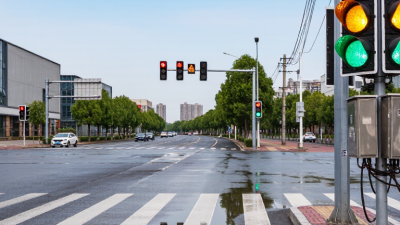
10 Traffic Signal Buying Tips for Global Buyers
A traffic signal is safety equipment, not just an illuminated housing. The 2023 WHO Global Status Report on Road Safety records about 1.19 million road deaths annually, with 20–50 million non-fatal injuries. Signal reliability deserves serious verification.
Request photometric test results for luminous intensity, color coordinates, uniformity, and visibility at different viewing angles. Check compliance with EN 12368, or the applicable national standard, before approving samples. The housing should also show suitable IP protection under IEC 60529 and withstand heat, moisture, vibration, and ultraviolet exposure. Ask for EMC test evidence. Electrical noise can create unexpected behavior near sensitive control equipment. It happens.
Do not rely on certificates alone. Inspect a production sample, then compare it with the delivered batch. Confirm LED lifetime claims through test conditions, not attractive numbers without context. Review factory quality records, calibration dates, material traceability, and corrective-action procedures. The 2023 FHWA Manual on Uniform Traffic Control Devices emphasizes consistent signal placement, visibility, and operational clarity in road environments. Local agencies may still require different colors, flashing patterns, connectors, or installation rules. A certificate from one market may have little value in another. I have seen technically strong products delayed because paperwork omitted one regional requirement. That weakness is avoidable. Include independent laboratory testing, acceptance criteria, and spare-part identification in the purchase contract.
| No. | Buying Tip | What to Verify | Practical Acceptance Criteria | Recommended Evidence | Relevant Standards or Regulations | Purchasing Risk if Omitted |
|---|---|---|---|---|---|---|
| 1 | Confirm the target country and road authority requirements first | Identify the installation country, road classification, traffic direction, signal configuration, mounting arrangement, and approving authority. | The quotation and technical specification should clearly state the intended jurisdiction and application instead of using a generic global specification. | Approved technical specification, authority design brief, project drawings, and regulatory checklist. | Local traffic control regulations; road authority standards; applicable national adaptations of international standards. | Critical Equipment may be rejected during approval or fail to match the intersection design. |
| 2 | Check optical performance and visibility | Review luminous intensity, viewing angle, color coordinates, contrast, uniformity, glare control, and visibility under direct sunlight. | Optical performance must be tested against the selected market standard and the required signal head class; do not rely only on nominal LED wattage. | Independent photometric test report, colorimetric data, optical drawings, and sample inspection under daylight conditions. | EN 12368 for traffic signal heads; local signal-head specifications; applicable road authority optical requirements. | Critical Poor visibility can create a direct traffic-safety hazard and prevent regulatory acceptance. |
| 3 | Verify electrical safety and input compatibility | Confirm rated voltage, frequency, current, power factor, inrush current, insulation, grounding, polarity protection, and compatibility with the controller cabinet. | Rated input parameters must match the local power system and the project controller output; electrical protection must be documented. | Electrical schematic, product data sheet, dielectric-strength report, insulation-resistance report, and sample test record. | IEC 60598-1 where applicable; IEC 60364 installation principles; national electrical safety requirements. | High Incorrect electrical characteristics may cause nuisance failures, overheating, or controller damage. |
| 4 | Assess environmental protection and materials | Check ingress protection, corrosion resistance, UV resistance, operating temperature, humidity tolerance, impact resistance, and drainage design. | Ingress and impact ratings should be selected for the actual installation environment and verified on the complete enclosure or signal assembly. | IP and impact test reports, material declarations, coating or polymer specifications, temperature-cycle results, and enclosure drawings. | IEC 60529 for IP ratings; IEC 62262 for IK impact ratings where applicable; local environmental requirements. | High Water ingress, condensation, corrosion, or UV degradation can shorten service life. |
| 5 | Review electromagnetic compatibility | Evaluate conducted and radiated emissions, immunity to electrical disturbances, electrostatic discharge, surges, and fast transients. | Test results should cover the complete operating configuration, including the intended power supply, controller interface, and protective devices. | EMC laboratory report, test configuration, immunity levels, surge-test results, and declaration of conformity where required. | IEC 61000-4 series; IEC 61000-6-2 and IEC 61000-6-4 where applicable; national EMC regulations. | High Electromagnetic interference may cause false indications, communication faults, or intermittent operation. |
| 6 | Validate controller and communication compatibility | Confirm signal states, monitoring functions, conflict monitoring, lamp-failure detection, dimming behavior, connectors, communication protocol, and fail-safe operation. | Each signal output and fault condition should be demonstrated in a system-level test with the intended controller or an approved test simulator. | Interface control document, wiring diagram, protocol description, compatibility matrix, and witnessed functional test. | EN 12675 for traffic signal controllers; NEMA TS 2 where specified by the project; local controller requirements. | Critical A signal head can be physically compatible but functionally unsafe with the controller. |
| 7 | Check regulatory markings and conformity documentation | Determine which conformity marks, declarations, import documents, safety files, and national approvals are legally required in the destination market. | Documents must identify the exact model, applicable directives or regulations, test standards, issuing laboratory, and validity status. | Declaration of conformity, certificates, technical construction file, customs classification data, and authorized test reports. | Applicable national product-safety, EMC, radio-equipment, environmental, and transportation regulations; CE marking where legally applicable. | Critical Missing or inaccurate documentation can delay customs clearance or invalidate market access. |
| 8 | Verify reliability, maintenance, and service-life claims | Review LED degradation data, driver reliability, thermal management, failure modes, replaceable parts, maintenance access, and warranty terms. | Service-life claims should state the operating temperature, duty cycle, current, failure definition, and test method rather than presenting an unsupported hour figure. | Accelerated-life test report, thermal test data, failure-rate assumptions, spare-parts list, warranty terms, and maintenance manual. | IEC 62384 for LED controlgear performance where applicable; EN 12368 maintenance and performance provisions; project reliability requirements. | High Unverified lifetime claims can result in excessive maintenance and difficult spare-parts planning. |
| 9 | Control production quality and configuration consistency | Check incoming-material control, assembly inspection, serial-number traceability, calibration, change control, and final functional testing. | Every shipment should be traceable to a production batch and approved configuration, with documented inspection results for critical characteristics. | Quality plan, inspection and test plan, batch records, calibration certificates, nonconformance procedure, and change-notification process. | ISO 9001 quality-management practices; project-specific factory-acceptance requirements; applicable conformity-assessment procedures. | Medium Uncontrolled variations can create inconsistent optical, electrical, or mechanical performance across an installation. |
| 10 | Test a production-equivalent sample before mass purchase | Inspect dimensions, colors, connectors, mounting hardware, markings, light output, wiring, sealing, controller response, and installation instructions. | The approved sample must be production-equivalent and formally frozen before bulk manufacturing; any design change requires written approval. | Golden sample record, approval checklist, pre-shipment inspection report, photographs, test videos, and signed deviation log. | Applicable local authority specification; EN 12368 or other project-selected signal-head standard; contract acceptance criteria. | Critical Mass production may reproduce a design mismatch that could have been identified through sample approval. |
Global buyers should compare signal types before comparing prices. Fixed-time signals suit stable traffic patterns and simple intersections. Actuated signals respond to vehicle or pedestrian detection. Adaptive systems adjust timing as demand changes, but they need reliable detectors, communication links, and trained maintenance teams. Pedestrian signals require clear countdown displays, audible guidance, and accessible push-button placement.
The FHWA Traffic Signal Timing Manual reports that proper retiming can reduce delay by roughly 15–20%. That figure depends on intersection geometry and traffic quality. Treat it as a planning reference, not a promise. Check LED visibility in direct sunlight, night-time dimming, power consumption, and optical uniformity. Confirm controller protocols, cabinet dimensions, voltage, grounding, and backup-power requirements. Small mismatches become expensive during installation.
Installation compatibility deserves more attention than packaging. Measure pole brackets, signal head spacing, cable entries, and mounting hardware before ordering. Review local standards, including electrical safety, accessibility, ingress protection, and traffic-control specifications. The U.S. FHWA Manual on Uniform Traffic Control Devices provides detailed requirements for signal faces, visibility, and placement. Local authorities may require stricter rules. Ask for photometric test data and environmental test records. A high IP rating helps against rain, but it does not replace correct sealing. I have seen technically strong equipment fail because the connector layout was overlooked. That mistake is avoidable.
Global traffic signal buyers need more than a low unit price. In field projects, I compare suppliers through samples, factory records, and technical documents. A reliable supplier should explain LED intensity, viewing angle, voltage range, ingress protection, and operating temperature clearly. Ask for test reports that match the exact model being quoted. Photos alone are not enough.
Pricing should include controllers, mounting hardware, packaging, spare parts, shipping terms, and replacement costs. A low quote can still look attractive. I have made that mistake. Later, missing accessories increased the installation budget. Request a detailed commercial offer with fixed validity, payment stages, and clear delivery dates. Check whether production capacity can support repeat orders without changing components.
Warranty language deserves close attention. Confirm its length, covered failures, response time, and transport responsibility. A five-year warranty means little if the supplier takes six weeks to answer. Technical support should include wiring diagrams, installation guidance, troubleshooting steps, and remote communication during commissioning. Ask for a named engineer, not only a general email address. Sample testing should include night operation, water exposure, heat cycles, and voltage variation. These checks may reveal weaknesses before a shipment reaches a busy intersection. Some requirements are easy to overlook, especially local approval documents and maintenance training. That gap deserves another review.
Plan Shipping, Testing, Installation, and Long-Term Maintenance
Global traffic signal purchases need more than a competitive quotation. Confirm signal dimensions, carton strength, pallet limits, and delivery routes before placing an order. Ask for moisture protection, shock indicators, spare lenses, and complete packing lists. Shipping delays often begin with missing documents. Check voltage, frequency, connector types, and local mounting standards early. Small mismatches can stop installation.
Request factory test records for brightness, color consistency, power consumption, insulation, and weather resistance. Arrange sample testing when the project is large. An independent inspection can verify measurements before shipment. Keep photos and serial records for every unit.
Do not accept unclear test language. It creates arguments later. We once underestimated connector variations, and installation lost valuable days. That mistake still deserves review.
Installation planning should include brackets, cable length, lifting access, foundation details, and technician training. Provide a clear wiring diagram at the worksite. Test one complete intersection before wider deployment. Keep replacement modules, gaskets, fuses, and fasteners in a controlled store.
Maintenance teams should inspect seals, cable entries, visibility, and mounting bolts on a fixed schedule. Record every repair and weather event. A signal may operate today but fail after months of vibration, dust, or heat. Long-term support should define response times, remote guidance, spare-part availability, and practical warranty procedures. Reliability is built through evidence, not promises.