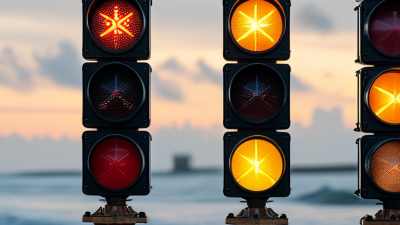
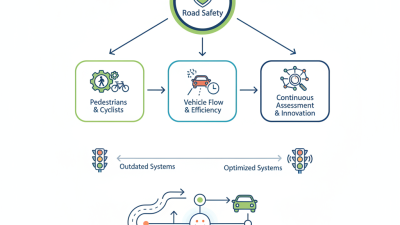
Choosing the best China Traffic Signal manufacturers requires more than comparing prices, product catalogs, or factory photographs. Buyers should examine field experience, controller reliability, certification, software compatibility, and after-sales support. A signal cabinet may look impressive, yet fail when humidity, voltage fluctuation, or heavy traffic tests its limits.
Industry evidence supports a careful approach. The Federal Highway Administration’s Traffic Signal Timing Manual explains that regular timing updates can reduce delay, fuel use, and unnecessary stops. Its guidance also stresses detection quality, coordination, maintenance, and documented engineering decisions. Grand View Research reported strong growth in the global intelligent traffic management market, driven by connected infrastructure, adaptive control, and urban traffic data. However, market forecasts vary by definition, region, and technology scope. Numbers should not be treated as certainty.
Peter Koonce, a respected traffic signal engineer and author, has described signal timing as “both an art and a science.” That idea also applies to manufacturer selection. The strongest suppliers combine engineering discipline with practical installation experience. Look for NEMA or EN compliance where applicable, transparent test records, cybersecurity policies, spare-parts planning, and references from comparable intersections. Ask how the supplier handles firmware updates, detector failures, cabinet cooling, and emergency maintenance. Small details matter.
No manufacturer is perfect. A supplier with advanced artificial intelligence may still lack local technicians. Another may offer robust hardware but limited software integration. This guide compares leading China Traffic Signal manufacturers through evidence, not marketing claims, so buyers can make a more defensible decision.
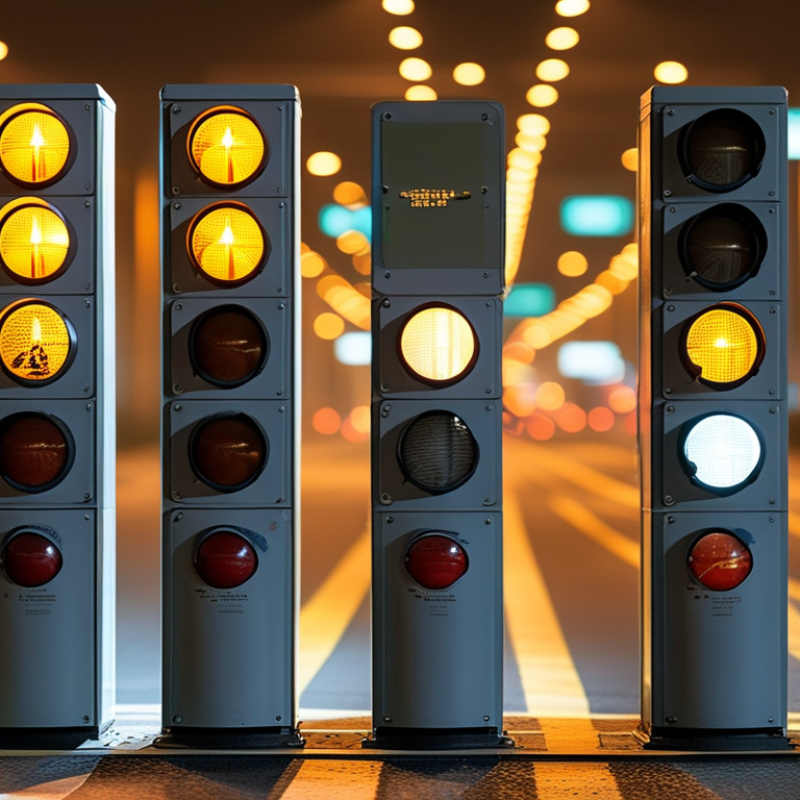
China’s traffic signal manufacturing industry has grown from basic lamp assembly into a broad engineering sector. Manufacturers now produce vehicle signals, pedestrian units, countdown displays, controllers, poles, and monitoring equipment. Production clusters support faster sourcing and flexible customization. Many factories combine injection molding, circuit assembly, optical testing, and final system inspection under one roof.
Selecting the best manufacturer requires more than comparing prices. A reliable supplier should provide test records, material specifications, wiring diagrams, and traceable quality procedures. Look for compliance with applicable traffic safety standards and local installation requirements. Experienced manufacturers test brightness, color consistency, weather resistance, sealing, and controller communication. Sample testing matters. A polished catalog cannot replace a working unit in rain, dust, heat, and direct sunlight.
Factory capability can vary between projects. Some suppliers have strong hardware production but limited software support. Others offer attractive designs but weak documentation. This is easy to miss. Buyers should inspect production lines, review defect handling, and request references from comparable road environments. Clear delivery schedules and spare-part planning also reduce maintenance pressure. No manufacturer is perfect, and even a capable factory may misunderstand unusual intersection layouts. Detailed drawings, site data, and repeated technical discussions can prevent costly revisions before shipment.

Traffic signal manufacturers in China offer several practical signal types for different road conditions. Standard red, yellow, and green vehicle signals manage intersections, turning lanes, and busy urban corridors. Arrow signals provide clearer guidance for left or right turns. They reduce hesitation when traffic movements overlap.
Pedestrian signals use walking and standing symbols near crossings, schools, stations, and public buildings. Countdown displays show remaining crossing time, which helps older people and children judge movement. Flashing warning beacons suit school zones, sharp bends, temporary hazards, and low-speed roads.
Lane-control signals are useful above tunnels, bridges, and reversible lanes. They show whether a lane is open or closed.
Small details matter, such as viewing distance, LED brightness, housing durability, and visibility during heavy rain. A technically correct product can still perform poorly if installed at the wrong height. That mistake is easy to overlook.
Tips: Match the signal to traffic speed and road width. Check optical clarity from the driver’s stopping line. Ask for environmental testing records, wiring diagrams, and maintenance guidance. Confirm compatibility with the local controller before ordering. A sample test is often wiser than relying on photographs. Also review spare parts and response times. The cheapest option may create higher maintenance costs later. Keep the decision practical, but leave room for site-specific changes.
China’s leading traffic signal manufacturers compete through practical engineering, not appearance alone. Many operate large production lines for vehicle signals, pedestrian signals, countdown timers, and solar warning units. Their product strengths often include modular housings, high-brightness LEDs, low power consumption, and weather-resistant coatings. These details matter beside dusty intersections and during heavy rain.
Experienced manufacturers usually provide signal heads with clear visibility from different approach angles. Some use aluminum housings, sealed optical compartments, and replaceable control modules. Strict factories test light intensity, waterproof performance, insulation, and vibration resistance before shipment. They may also support red, yellow, and green lenses in several diameters. Configuration flexibility helps contractors match local road layouts without redesigning every component.
The strongest suppliers understand integration. They can coordinate signal controllers, pedestrian push buttons, countdown displays, mounting poles, and communication interfaces. Technical teams often review drawings, cable routes, and installation conditions before production. That reduces costly changes at the site. Still, factory claims should not be accepted blindly. A polished sample may hide inconsistent wiring or weak documentation. Buyers should request test records, installation photos, spare-part lists, and clear warranty terms. I have found that small details, such as connector quality and label durability, can decide long-term maintenance costs. Some manufacturers remain excellent at production but less responsive after delivery. That gap deserves careful attention.
| Manufacturer Capability Area | Typical Product Configuration | Common Technical Data | Relevant Standards or Ratings | Key Product Strength | Typical Application |
|---|---|---|---|---|---|
| Vehicle Traffic Signal Heads | Three-color LED signal heads with red, yellow, and green indications | Common lens diameters: 200 mm or 300 mm; nominal supply: 85–265 V AC; LED service life commonly specified at 50,000 hours or more | GB 14887; EN 12368; IP-rated enclosure options under IEC 60529 | High visibility, low energy consumption, long maintenance intervals, and modular installation | Urban intersections, highways, bridges, and industrial access roads |
| Arrow and Lane-Control Signals | Directional arrow signals, lane-use signals, and reversible-lane indicators | Red, amber, and green arrow patterns; common sizes include 200 mm and 300 mm; outdoor weather-resistant housings | GB 14887; EN 12368; project-specific photometric and visibility requirements | Clear lane guidance, flexible traffic management, and compatibility with signal controllers | Dedicated-turn lanes, expressways, tunnels, and reversible traffic lanes |
| Pedestrian Crossing Signals | Red and green pedestrian symbols with optional countdown displays and audible devices | Common signal sizes: 200 mm or 300 mm; countdown displays generally use high-brightness LED digits; optional acoustic alerts support accessibility | GB 14887; accessibility requirements depend on the local road authority and project design | Improved pedestrian visibility, accessible crossing support, and easy integration with intersection timing | Schools, city centers, transit stations, hospitals, and residential districts |
| Traffic Signal Controllers | Fixed-time, coordinated, actuated, and network-connected signal controllers | Support for multi-phase operation, detector inputs, conflict monitoring, time synchronization, and communication interfaces | GB 25280; cabinet and electrical safety requirements depend on the installation | Programmable timing plans, coordinated intersections, fault monitoring, and centralized management compatibility | Single intersections, arterial corridors, adaptive traffic systems, and smart-city platforms |
| Solar Traffic Signals | LED signal heads combined with photovoltaic panels, batteries, charge controllers, and mounting poles | Off-grid operation depends on solar irradiance, battery capacity, local traffic duty cycle, and required autonomy days | GB 14887 for signal equipment; photovoltaic and battery components require system-specific electrical assessment | Reduced trenching and utility dependence, faster deployment, and suitability for remote locations | Rural crossings, temporary traffic control, construction zones, and areas with limited grid access |
| Flashing Beacons and Warning Lights | Single- or dual-color flashing LED beacons with optional solar power or audible warning units | Common colors include amber, red, and blue subject to local regulations; flash patterns and mounting options are configurable | Applicable road-safety standards and local authority requirements; enclosure protection commonly specified using IEC 60529 ratings | Strong attention capture, simple control logic, and flexible roadside installation | School zones, pedestrian crossings, sharp curves, work zones, and emergency access points |
| Signal Poles, Brackets, and Cabinets | Galvanized steel or aluminum poles, mast arms, mounting brackets, and weather-resistant controller cabinets | Configuration is selected according to span length, wind load, signal weight, foundation design, and cable routing requirements | Structural design and corrosion protection follow local engineering specifications; cabinet protection commonly uses IP ratings | Complete roadside integration, durable support structures, and simplified project procurement | Municipal intersections, highways, ports, campuses, and large logistics facilities |
| Intelligent and Connected Signal Systems | Signal controllers, communication gateways, detectors, monitoring software, and remote maintenance functions | May support Ethernet, cellular, fiber, or other approved communication methods; features depend on the system architecture | GB 25280 for controllers; cybersecurity, communications, and data-interface requirements are project-specific | Remote diagnostics, centralized scheduling, traffic-data integration, and scalable deployment | Smart intersections, traffic control centers, urban corridors, and integrated transport networks |
The best China traffic signal manufacturers treat certification as a starting point, not a marketing badge. The WHO Global Status Report on Road Safety 2023 records about 1.19 million annual road deaths worldwide. Reliable signal equipment therefore needs stable visibility, accurate timing, and strong environmental resistance.
Look for factories operating under ISO 9001 quality management systems. ISO 14001 and ISO 45001 can also indicate controlled environmental and workplace practices. For exported products, check relevant requirements such as EN 12368, IEC 60529 ingress protection, and applicable EMC testing. CCC compliance may support domestic Chinese distribution, while CE documentation should match the exact product configuration. Do not accept a certificate without checking its scope.
Real production capability appears in the details. Ask whether each LED module receives photometric testing, thermal cycling, waterproof inspection, and electrical safety checks. A documented burn-in process can reveal early component failures. Traceable batch numbers are useful when a roadside unit needs service years later. Production lines should include automated assembly, calibrated test instruments, aging rooms, and final inspection records.
According to the International Transport Forum’s Road Safety Annual Report, road safety depends on both infrastructure and system management. That makes controller compatibility and maintenance planning essential. A factory may offer impressive output, yet weak after-sales documentation can create delays. Certification alone is not proof of field reliability. Request sample test reports, ingress-test photos, wiring diagrams, and a realistic spare-parts plan before approval. Temperature claims also deserve scrutiny; laboratory results may not reflect dust, coastal salt, or unstable power conditions.
Selecting a China traffic signal manufacturer should begin with evidence, not catalog size. The World Health Organization’s Global Status Report on Road Safety 2023 records about 1.19 million annual road deaths worldwide. It also notes that crashes can cost countries nearly 3% of gross domestic product. Signal reliability is therefore a safety issue, not a purchasing detail.
China’s Ministry of Public Security reported 435 million motor vehicles and 523 million licensed drivers in its 2023 traffic statistics. This scale makes production capacity important, but capacity alone proves little. Check compliance with GB 14886, relevant IEC requirements, and the standards of your target market. Request current test records for photometric performance, ingress protection, surge resistance, EMC, thermal cycling, and LED lifetime. Test the details. A factory video is not verification.
Evaluate component traceability, calibration records, software control, spare-part availability, and warranty response times. Ask for failure data from comparable installations, not only reference photos. Review whether each batch has serial tracking and documented final inspection. The checklist is imperfect. A low quotation may reflect efficient production, or weaker drivers and limited testing. Independent pre-shipment inspection can expose that difference. The International Organization for Standardization reports that ISO 9001 supports controlled, repeatable quality processes, but certification does not guarantee excellent signals. Audit the actual site, interview the quality engineer, and compare delivered samples against approved drawings.