- Home
- Products
- About Us
- News
- Videos
- Contact Us
- Downloads
inquiry
Leave Your Message
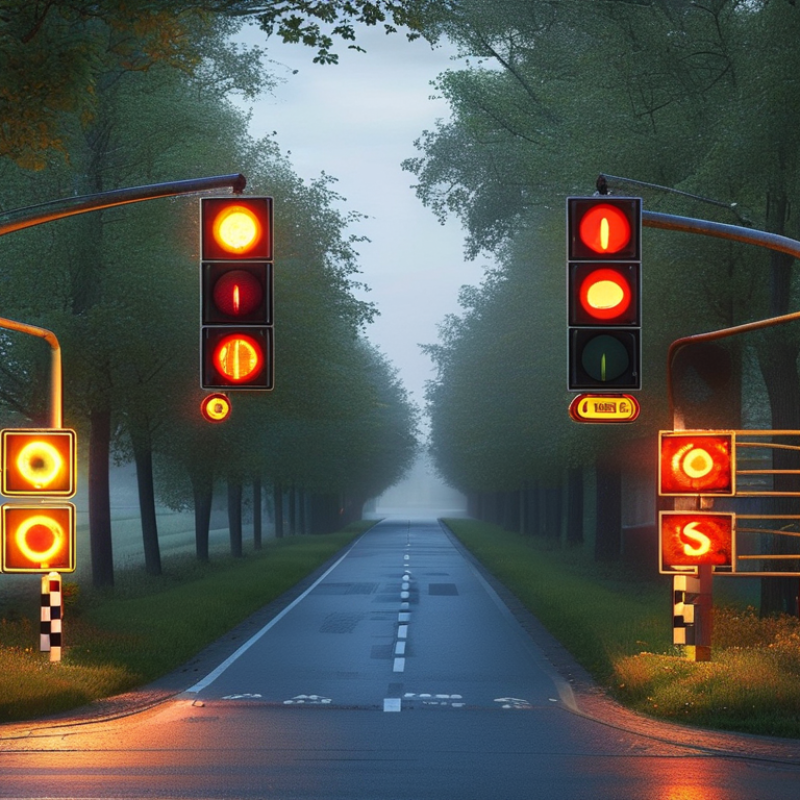
Choosing Traffic Signal And Road Signs is not simply a matter of selecting bright colors or modern equipment. Each device must answer a real road situation. A signal near a school needs clear timing, visible displays, and enough crossing time for children and older pedestrians. A warning sign on a rural curve needs distance, contrast, and protection from trees, dust, and heavy rain. The surrounding road matters just as much as the product itself.
Hans Monderman, the influential Dutch traffic engineer, often reminded designers, “The road is not a place where people should feel safe. It is a place where people should behave safely.” His statement highlights an important point. Good traffic control supports attention rather than replacing it. This guide examines how to match signals and signs with speed, traffic volume, road geometry, weather, lighting, and pedestrian movement. It also considers maintenance, because a faded sign or dark signal can weaken an otherwise careful design.
There is no perfect selection formula. A device that works well on a wide urban avenue may fail beside a narrow village road. Field experience can reveal problems that drawings miss. Drivers may overlook a sign hidden behind branches. Pedestrians may misunderstand a symbol at night. These details deserve honest review. The best Traffic Signal And Road Signs choices are visible, consistent, durable, and understandable under pressure. They should serve the road’s actual users, not only satisfy a specification sheet.
How to Choose Traffic Signals and Road Signs?
Define the Purpose and Location of the Traffic Control Device
Every device should answer one practical question: What must road users do here? A warning sign belongs before the conflict, not beside it. A regulatory sign must face drivers at the decision point. Location decides everything. The World Health Organization’s Global Status Report on Road Safety 2023 estimates 1.19 million road deaths worldwide each year. Clear control devices can reduce confusion, but only when their message matches the hazard.
Begin with a site review. Record approach speed, sight distance, lane movement, pedestrian activity, lighting, and weather exposure. Then define the device’s purpose: warning, guidance, regulation, or temporary control. The Federal Highway Administration’s Manual on Uniform Traffic Control Devices, 11th edition, stresses uniform messages, consistent placement, and adequate visibility. These details are not decorative. A sign hidden behind branches is practically absent.
Data should guide placement, not replace field judgment. National traffic statistics reported 40,901 road deaths in 2023, showing that safer design still demands attention. Inspect the device from a driver’s eye level. Check it at night and during rain. I have seen plans that looked perfect on paper but failed beside parked vehicles. That mistake is easy to repeat. Engineers should question whether drivers can understand the device within seconds, especially near intersections, crossings, and sudden lane changes.
| Traffic Control Device | Primary Purpose | Best-Suited Location | Typical Traffic or Road Condition | Key Selection Criteria | Placement and Visibility Considerations | Recommended Review Frequency |
|---|---|---|---|---|---|---|
| Traffic Signal | Assigns right-of-way between conflicting traffic movements, pedestrians, and cyclists. | Signalized intersections, pedestrian crossings, and other locations where traffic movements require controlled separation. | Recurring traffic demand, substantial pedestrian activity, frequent conflicts, or limited safe gaps in traffic. | Use only when an engineering evaluation supports the need. Consider traffic volumes, crash history, pedestrian demand, roadway geometry, and coordination with nearby signals. | Install where all intended users can see the indications clearly. Provide adequate sight distance, accessible pedestrian features, and appropriate signal timing. | After major roadway changes and through periodic signal timing and safety reviews. |
| Stop Sign | Requires traffic to stop before entering or crossing a conflicting roadway or pedestrian path. | Intersections where a stop-controlled approach is appropriate and where drivers can identify the conflict point. | Low- to moderate-volume approaches, minor roads, or locations where priority must be assigned without installing a traffic signal. | Confirm that stopping is justified by intersection control requirements, sight distance, roadway hierarchy, and applicable traffic-control standards. | Place near the point where vehicles must stop, with a clear approach view. A stop line or marked crossing should identify the stopping position when appropriate. | Inspect routinely and after changes to intersection geometry or sight distance. |
| Yield Sign | Requires drivers to give priority to conflicting traffic and proceed only when it is safe. | Minor approaches, roundabout entries, channelized intersections, and locations where stopping is not always necessary. | Traffic conditions allow drivers to merge or cross safely after yielding, with adequate visibility of approaching users. | Evaluate available gaps, approach speed, sight distance, lane arrangement, and the risk of unnecessary stopping. | Position close to the yield point and supplement with a yield line or pavement marking where needed. Do not place it where vegetation or structures block the conflict area. | Review when traffic patterns, landscaping, or approach speeds change. |
| Speed Limit Sign | Communicates the legally established maximum or minimum speed for a road segment. | At the beginning of a speed zone and after major changes in the roadway environment or legal speed limit. | Roads with defined speed zones, changing land use, school areas, work zones, or transitions between urban and rural environments. | Base the posted limit on the responsible authority’s regulations, roadway function, operating speeds, pedestrian activity, crash history, and roadside development. | Install where the new limit begins and ensure the sign is conspicuous, unobstructed, and repeated when drivers may reasonably need additional confirmation. | Review after roadway reconstruction, land-use changes, or speed studies. |
| Warning Sign | Alerts road users to an unexpected condition or potential hazard ahead. | Before curves, intersections, crossings, grades, merging areas, narrow bridges, and other hazards requiring advance notice. | Road users need additional time to detect, understand, and respond to a condition that is not readily apparent. | Select the sign according to the specific hazard, approach speed, available decision time, and whether the condition is temporary or permanent. | Place far enough in advance for recognition and response. Maintain a clear line of sight and avoid placing multiple signs so close together that they compete for attention. | Inspect regularly and whenever the hazard changes or is removed. |
| Regulatory Sign | States a traffic law, restriction, or required movement, such as no turn, one-way operation, or lane use. | At or immediately before the point where the rule applies, including intersections, restricted lanes, and access-controlled areas. | Locations requiring consistent compliance with a legal restriction or movement requirement. | Verify that the restriction is legally enforceable, clearly worded, necessary, and consistent with roadway operations. | Place within the driver’s decision zone and repeat it when the restriction extends over a long distance or may be overlooked. | Review after changes to regulations, lane configuration, or access arrangements. |
| Guide or Destination Sign | Provides route, destination, direction, and lane-use information to support navigation. | Approaches to interchanges, major intersections, route splits, activity centers, and decision points. | Drivers need advance information to select a route or lane without sudden braking or weaving. | Use concise wording, readable lettering, logical destinations, adequate contrast, and sufficient advance distance for the operating speed. | Place before the decision point and provide confirmation after a turn or route choice when appropriate. Avoid visual obstruction and information overload. | Review after route changes, new development, or changes in traffic patterns. |
| Pedestrian Crossing Sign | Warns or informs drivers about a designated or frequently used pedestrian crossing. | Marked crossings, school crossings, shared-use path crossings, transit stops, and locations with regular pedestrian movement. | Pedestrians cross the roadway and may not be expected by approaching drivers, especially where visibility or speed is a concern. | Consider pedestrian volume, crossing distance, vehicle speed, crash history, accessibility, lighting, and whether additional crossing treatments are required. | Place on the approach side with sufficient advance warning. Keep the crossing, sign face, and waiting areas visible to both drivers and pedestrians. | Inspect before school terms, after construction, and following changes in pedestrian activity. |
| School-Area Sign or Beacon | Draws attention to school-related traffic, children crossing, or a school-zone restriction. | School approaches, crossings, student loading areas, and school zones with time-based traffic controls. | High concentrations of children, pedestrians, bicycles, buses, and turning vehicles during defined periods. | Coordinate the device with the school-zone regulation, crossing plan, operating hours, pedestrian routes, and local authority requirements. | Use conspicuous placement, clear operating schedules, and unobstructed visibility. Flashing operation should be limited to the periods when the warning applies. | Check before each school year and whenever school access or travel patterns change. |
| Work-Zone Channelizing Device | Guides road users through temporary traffic patterns and separates traffic from workers or hazards. | Construction zones, maintenance areas, lane closures, shoulder work, and temporary pedestrian routes. | Normal road alignment or available lanes are temporarily changed, narrowed, or shifted. | Select the device based on traffic speed, exposure to impact, required separation, work duration, night visibility, and the approved temporary traffic-control plan. | Provide a clear, continuous transition and adequate taper length. Maintain retroreflectivity, stability, spacing, and access for pedestrians and emergency vehicles. | Inspect at the start of each work period and after impacts, severe weather, or traffic shifts. |
| Lane-Use Control Signal | Indicates whether a lane is open, closed, or reserved for a particular direction or movement. | Reversible lanes, tunnels, bridges, toll approaches, incident-management areas, and variable lane configurations. | Lane direction or availability changes by time, congestion, incident, maintenance activity, or operational needs. | Ensure the control system is fail-safe, clearly understood, synchronized with lane markings and signs, and supported by reliable detection or operator control. | Install over or beside the controlled lane where indications are visible before drivers enter the affected section. Prevent conflicting displays. | Test routinely and after power, communication, or configuration changes. |
| Pavement Marking | Defines lanes, stopping positions, crossings, edge lines, turn areas, and other roadway boundaries. | Roadway surfaces where visual lane guidance or separation is needed, including intersections and pedestrian crossings. | Drivers and other road users need continuous guidance, especially at night, in complex intersections, or through temporary alignments. | Select markings according to road function, traffic direction, lane arrangement, visibility needs, surface condition, and maintenance requirements. | Apply with consistent alignment, adequate contrast, and appropriate retroreflectivity. Coordinate markings with signs and signals so that instructions do not conflict. | Inspect for wear, loss of contrast, surface damage, and reduced nighttime visibility. |