inquiry
Leave Your Message

2026 Best Traffic Signal and Road Signs Manufacturers?

Choosing the 2026 best Traffic Signal And Road Signs manufacturers requires more than comparing product catalogs. Reliability begins at the roadside, where signal controllers face heat, moisture, vibration, and constant electrical cycles. Signs must remain visible under rain, glare, darkness, and aging retroreflective materials.

The World Health Organization’s Global Status Report on Road Safety 2023 estimates that approximately 1.19 million people die annually in road crashes. That figure gives manufacturers a serious responsibility. The Federal Highway Administration’s 11th Edition of the Manual on Uniform Traffic Control Devices also defines national requirements for traffic signs, signals, markings, and installation practices in the United States. These references help assess compliance, visibility, accessibility, maintenance, and system interoperability.

Dutch traffic engineer Hans Monderman once said, “The engineer has to be a bit more careful, but the driver has to be a bit more careful too.” His observation remains relevant. Effective equipment should guide behavior without creating visual confusion. Smart signals, pedestrian countdowns, solar warning signs, and connected controllers can improve road awareness. Yet technology alone cannot repair poor placement or neglected maintenance.

This guide compares manufacturers through practical criteria, including optical performance, controller compatibility, weather resistance, testing records, warranty support, and documented project experience. Market forecasts can indicate commercial momentum, but they cannot prove roadside performance. No ranking is perfect. A supplier may look impressive on paper and still disappoint during installation, training, or emergency repairs. Readers should verify certifications, local approvals, lifecycle costs, and independent test results before choosing a partner for 2026 projects.

2026 Best Traffic Signal and Road Signs Manufacturers?

What Are Traffic Signal and Road Sign Manufacturers?

A traffic signal and road sign manufacturer designs, produces, and tests equipment that controls movement and communicates roadway rules. Its work may include LED signal heads, pedestrian indicators, controllers, reflective signs, mounting structures, and detection systems. These companies also provide photometric testing, weather-resistance checks, wiring guidance, and installation documentation. The strongest manufacturers understand engineering, not only metal fabrication.

Safety creates constant demand for dependable production. The World Health Organization’s Global Status Report on Road Safety 2023 estimates that about 1.19 million people die in road crashes each year. Clear signs and accurately timed signals cannot prevent every collision, but they support predictable decisions at intersections. In the United States, the Federal Highway Administration’s Manual on Uniform Traffic Control Devices, 11th Edition, defines requirements for traffic control devices. Manufacturers must therefore align colors, symbols, visibility, mounting, and operational features with local standards.

Choosing a manufacturer in 2026 requires more than comparing catalog prices. Review test records, material specifications, warranty terms, spare-part support, and field experience. Ask how signal visibility performs in rain, glare, dust, and power interruptions. Small details matter. A poorly sealed enclosure can fail quietly. A low bid may hide maintenance costs. That assumption deserves scrutiny. Manufacturers also need to document quality consistently, although real-world installation conditions can expose weaknesses that factory testing misses. The best evaluation combines certified data, site trials, and feedback from traffic engineers.
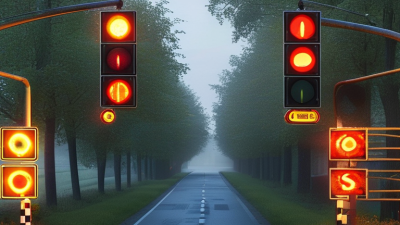
2026 Best Traffic Signal and Road Sign Manufacturers? — What Are Traffic Signal and Road Sign Manufacturers?

Manufacturers in this sector produce traffic signal equipment, regulatory signs, warning signs, guide signs, sign sheeting, signal housings, poles, controllers, and related roadway hardware. The chart below uses an objective procurement benchmark rather than company or brand data.

Benchmark: Minimum standard STOP sign face sizes vary by roadway context in the United States: 30 inches for conventional roads, 36 inches for expressways, and 48 inches for freeways. These dimensions are specified in the FHWA Manual on Uniform Traffic Control Devices, Table 2B-1.

How to Evaluate Traffic Signal and Road Sign Manufacturers in 2026

How to Evaluate Traffic Signal and Road Sign Manufacturers in 2026

Reliable evaluation starts with public safety, not catalog brightness. The WHO Global Status Report on Road Safety 2023 records about 1.19 million annual road deaths worldwide. That figure makes weak testing unacceptable. Ask manufacturers for laboratory photometric reports, temperature-cycle results, corrosion data, and ingress protection certificates. Check whether signals and signs meet applicable standards, such as EN 12966, MUTCD requirements, or regional equivalents. A certificate alone is not enough. Review its scope and testing date.

Field performance matters more than polished samples. Request installation references from similar climates and traffic volumes. Examine LED visibility at dawn, during rain, and under direct sunlight. For controllers, check communication standards, fail-safe functions, firmware support, and cybersecurity procedures. The U.S. Federal Highway Administration’s 2023 National Traffic Signal Report highlights the importance of consistent signal operations and maintenance planning. Ask for measured failure rates, spare-part availability, and average repair time. Some suppliers avoid these questions. That is a warning.

Tips: Build a weighted scorecard before requesting quotations. Give safety testing, lifecycle cost, service response, and accessibility equal attention. Compare energy use over ten years, not only purchase price. Inspect one live installation if possible. I would not trust a perfect proposal without uncomfortable details, including failed tests and replacement history. The evaluation may feel slower, but rushed procurement creates expensive blind spots.

2026 Best Traffic Signal and Road Signs Manufacturers? - How to Evaluate Traffic Signal and Road Sign Manufacturers in 2026

A practical, standards-based evaluation framework for comparing traffic signal and road sign manufacturers in 2026. The weighted criteria can be adapted to local regulations, project size, climate, and procurement requirements.

Evaluation Dimension Applicable Product Area Recommended Weight Evidence to Request Minimum Benchmark for a Strong Candidate How to Score
Regulatory and Standards Compliance Traffic signals and road signs 18% Declarations of conformity, test reports, technical files, and documentation showing compliance with the standards required in the target market. Products are demonstrably compliant with the applicable national or regional requirements, such as MUTCD requirements in the United States or relevant EN standards in European projects. 5 = Complete, current, independently verifiable documentation; 3 = Partial documentation; 1 = Unsupported claims.
Optical Performance and Visibility Signal heads, LED modules, illuminated signs, reflective signs 15% Photometric test reports, viewing-angle data, color coordinates, luminance or intensity results, and nighttime visibility data. Performance is tested under the project’s required photometric and color specifications, with stable visibility across the stated viewing angles and operating temperatures. 5 = Verified performance with complete test data; 3 = Basic data only; 1 = Marketing claims without measurements.
Electrical and Surge Protection LED traffic signals, controllers, power supplies, variable-message signs 12% Electrical safety reports, operating-voltage range, power-consumption data, surge-protection design, grounding instructions, and failure-mode information. The product is suitable for the local power system and includes documented protection against electrical transients and common utility disturbances. 5 = Tested protection and clear installation requirements; 3 = Basic protection stated; 1 = No technical evidence.
Environmental Durability Outdoor signal and sign equipment 12% Ingress-protection rating, corrosion-resistance testing, temperature range, humidity testing, UV-resistance data, and material specifications. The enclosure and materials are matched to the project climate, with an appropriate IP rating under IEC 60529 and documented resistance to corrosion, heat, cold, moisture, and sunlight. 5 = Climate-specific validation; 3 = General outdoor rating; 1 = Indoor-grade or undocumented construction.
Mechanical Quality and Safety Signal housings, poles, brackets, sign panels, mounting systems 10% Material certificates, wind-load calculations, vibration testing, impact testing, fastening details, and installation drawings. Structural design is appropriate for local wind, vibration, impact, and mounting conditions, with replaceable components and safe access for maintenance. 5 = Complete engineering validation; 3 = Standard design with limited calculations; 1 = Inadequate structural evidence.
Reliability and Service Life All product categories 10% Warranty terms, mean-time or failure-rate information where available, burn-in procedures, quality-control records, and field-performance references. The manufacturer provides a clearly defined warranty, traceable quality controls, replaceable parts, and realistic service-life expectations supported by records. 5 = Strong traceability and field evidence; 3 = Standard warranty only; 1 = Unclear service support.
Interoperability and Control Compatibility Traffic signals, controllers, detection systems, communication-enabled signs 8% Interface specifications, wiring diagrams, communication protocols, controller compatibility lists, configuration manuals, and cybersecurity documentation for connected equipment. Equipment integrates with the project’s existing controller, detection, monitoring, and power systems without proprietary lock-in or undocumented interfaces. 5 = Open, documented, tested integration; 3 = Integration possible with additional engineering; 1 = Proprietary or unclear interface.
Manufacturing Quality Management All product categories 7% Quality-management certificates, incoming-material controls, production inspection records, calibration records, nonconformance procedures, and lot traceability. The production system is managed under a documented quality process, preferably including certification to ISO 9001 or an equivalent independently audited system. 5 = Audited system with strong traceability; 3 = Documented internal controls; 1 = Informal or unverified controls.
Customization and Engineering Support Project-specific signal and sign systems 5% Approved drawings, photometric layouts, mounting options, language or symbol variations, local engineering support, and sample-development procedures. The supplier can adapt dimensions, optics, mounting, legends, symbols, power requirements, and documentation without compromising compliance. 5 = Proven engineering capability; 3 = Limited customization; 1 = Catalog-only supply.
Delivery Capacity and Supply Continuity Large-scale infrastructure projects 5% Production capacity, lead-time history, inventory policy, component-sourcing plan, approved substitutions, and business-continuity procedures. The manufacturer can meet the project schedule, identify critical components, communicate supply risks, and maintain consistent specifications across production lots. 5 = Proven capacity and contingency planning; 3 = Adequate capacity with moderate risk; 1 = Unclear schedule or sourcing.
Lifecycle Cost and Energy Efficiency LED signals, illuminated signs, and networked equipment 4% Purchase price, energy consumption, maintenance intervals, spare-part pricing, replacement procedures, disposal requirements, and total-cost-of-ownership estimates. The proposal compares acquisition, energy, maintenance, replacement, and disposal costs over the planned service period rather than relying only on the lowest purchase price. 5 = Transparent lifecycle model; 3 = Purchase price and basic energy data; 1 = No cost-of-ownership information.
After-Sales Support and Training All product categories 4% Installation manuals, commissioning procedures, training plans, response-time commitments, spare-parts availability, repair facilities, and technical support contacts. The supplier provides clear documentation, local or regional technical support, accessible spare parts, and defined response times for warranty and operational issues. 5 = Structured support program; 3 = Standard documentation and remote support; 1 = Limited post-sale assistance.
Suggested decision rule: Assign each dimension a score from 1 to 5, multiply the score by the recommended weight, and compare the weighted totals. Before awarding a contract, verify all mandatory legal, safety, optical, electrical, and environmental requirements independently; a high commercial score should not compensate for non-compliance.

Leading Traffic Signal Manufacturers and Their Product Categories

2026 Best Traffic Signal and Road Signs Manufacturers?

Leading traffic signal manufacturers now serve complete roadway systems, not only red, yellow, and green lamps. Their product categories commonly include LED signal heads, pedestrian indicators, countdown timers, traffic controllers, detection sensors, and mounting hardware. Reliable suppliers provide clear specifications, testing records, and installation guidance. That evidence matters more than polished catalog images.

Signal heads are designed for strong visibility in rain, glare, and winter haze. Controllers coordinate timing, detection inputs, emergency settings, and communication networks. Pedestrian products often include audible guidance, tactile buttons, and high-contrast displays. Road sign manufacturers add regulatory, warning, guide, and variable-message signs. Reflective sheeting, aluminum strength, and message clarity deserve careful inspection.

Experienced buyers should compare optical performance, power use, service access, warranty terms, and spare-part availability. A cabinet that looks compact may become difficult to maintain beside a busy intersection. Field trials can reveal problems that laboratory sheets miss. No catalog is perfect. Even experienced teams sometimes overlook connector quality or heat management. Manufacturers with traceable production controls and responsive technical support usually reduce those risks. Site geometry, climate, traffic volume, and maintenance skills should shape the final product category and specification.

Top Road Sign Manufacturers and Their Key Solutions

Choosing the best road sign manufacturer in 2026 requires more than comparing catalog prices. In field reviews, durable signs usually begin with clear engineering data, not attractive samples. Manufacturers should provide aluminum thickness, coating type, reflective performance, mounting details, and test records. Their signs must remain readable at dawn, in rain, and under dirty headlamps. A sign that looks bright in a showroom may perform poorly beside a busy highway. That difference matters.

Leading manufacturers now offer complete sign systems rather than printed panels alone. Common solutions include high-intensity reflective signs, overhead direction boards, temporary work-zone signs, and electronic message displays. Some also supply posts, brackets, foundations, and installation drawings. This reduces coordination errors on site. Good suppliers adapt legends, fonts, colors, and sizes to local road authority rules. They should also explain maintenance intervals and replacement procedures in plain language. Technical support matters.

Procurement teams should inspect sample panels, verify production quality, and request independent photometric results. They can check edge sealing, corner strength, fastener corrosion, and nighttime visibility. A practical factory audit may reveal more than a polished presentation. No supplier is perfect. I have seen excellent reflective film paired with weak brackets, creating an avoidable failure point. Another overlooked issue is spare-part availability after installation. Reliable manufacturers document batch numbers and respond quickly when field conditions expose design weaknesses. That openness builds trust better than confident promises.

How to Choose the Right Manufacturer for Your Project

2026 Best Traffic Signal and Road Signs Manufacturers?

How to Choose the Right Manufacturer for Your Project

Choosing a traffic signal and road sign manufacturer requires more than comparing prices. Start with the project environment. A coastal road needs corrosion-resistant materials, sealed electrical housings, and durable reflective sheeting. A busy intersection may require precise signal timing, high-visibility lenses, and cabinets that technicians can access safely.

Ask for evidence, not promises. Reliable manufacturers should provide material specifications, photometric test results, factory quality records, and clear compliance documentation. Their engineers should understand local traffic conditions, installation limits, and maintenance routines. Request samples before approving large quantities. Check the sign’s color under rain, dust, and nighttime headlights. Small differences can affect driver recognition.

Experience matters on site. Review completed projects with similar traffic volume and weather exposure. Ask how defects are handled, how replacement parts are supplied, and whether technical support continues after installation. A firm warranty is useful, but response time may matter more. Get delivery schedules in writing, including inspection and packaging details.

No checklist is perfect. Project assumptions often change. I have seen specifications overlook cleaning access or cable routing, creating avoidable maintenance problems. Leave room for an engineering review before production. The best manufacturer is not always the cheapest or largest. It is the one that documents its work, challenges weak assumptions, and delivers equipment suited to real road conditions.