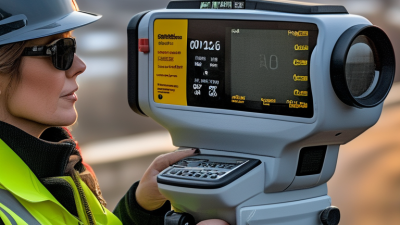
Why Choose a Speed Detector for Accurate Traffic Monitoring?
Why Choose a Speed Detector for Accurate Traffic Monitoring?
Road safety depends on trustworthy speed information, not assumptions made from roadside impressions. The World Health Organization’s Global Status Report on Road Safety 2023 estimates that approximately 1.19 million people die in road crashes each year. Speed remains a major contributing factor.
The evidence is concrete. The U.S. National Highway Traffic Safety Administration reported 12,330 speeding-related deaths in 2022, representing about 29% of all traffic fatalities. A properly installed Speed Detector can record vehicle speeds continuously, identify changing traffic patterns, and support safer road engineering decisions. It can also provide data near schools, work zones, intersections, and busy urban corridors.
Professor Rune Elvik, a leading transport-safety researcher, stated, “Speed is the most important factor determining the severity of road crashes.” His research supports careful speed measurement, rather than relying only on driver surveys or occasional manual checks.
Accuracy matters.
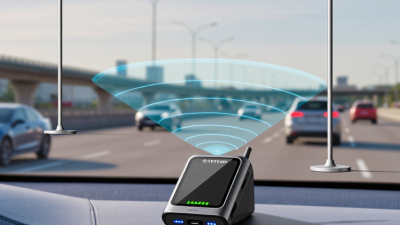
A modern Speed Detector can use radar, lidar, or video analytics to measure speed within seconds. Picture a roadside unit tracking vehicles during rain, darkness, and morning congestion. Its value depends on calibration, installation angle, maintenance, and transparent data handling. No detector is perfect.
That limitation deserves attention. Poor placement can create misleading readings. Weather may affect some technologies. Operators must review unusual results instead of trusting every number automatically. Even so, reliable speed data helps transport agencies evaluate risk, improve road design, and measure whether safety changes are working. For decision-makers seeking evidence-based traffic monitoring, a verified Speed Detector offers practical insight with measurable value.
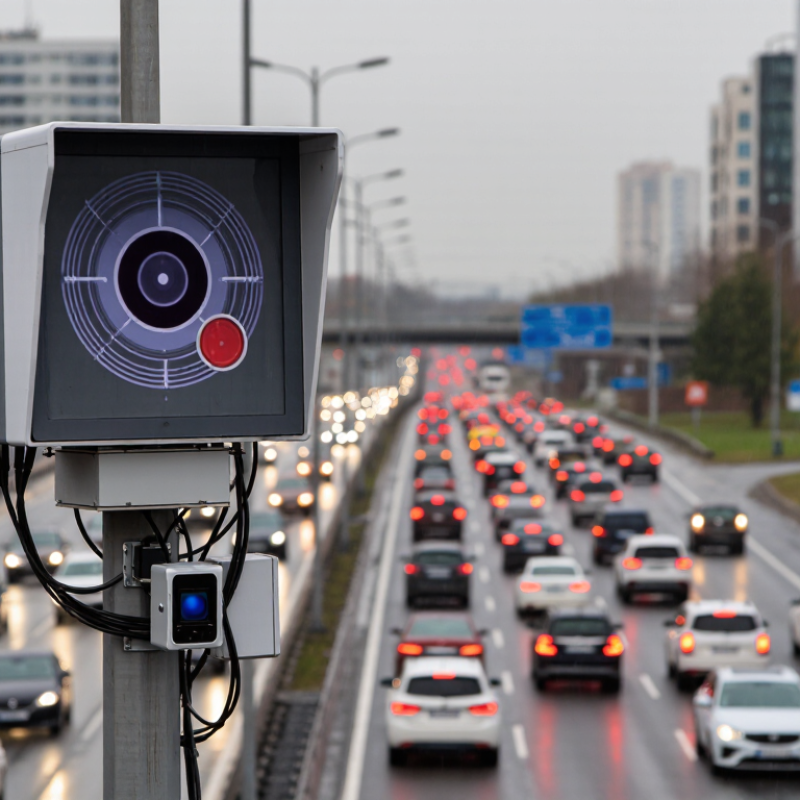
What Is a Speed Detector and How Does It Work?
A speed detector is an electronic device that measures how quickly a vehicle travels. It supports traffic monitoring by producing consistent data at busy roads, school zones, and work areas. Most systems use radar, lidar, or road sensors. Radar sends electromagnetic waves toward a vehicle and reads the frequency change in the returning signal. This change is called the Doppler effect. Lidar uses short light pulses and calculates speed from changing distance. Road sensors measure the time a vehicle needs to pass between two fixed points.
The result appears almost instantly. A processor can record speed, direction, vehicle count, and time of day. In practical traffic surveys, this information helps engineers identify repeated speeding patterns rather than relying on occasional visual checks. Placement matters greatly. A detector needs a clear view, stable mounting, and proper calibration. Rain, fog, sharp angles, and nearby moving objects may reduce accuracy. Small errors matter. Regular testing against a certified reference device improves reliability. Operators should also review unusual readings instead of accepting every number automatically. A detector may report a fast object near a vehicle, or a poor installation may distort results. Clear procedures, trained staff, and protected records make the data more useful for fair traffic decisions.
Why Choose a Speed Detector for Accurate Traffic Monitoring? - What Is a Speed Detector and How Does It Work?
| Detector Type |
Operating Principle |
Typical Measurement Range |
Typical Accuracy |
Best Traffic-Monitoring Use |
Main Limitation |
| Doppler radar |
Measures the frequency shift of radio waves reflected by moving vehicles. |
Approximately 10–300 km/h, depending on sensor design and installation. |
Often about ±1–3 km/h in controlled installations. |
Continuous speed monitoring across one or more lanes, including low-light conditions. |
Reflections from nearby objects and poor alignment can affect readings. |
| LiDAR |
Calculates distance changes using timed laser pulses reflected from vehicles. |
Commonly about 5–200 m detection distance; speed range depends on the system. |
Can achieve approximately ±1–2 km/h under suitable conditions. |
Target-specific measurements where lane discrimination and precise positioning are important. |
Heavy rain, fog, dust, or blocked optical paths may reduce performance. |
| Inductive loop |
Detects changes in magnetic inductance caused by metal vehicles passing over embedded loops. |
Vehicle presence and speed are measured at fixed road locations. |
Typically about ±3–5% when loops are correctly installed and calibrated. |
Reliable lane-by-lane counting, occupancy measurement, and signal-control systems. |
Requires pavement cutting and may be damaged by resurfacing or road repairs. |
| Video-based detection |
Uses cameras and image-processing software to track vehicles across video frames. |
Usually covers a monitored camera field of view rather than a fixed physical zone. |
Commonly about ±3–10%, depending on calibration, image quality, and traffic conditions. |
Vehicle classification, lane occupancy, incident detection, and multi-lane monitoring. |
Glare, shadows, darkness, rain, occlusion, and poor camera angles can reduce accuracy. |
| Pneumatic road tube |
Records air-pressure pulses when vehicle tires cross flexible tubes placed on the road. |
Temporary surveys typically covering speeds from about 10–160 km/h. |
Often about ±3–5% when tube spacing and installation are correct. |
Short-term traffic studies, speed distribution surveys, and vehicle classification. |
Tubes can wear, shift, or be damaged by heavy traffic and harsh weather. |
| Ultrasonic sensor |
Uses reflected sound waves to detect vehicle presence and changes in distance. |
Generally suited to short-range monitoring, often within approximately 5–15 m. |
Accuracy varies significantly with mounting height, temperature, and vehicle position. |
Short-range occupancy detection and vehicle presence monitoring. |
Wind, temperature changes, and irregular vehicle surfaces can influence readings. |
Note: The figures shown are representative industry ranges rather than guaranteed specifications. Actual performance depends on sensor design, installation geometry, calibration, lane configuration, weather, traffic density, and local measurement requirements.
Which Technologies Enable Accurate Vehicle Speed Measurement?
Accurate vehicle speed measurement depends on how a sensor observes motion. Doppler radar estimates speed from the frequency shift of reflected radio waves. It works well across multiple lanes, but nearby vehicles can complicate target selection. Laser-based lidar measures changing distance over time. Its narrow beam helps isolate a vehicle, though rain, dust, or poor alignment can weaken readings. Inductive loops, installed beneath the road, infer speed from vehicle detection at two points. They can be consistent, but pavement work is required.
Different tools fit different roads. Radar can monitor a broad approach; lidar suits a defined lane or checkpoint; loops provide fixed-point measurements. A camera may pair with radar or lidar to connect a reading with a vehicle image. That pairing matters when traffic is dense. Still, installation geometry and routine calibration matter as much as the sensor itself. No sensor is magic.
For a useful benchmark, the National Institute of Standards and Technology’s 2024 Handbook 44 lists acceptance tolerances for speed-measuring devices: ±1 mph below 10 mph and ±2 mph at 10 mph or above. These are U.S. metrology limits, not a guarantee of field performance. FHWA’s Traffic Detector Handbook also describes how road-surface detectors depend on installation and maintenance. In practice, operators should check readings against a traceable reference and document weather, lane position, and calibration. Small details count. A missed alignment check can quietly distort results.
How Do Speed Detectors Improve Traffic Monitoring Accuracy?
Speed detectors improve traffic monitoring by turning passing vehicles into measurable data. A roadside radar unit can record each vehicle’s speed, direction, and time of passage. Some systems also use lidar or video analysis. When readings are collected consistently, traffic teams can spot patterns that a brief roadside observation may miss. For example, repeated high speeds near a school crossing during the morning commute may point to a specific time and location for closer review.
Reliable results depend on careful setup. The detector should be positioned to reduce interference from nearby lanes, signs, or large vehicles. Regular checks help reveal faulty alignment or unusual readings. Short test runs can compare device data with visible traffic conditions. Small errors matter. A reading distorted by a truck in the next lane could lead to a misleading speed profile. Data should therefore be reviewed alongside weather, road layout, and traffic volume, rather than treated as unquestionable.
Good monitoring also depends on how results are interpreted. A single high reading does not describe everyday driving behavior. Several days of records may show whether speeding is occasional or persistent. Yet even longer records have limits: construction, holidays, or a changed signal pattern can alter traffic. Detectors make observation more precise, but people still need to ask what the numbers leave out.
What Factors Affect Speed Detector Performance and Reliability?
Why Choose a Speed Detector for Accurate Traffic Monitoring?
A speed detector is only as dependable as its setup and surroundings. Radar units need a clear view of passing vehicles; roadside clutter, sharp approach angles, and overlapping lanes can distort readings.
Pavement sensors face different challenges: worn surfaces, poor installation, or damaged cables can produce missed or inconsistent measurements. Rain, spray, and temperature shifts may also affect some technologies more than others.
The details matter. FHWA’s Traffic Monitoring Guide (2016) identifies accuracy, completeness, validity, and timeliness as key dimensions of traffic-data quality.
A detector that reports quickly but overlooks vehicles is not giving a full picture.
Calibration and placement deserve regular attention. A small alignment error can become more noticeable when vehicles cross several lanes or travel at different angles. Teams should compare detector readings with a trusted reference, inspect mounting points, and record maintenance and weather conditions.
This takes time. Still, it helps separate equipment faults from real changes in traffic.
The World Health Organization’s Global Status Report on Road Safety 2023 notes that each 1% rise in mean speed is associated with a 4% increase in fatal-crash risk.
That finding makes reliable speed data important for monitoring, though a detector alone cannot explain why speeds change.
Local testing may reveal weaknesses that a clean installation plan missed.
Where Are Speed Detectors Used in Modern Traffic Management?
Speed detectors are used across modern traffic networks, not only beside busy highways. Urban road agencies place them near intersections, school zones, tunnels, and pedestrian crossings. These devices measure vehicle speed and traffic volume in real time. The information helps engineers adjust signal timing and identify roads with recurring congestion.
Highway operators use speed detectors to support variable speed signs and incident management. A sudden speed drop can reveal a crash, stalled vehicle, or blocked lane. Rural roads also benefit, especially where long distances make manual observation difficult. In work zones, detectors provide live data for safer lane planning and clearer warnings. Small details matter here.
Speed data can guide road design and maintenance decisions. Engineers may compare measurements from different hours, weather conditions, and traffic directions. However, one reading should not decide a policy. Rain, shadows, heavy vehicles, and poor sensor alignment can affect accuracy. That assumption is too simple. Reliable systems need regular calibration, clear installation records, and careful human review. Data should also be handled responsibly, with attention to privacy and local requirements. A speed detector is useful, but it is not perfect.
Why Choose a Speed Detector for Accurate Traffic Monitoring?
Speed detectors support non-intrusive monitoring on roads, at intersections, and in work zones. This chart shows commonly used U.S. traffic-radar frequency bands; the Ka-band value is a representative frequency, and actual assignments vary by jurisdiction.
Higher frequency does not by itself mean more accurate speed measurement. Accuracy depends on the detector, installation, calibration, and operating conditions.