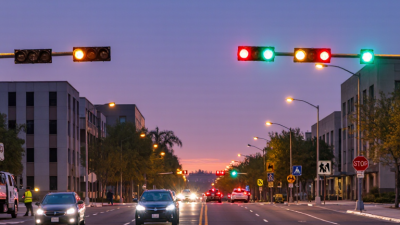
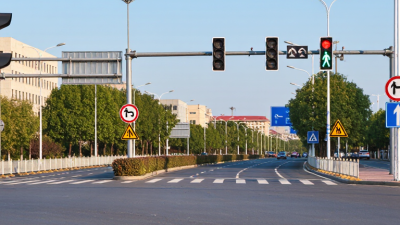
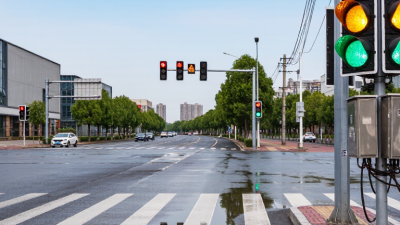
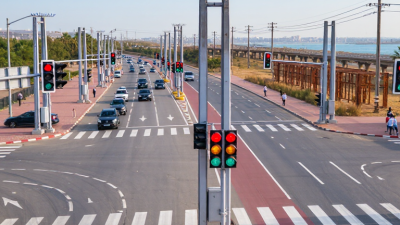
Buying traffic equipment across borders requires more than comparing prices and product photos. Traffic Signal And Road Signs systems must suit local road layouts, climate conditions, driver behavior, and installation standards. A signal designed for a dry urban corridor may perform poorly beside a coastal highway. Small details matter, including lens visibility, sign reflection, controller compatibility, mounting hardware, and cable protection.
This guide, “10 Traffic Signal And Road Signs Tips For Global Buyers,” offers practical advice for evaluating suppliers and specifications. It focuses on product quality, documented testing, customization, delivery planning, and long-term maintenance. Experienced buyers should request clear datasheets, sample images, warranty terms, inspection records, and replacement-part information. Ask difficult questions.
Reliable suppliers should explain performance under heat, rain, dust, vibration, and strong sunlight. They should also identify applicable technical standards without making vague compliance claims. A red signal must remain clearly visible at a busy intersection, even through glare or heavy rain. A road sign should stay readable after years of exposure, not only during factory inspection.
However, no purchasing guide can remove every uncertainty. Product samples may not represent full production quality. Shipping damage, installation errors, or unclear local requirements can still create problems. Buyers should verify critical details with qualified traffic engineers and local authorities. Careful planning reduces expensive surprises. It also protects road users.
The following tips help global buyers compare offers with greater confidence, document decisions, and select equipment that performs reliably in real-world conditions.
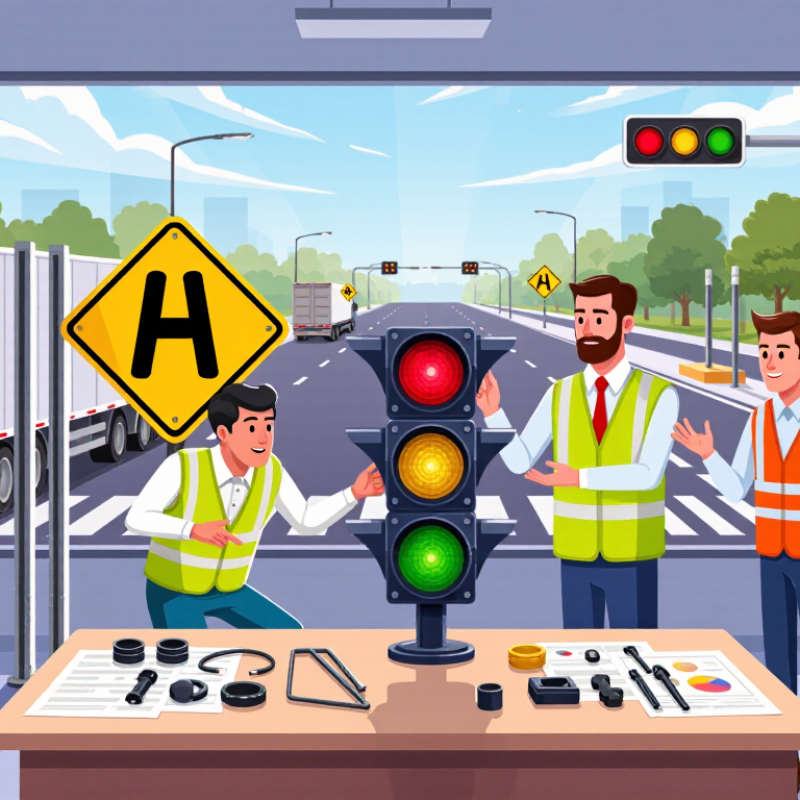
Traffic signals are not universal, even when their colors look familiar. Fixed-time signals suit predictable traffic, while vehicle-actuated signals respond to changing demand. Adaptive systems adjust cycles through live traffic data, but they need reliable detection and maintenance. Pedestrian signals require clear walking symbols, audible guidance, and enough crossing time. Flashing beacons can improve attention at crossings, yet poor placement may confuse drivers. Check local meanings before selecting equipment.
Road signs also vary in shape, wording, color, and mounting height. Regulatory signs control movement, warning signs highlight hazards, and guide signs support navigation. The FHWA Manual on Uniform Traffic Control Devices, 11th Edition, published in 2023, emphasizes consistent placement, legibility, and visibility. Buyers should compare these principles with the destination country’s standards. Do not assume one design fits every market.
Visibility matters after sunset. Retroreflective sheeting, LED intensity, viewing angle, and weather resistance should be tested together. The World Health Organization reported about 1.19 million annual road deaths in its Global Status Report on Road Safety 2023. That figure makes small design choices important. Specify operating temperatures, ingress protection, power backup, and spare-part access. Field teams often discover that a technically excellent signal fails because maintenance training was overlooked. That is an uncomfortable, but useful, lesson.

Road safety needs vary significantly by region. This chart shows estimated road traffic death rates per 100,000 population in 2021 across WHO regions, highlighting why traffic signals, pedestrian phases, warning signs, and speed-control measures must be adapted to local risk conditions.
Source: World Health Organization, Global Status Report on Road Safety 2023. Values represent estimated road traffic fatalities per 100,000 population in 2021.
10 Traffic Signal And Road Signs Tips For Global Buyers
Identifying Road Sign Categories, Symbols, and Regulatory Meanings
Road signs usually fall into regulatory, warning, guide, pedestrian, and temporary work-zone categories. Each category serves a different decision point. Regulatory signs control movement. Stop, yield, speed-limit, no-entry, and lane-control signs create enforceable instructions. Warning signs alert drivers to curves, crossings, narrow lanes, or changing road conditions. Guide signs provide destinations, distances, and route information.
Symbols may look familiar, but their meanings can shift between countries. A red circle often restricts an action, while a triangle commonly warns of danger. Shape and color are not enough. Check the legend, local language, arrow direction, and installation height. A pedestrian icon should remain clear at night. Small details matter. A reversed arrow can create a serious misunderstanding.
Global buyers should request official specifications, drawings, material data, and test records before placing large orders. Review retroreflective performance, UV resistance, corrosion protection, printing accuracy, and edge finishing. Compare a physical sample under daylight and vehicle headlights. A bright sign is not automatically a compliant sign. Local road authorities may require different dimensions, symbols, or mounting systems. Never rely only on a supplier’s catalog.
A neat color chart can still mislead. I would also check how drivers read the sign from a distance, not only how it looks nearby. Translation errors deserve careful review. One missing word may change a command into a suggestion. Keep records of approvals, revisions, and inspection results for every shipment.
Global buyers should compare traffic signs by performance, not appearance alone. Road symbols, colors, and sign shapes vary between regions, even when they communicate similar warnings. Some countries follow international conventions, while others apply national road manuals. Confirm the destination authority’s requirements before ordering. A familiar design may still fail local inspection.
Material choice affects service life. Aluminum resists corrosion and remains lightweight, while galvanized steel offers stronger support in harsh conditions. Polycarbonate can reduce weight, but heat and impact testing remain essential. Reflective sheeting should maintain brightness after dust, rain, ultraviolet exposure, and repeated cleaning. Ask for laboratory results, coating specifications, and sample panels. Small details matter.
Visibility needs testing at night, in rain, and from different approach angles. Retroreflectivity should match the local performance class, not merely appear bright in daylight. Check color coordinates, luminance, viewing distance, mounting height, and sign size together. In coastal areas, salt resistance deserves extra attention. In snowy regions, raised edges can collect ice. I have seen attractive signs lose clarity after one severe season. A lower price can look efficient, but replacement work may cost more. No comparison is perfect. Field trials are still valuable. Also review maintenance access, replacement schedules, and installation hardware before approving a shipment. 马会
10 Traffic Signal And Road Signs Tips For Global Buyers
Evaluating Safety Features, Durability, and Environmental Performance
Traffic signals and road signs must remain readable during rain, dust, glare, and power interruptions. Buyers should check optical clarity, viewing distance, and color consistency before purchasing. Retroreflective materials should return light clearly from different angles. Test them with a vehicle headlamp at night. Poor contrast creates real confusion.
Look for impact-resistant sign faces and corrosion-protected frames. Galvanized steel and treated aluminum often perform well in coastal areas. Ask for salt-spray, UV-aging, vibration, and temperature-cycle test records. Signal housings should resist water and dust, with suitable ingress protection for the installation site. Confirm that LED modules maintain brightness without excessive heat. Check lens replacement, wiring access, and spare-part availability. Maintenance details matter.
I have seen small mounting failures become expensive roadside repairs. No checklist is perfect. Local engineers should still inspect samples under actual weather conditions. Review power consumption, standby demand, and expected service life. Lower energy use can reduce operating emissions, especially across large networks. Also examine recycled content, repairability, packaging, and end-of-life recycling options. A product may look sustainable while requiring frequent replacement. Ask for measurable environmental data, not broad promises. Verify certifications, factory quality controls, and installation guidance through independent documentation. Local road authorities may require additional testing, dimensions, or performance levels.
| No. | Evaluation Tip | Safety Feature to Check | Measurable Criteria or Benchmark | Durability and Testing Evidence | Environmental Performance | Buyer Verification |
|---|---|---|---|---|---|---|
| 1 | Confirm regulatory compliance | Signal colors, sign layout, symbols, dimensions, mounting height, and installation compatibility must match the destination country. | Require compliance with the applicable national road authority rules. Common reference frameworks include traffic-control-device manuals, EN 12899 for fixed vertical road signs, and applicable electrical safety standards. | Request a technical file, conformity declaration where applicable, test reports, drawings, and installation instructions. | Check whether materials and coatings are approved for the local climate and disposal requirements. | Use an independent inspection agency or a qualified local engineer before shipment. |
| 2 | Evaluate visibility in all conditions | Uniform light output, correct color recognition, legible symbols, and adequate contrast during daylight, darkness, rain, fog, and glare. | For signs, verify retroreflective sheeting classification and photometric performance under the applicable ASTM, EN, or national specification. For signals, verify measured luminous intensity and color coordinates against the destination standard. | Check photometric test reports, nighttime photographs, uniformity measurements, and a sample viewed at the intended distance and angle. | Select optics that provide the required visibility without excessive upward light spill or unnecessary power consumption. | Conduct day/night field trials in representative weather conditions. |
| 3 | Check LED and optical reliability | Redundant LED circuits, fail-safe behavior, low-voltage monitoring, stable color output, and visible failure indication. | Prefer products with documented lumen-maintenance data such as an L70 life claim, supported by thermal measurements and recognized LED reliability testing. Do not accept lifetime claims without test conditions. | Review thermal-management design, driver test results, accelerated aging data, and replacement-part availability. | Efficient LEDs and replaceable drivers can reduce energy use and extend the service life of the complete housing. | Compare measured power, temperature rise, and light output from production samples. |
| 4 | Assess weather and water protection | Sealed housing, protected cable entries, drainage, anti-condensation measures, and corrosion-resistant fasteners. | Specify the required IP rating under IEC 60529. IP65 indicates dust-tight protection and protection against water jets; the correct rating depends on the installation location. | Request ingress-test reports, gasket specifications, enclosure material data, and evidence of repeated opening and closing without seal damage. | Use durable recyclable metals or engineered polymers and avoid designs that trap water or require frequent chemical cleaning. | Inspect seals, vents, drainage points, and cable glands on randomly selected units. |
| 5 | Measure mechanical strength | Impact-resistant lenses, secure mounting brackets, vibration-resistant fasteners, and protection against vandalism. | Where relevant, use IEC 62262 IK ratings for impact protection; IK08 represents protection against a 5-joule impact and IK10 represents a 20-joule impact. The required level depends on risk location. | Check impact, vibration, wind-load, torque, and mounting-load test results. Verify that lenses remain secure after testing. | A robust, repairable housing can reduce replacement frequency, material use, and transport-related emissions. | Perform sample impact and fastener inspections using documented acceptance criteria. |
| 6 | Verify temperature performance | Stable operation in the actual local temperature range, including direct solar heating and cold starts. | Specify an operating range based on the site survey. A procurement range such as −40 °C to +70 °C may be appropriate for some outdoor applications, but it must be confirmed by the product test report. | Request high/low-temperature, thermal cycling, condensation, and start-up test results. | Efficient thermal design reduces cooling requirements and helps maintain LED life and power efficiency. | Test energized samples in an environmental chamber or equivalent controlled setup. |
| 7 | Inspect corrosion resistance | Suitable aluminum, galvanized steel, stainless steel, powder coating, or other protective systems for coastal, industrial, and winter-salt environments. | Specify coating thickness, material grade, edge protection, and the applicable salt-spray or cyclic-corrosion test method. Test duration alone does not predict real-world life. | Review coating adhesion, surface preparation, fastener compatibility, and corrosion-test records. | Longer coating life reduces repainting, replacement materials, maintenance travel, and waste. | Examine cut edges, welds, joints, drainage areas, and dissimilar-metal contact points. |
| 8 | Compare energy efficiency | Low standby power, efficient LED modules, automatic dimming where permitted, and compatible control interfaces. | Compare measured watts per signal head or sign at the required brightness. For AC equipment, power factor of 0.90 or higher is a useful procurement target when compatible with local requirements. | Require power-consumption data at minimum, normal, and maximum operating conditions and verify driver efficiency. | Calculate annual energy use from operating hours, dimming schedules, voltage, and local electricity mix. | Use a calibrated power meter during factory acceptance testing. |
| 9 | Check electrical and EMC safety | Overvoltage, surge, short-circuit, polarity, grounding, insulation, and electromagnetic-compatibility protection. | Specify the applicable IEC or national electrical-safety and EMC requirements. Include surge protection sized for the local utility and lightning exposure. | Request dielectric-strength, insulation-resistance, earth-continuity, surge, conducted-emission, and radiated-emission test results. | A protected, serviceable power supply reduces premature electronic waste and emergency replacements. | Verify certificates, wiring diagrams, protective-device ratings, and random electrical samples. |
| 10 | Plan lifecycle maintenance | Modular components, accessible terminals, replaceable lenses or drivers, fault diagnostics, spare parts, and clear maintenance procedures. | Evaluate total cost of ownership over the planned service period, including energy, inspections, cleaning, replacement parts, labor, transport, and end-of-life handling. | Require a minimum spare-parts plan, repair instructions, warranty terms, mean-time-to-repair estimate, and documented service intervals. | Prefer designs that can be repaired, upgraded, disassembled, and recycled instead of replacing the complete assembly. | Score suppliers using lifecycle cost, repairability, material declarations, and end-of-life instructions. |
Procurement note: All ratings, operating ranges, and performance targets should be matched to the destination country’s road authority requirements, electrical regulations, climate, traffic speed, mounting location, and maintenance conditions.
Global buyers should treat traffic equipment as safety infrastructure, not ordinary electrical merchandise.
The WHO Global Status Report on Road Safety 2023 records about 1.19 million road deaths each year. That figure makes supplier verification practical, not ceremonial. Request factory test records, component traceability, and recent project references from similar climates. Ask who tested the controller. Ask again. A polished catalogue proves little.
Check conformity against destination rules and procurement documents. Signal heads may need EN 12368 performance evidence, while controllers may require EN 12675 alignment. Road signs often depend on retroreflective performance under EN 12899 or local equivalents. ISO 9001 supports process control, but it does not certify product safety alone. Electrical and electromagnetic testing should match local requirements, including ingress protection, surge resistance, and night visibility. Certificate scope matters more than its logo.
Installation support separates usable equipment from expensive roadside inventory. Require wiring diagrams, mounting tolerances, cabinet layouts, commissioning checklists, and technician training. World Bank road safety management guidance emphasizes institutional capacity and reliable data, not hardware alone. Suppliers should provide spare-part lists and response times before shipment. A site survey should record pole height, lane geometry, voltage, drainage, and seasonal weather. Manuals can be vague. Challenge them with photos and fault scenarios. Do not assume remote support is enough when a cabinet fails during rain. Warranty terms should define labor, travel, replacement units, and escalation. That detail feels slow, yet it prevents hurried decisions.