inquiry
Leave Your Message

Top Solar Traffic Signal Light Manufacturers in China?

China’s solar traffic signal manufacturers serve roads, construction sites, campuses, and remote junctions. Their products combine signal heads, photovoltaic panels, batteries, controllers, and mounting hardware. Yet a polished catalogue does not prove dependable performance. Buyers should examine operating time after cloudy days, battery capacity, LED visibility, enclosure quality, and maintenance access.

“Reliable signals are tested at dawn, not just displayed at noon,” says solar traffic systems engineer Wei Chen. That practical reminder matters. A panel may look impressive under bright showroom lights, while a poorly matched battery struggles through a long, overcast night. The details count.

This guide to top Solar Traffic Signal Light manufacturers in China focuses on what procurement teams can verify: product range, documented specifications, quality-control processes, customization options, and export experience. It also considers whether suppliers explain testing clearly and provide useful technical support. Rankings alone can mislead; product fit depends on location, traffic conditions, and installation needs. Some comparisons remain imperfect, because public information varies between manufacturers. That deserves scrutiny, not guesswork. A careful shortlist starts with evidence, clear questions, and realistic expectations about performance in the field.
Top Solar Traffic Signal Light Manufacturers in China?

What Solar Traffic Signal Lights Are and How They Work

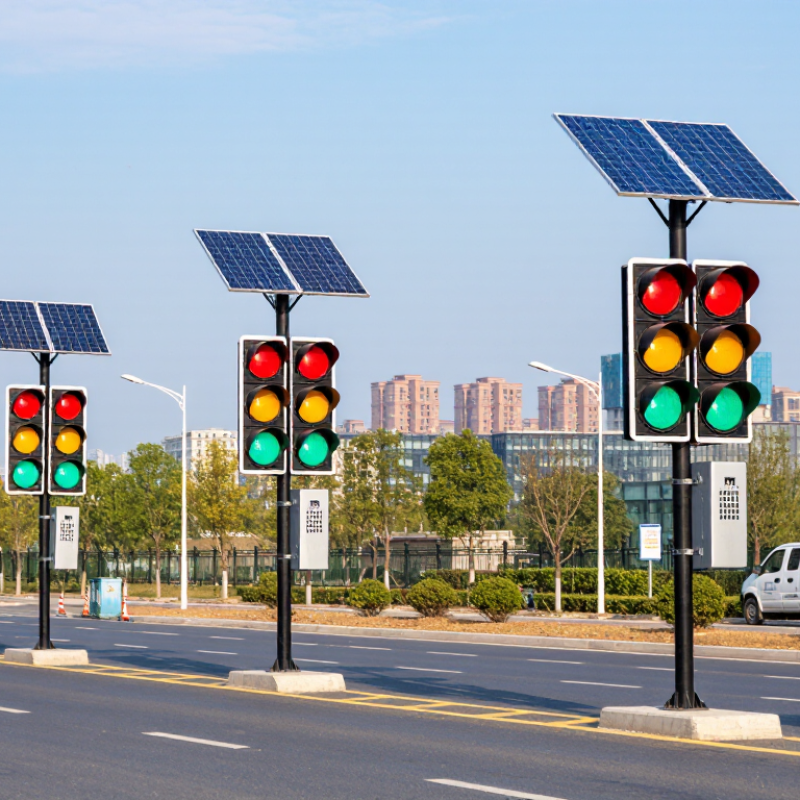
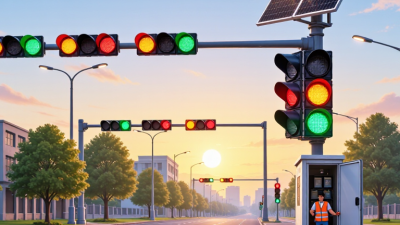
Solar traffic signal lights use sunlight to power signal heads and, in some installations, their control equipment. A photovoltaic panel converts daylight into electricity, which a charge controller directs to a battery. At night or during cloudy weather, the battery supplies power to the lights. The panel may sit above the signal or on a nearby pole, angled to catch useful sunlight.

The LEDs show the familiar red, amber, and green indications. A separate controller manages their timing and sequence; solar power alone does not determine when traffic moves. Sensors or coordinated systems may also affect operation, depending on the site. Short answer: panel, battery, controller, lights. Each part must be matched to the local demand. For example, a shaded intersection or a long stretch of cloudy weather can reduce the energy available.

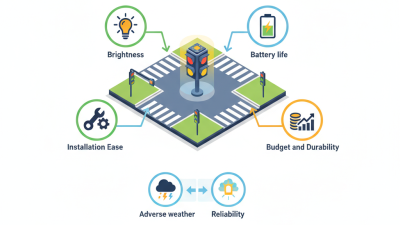
A practical assessment considers signal load, panel exposure, battery capacity, and maintenance access. Dust on a panel, loose connections, or an aging battery can reduce reliability, even when the equipment appears intact. The setup is not maintenance-free. It can also be tempting to assume that a larger panel solves every power issue, but poor placement may still limit charging. Careful site checks and routine inspection help keep the signal dependable.
Key Criteria for Evaluating Manufacturers in China

Top Solar Traffic Signal Light Manufacturers in China

Evaluating solar traffic signal light manufacturers requires more than comparing prices. Check production experience, engineering capacity, and quality records. A reliable supplier should explain panel efficiency, battery chemistry, controller settings, and LED visibility in clear terms. Ask for test reports, sample units, and traceable component details. Vague answers are warning signs.

Study the complete system, not only the lamp head. Confirm IP protection, wind resistance, operating temperature, charging performance, and nighttime autonomy. Request a field trial in dusty roads or cloudy regions. Battery performance may change sharply after repeated discharge cycles. Factory certificates help, but independent testing adds stronger evidence. A polished factory tour can still hide weak inspection procedures.

Tips: Visit the production line when possible. Check incoming material inspection, soldering quality, sealing, and final light testing. Review warranty terms, spare-part availability, installation guidance, and response times. Ask how rejected products are recorded and corrected. No checklist is perfect. I would also compare real operating data with laboratory claims, because both sides can miss practical problems. A manufacturer worth considering communicates limitations openly and supports adjustments after installation.

Top Solar Traffic Signal Light Manufacturers in China? — Key Criteria for Evaluating Manufacturers in China

Evaluation Dimension What to Assess Evidence to Request Practical Evaluation Criteria
Product compliance and intended use Whether the signal head, controller, and installation configuration meet the requirements of the destination market and road authority. Applicable test reports, declarations of conformity, product specifications, and a written list of standards used for the proposed model. Check the relevant local requirements. For China-market road traffic signal lights, ask whether GB 14887 applies; do not assume one standard covers every export market or project.
Signal visibility and optical performance Lens diameter, LED color, luminous intensity, viewing angle, uniformity, and visibility in bright sunlight and at night. Photometric test data for the exact configuration, optical drawings, LED specifications, and sample evaluation results. Compare measured performance with the project specification and applicable signal-head requirements. Confirm the tested lens, LED module, and operating mode match the quoted product.
Solar and battery sizing PV module output, battery chemistry and capacity, controller efficiency, load demand, local solar conditions, and seasonal operating assumptions. System sizing calculation showing daily energy use, site assumptions, battery capacity, charging arrangement, and expected autonomy. Require sizing for the actual location, signal duty cycle, and shading conditions. Treat autonomy targets as project-specific rather than a universal manufacturer benchmark.
Battery safety and service life Battery type, operating temperature range, protection features, cycle-life conditions, and replacement procedure. Battery datasheet, safety documentation, warranty terms, and relevant transport or product test records. For lithium batteries, verify applicable requirements such as UN 38.3 for transport. Check that ratings and test conditions are stated clearly. Confirm whether the battery is replaceable and whether the warranty covers the battery separately from the signal equipment.
Environmental protection and durability Resistance to rain, dust, humidity, corrosion, vibration, temperature variation, and prolonged outdoor exposure. Enclosure drawings, material and coating details, ingress-protection test reports, and environmental test records for the relevant assembly. Match the specified IP rating and environmental conditions to the installation site. An IP rating alone does not establish resistance to corrosion, impact, or every weather condition.
Controller and electrical protection Charging control, overcharge and deep-discharge protection, wiring, connectors, surge protection, and fault indication. Controller datasheet, wiring diagram, protection description, and functional test procedure. Confirm the controller is compatible with the selected PV module and battery, and that the manufacturer explains how low battery voltage and system faults are handled.
Manufacturing quality control Incoming-material checks, production controls, final inspection, traceability, and handling of nonconforming products. Quality-management certificate and scope, inspection records, sample test reports, and an outline of production and final-inspection steps. Verify certificate validity and scope with the issuing body where possible. ISO 9001 certification can support a quality-system review but does not by itself prove product performance.
Customization and engineering support Ability to adapt voltage, mounting, housing, lens, cabling, labels, and documentation to project requirements. Technical drawings, a configuration list, sample approval process, and a record of how design changes are reviewed and controlled. Require written confirmation of the final configuration before production. Separate standard options from custom changes that may affect testing, lead time, or warranty.
Installation and maintenance Mounting method, access for service, battery replacement, troubleshooting guidance, and availability of spare parts. Installation manual, maintenance schedule, wiring diagram, spare-parts list, and recommended inspection checks. Assess whether local technicians can install and service the system using the supplied documentation and tools. Confirm spare-part availability and expected support response times.
Warranty and after-sales support Warranty duration and exclusions for the signal head, PV module, controller, and battery, as well as repair or replacement arrangements. Written warranty terms, claims process, service contact details, and confirmation of which components are covered. Compare component-specific coverage and claim conditions, including shipping responsibility, environmental exclusions, and the process for diagnosing failures.
Delivery and export readiness Production lead time, packaging, shipping terms, export documentation, and protection of PV modules and lenses during transit. Production schedule, packaging specification, sample shipping documents, and confirmation of the proposed Incoterms® rule and named place. Check that the quotation identifies the configuration, quantity, delivery basis, and required documents. For battery shipments, confirm the applicable transport documentation before booking.

Note: Requirements vary by road authority, destination market, climate, and installation design. Request evidence for the exact model and configuration being quoted, and have project-specific requirements confirmed by the relevant authority or qualified engineer.

Leading Solar Traffic Signal Light Manufacturers in China

China’s leading solar traffic signal light manufacturers are best assessed by engineering depth, not catalogue size. Look for factories that integrate photovoltaic panels, charge controllers, batteries, LED signal heads, and weatherproof enclosures. Ask for test records covering battery autonomy, dusk-to-dawn switching, temperature range, and waterproof performance. A clear wiring diagram matters. So does access to replacement parts.

The supply base benefits from China’s wider solar manufacturing capacity. The International Energy Agency’s 2022 Special Report on Solar PV Global Supply Chains estimated that China held more than 80% of global manufacturing capacity across key solar-panel supply stages. That figure describes the PV supply chain, not traffic-signal quality. Still, it helps explain why Chinese suppliers can offer varied panel sizes and component configurations. Buyers should verify the actual panel and battery specifications rather than rely on broad “solar-powered” claims.

For a practical shortlist, compare manufacturers that provide customized pole mounting, optical distribution data, and documented battery sizing for local sunlight conditions. Request a sample unit and inspect its seals, cable glands, lens clarity, and controller settings. Ask how the signal performs after several cloudy days. One caveat: a polished sample does not prove consistent batch quality. Production inspection and traceable test reports can reduce that uncertainty.

Comparing Products, Certifications, and Manufacturing Capabilities

Comparing solar traffic signal light manufacturers in China starts with the hardware, not the brochure. Check panel size, battery chemistry, LED visibility, and controller behavior in low sunlight. Ask how long the signal can operate after several cloudy days. Small details matter. A compact unit may suit a temporary road layout, while a larger assembly may need stronger mounting and easier battery access.

Certifications deserve careful checking. Request current test reports and confirm that each document covers the exact model being quoted. Review ingress protection ratings, electrical safety evidence, and environmental test conditions. A logo alone proves little. Ask whether samples were tested by an independent laboratory, and compare the reported results with your project requirements. Paperwork can look complete, yet still leave questions.

Manufacturing capability shows in repeatability. Ask about incoming component checks, production records, and final inspection procedures. A factory that can explain battery cycling tests or nighttime visibility checks offers useful evidence. Request sample units and inspect wiring, seals, labels, and spare-part access. Also confirm lead times and how design changes are documented. These checks take time. I would not treat one successful sample as proof that every production batch will match it.

How to Select a Manufacturer for Your Project

When selecting a solar traffic signal manufacturer in China, ask for evidence from the exact system you plan to install. Request a site-specific energy calculation, not just a panel wattage. It should show local sunlight, signal load, battery capacity, and backup hours. IRENA’s Renewable Capacity Statistics 2024 reports that global solar capacity reached about 1,419 GW in 2023. That growth shows a mature supply chain, but it does not prove that one signal system will perform reliably at your intersection.

Check the battery’s usable capacity, low-temperature performance, and replacement interval. Ask for test records covering rain ingress, vibration, heat, and repeated charge-discharge cycles. Confirm that the signal head and controller match applicable traffic-device specifications in the project location. The manufacturer should explain how it sizes the panel for cloudy periods and nearby shade. Get the assumptions in writing. They are easy to overlook.

NREL’s field-data review by Jordan and Kurtz found a median photovoltaic module degradation rate near 0.5% annually. That figure concerns modules, not complete signal systems, so treat it as context rather than a service-life promise. Request warranty terms, spare-parts availability, and a sample installation record. Inspect the connectors and enclosure yourself if possible. A polished brochure is not a field test. I would also ask for a pilot unit; this adds time, but can expose weak mounting hardware or confusing maintenance steps before wider deployment.