Choosing a Solar Traffic Signal Light in 2026 is a decision about dependable operation, not just panel size. A bright display at noon proves little. The real test comes before dawn, after several cloudy days, when batteries must still power the signal and its controller. “Design for the weakest sunlight, not the best day.” Treat that as an engineering principle, not a quotation attributed to a named expert; no verified expert source was provided.
Start with the site. Note the signal’s location, daily operating hours, shade from trees or buildings, and local seasonal sunlight. Then check the required signal head, controller load, battery capacity, panel output, and backup plan. These details need to work together. A larger panel cannot fix an undersized battery, and a battery can underperform if heat, cold, or poor maintenance shorten its life.
Look for clear specifications, independent test evidence, service access, and a warranty that explains what is covered. Ask how the system performs through extended low-sun periods, and how operators can check battery health. Small details matter: a cabinet that is easy to inspect can save time during routine maintenance. So can a supplier that provides realistic autonomy figures instead of broad promises.
This guide offers a practical way to compare options for different roads and operating conditions. It also points out where estimates need local verification. Solar can be a strong fit. But every site is different.
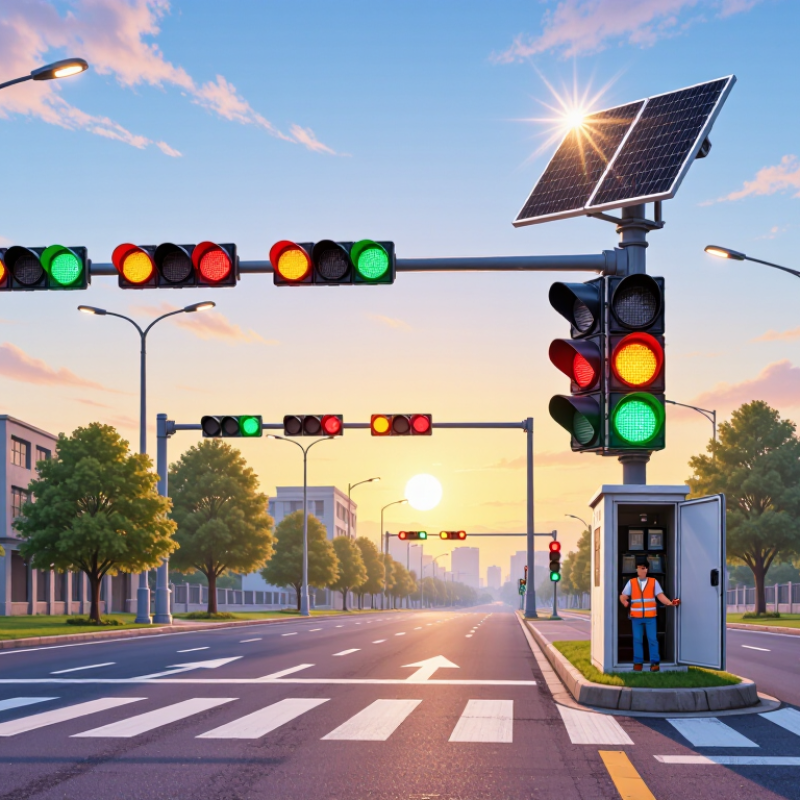
A solar traffic signal light converts sunlight into electricity through a photovoltaic panel. A charge controller regulates that power and sends it to a battery, helping prevent overcharging and deep discharge. At night or during cloudy weather, the battery supplies the signal. No sunlight is needed then. LEDs use relatively little energy, but the controller still needs enough stored power to run the programmed signal phases reliably.
Some systems also connect to vehicle detectors or communications equipment. These components add to the energy demand. A panel that looks large may still produce too little power if trees shade it or its angle is poor. Battery performance can also change with temperature and age. Small details matter.
When choosing a unit, compare its daily power use with local sunlight levels and the required backup time. Check the panel orientation, battery capacity, controller settings, and expected maintenance access. Ask how the system behaves when battery charge falls; this is easy to overlook. Commissioning should include checking each signal phase and confirming that the system operates after dark. The setup sounds simple. It isn’t always. A careful site assessment is more useful than relying on panel size alone.
Assessing Site Conditions and Traffic Requirements
Before choosing a solar traffic signal light, inspect the exact installation site at different times of day. Note how long direct sunlight reaches the panel, and mark shadows from buildings, trees, signs, or passing vehicles. A shaded panel may underperform, even when nearby areas look bright. Check seasonal changes too; bare branches in winter may become dense shade in summer. Record the mounting height, panel direction, and exposure to dust, snow, or standing water.
Traffic needs matter just as much. Count vehicles during busy and quiet periods, and note approach speeds, lane layout, and sight lines. Drivers need enough distance to recognize the signal and respond safely. Consider nearby crossings, turning movements, and whether pedestrians need a clear warning. A short site visit can miss unusual congestion, so review observations against reliable traffic records where available. Conditions are rarely perfect.
Tips: Photograph the site in morning, midday, and late afternoon. Write down obstructions and traffic patterns before comparing equipment. If the available sunlight or signal visibility is uncertain, arrange a qualified site assessment; guessing can lead to unreliable operation.
| Assessment Dimension | What to Check | Indicative Site or Traffic Condition | Selection Consideration |
|---|---|---|---|
| Solar exposure | Shading from buildings, trees, terrain, and seasonal changes; available unshaded panel area. | Record sun exposure across the day and consider winter conditions, when daylight is shorter and the sun angle is lower. | Choose a panel and battery system sized for the location’s solar resource and expected operating schedule. Avoid assuming summer exposure represents year-round performance. |
| Required autonomy | How many days the light must operate through poor weather or reduced charging. | Remote sites may have limited access for maintenance; cloudy periods can reduce solar charging. | Specify battery capacity against the required autonomy, load, local climate, and applicable design standards. Confirm the supplier’s stated autonomy assumptions. |
| Traffic volume | Vehicle counts by approach, peak-hour demand, turning movements, and daily variation. | Use recent counts that include representative weekdays, weekends, and seasonal or event-related peaks where relevant. | Match the control strategy and signal configuration to an engineering traffic study. Volume alone does not determine whether a signal is warranted. |
| Operating pattern | Whether the signal runs continuously, on a schedule, or only when activated. | School crossings, temporary work zones, and low-volume rural intersections may have different operating periods. | Confirm that the controller supports the intended mode, timing plan, detection, and any required remote monitoring. |
| Approach speed and visibility | Posted and observed speeds, sight distance, roadway alignment, and potential visual obstructions. | Curves, hills, glare, roadside vegetation, and high approach speeds can affect how early drivers see a signal. | Have a qualified traffic professional determine placement, visibility requirements, and any advance warning devices under local standards. |
| Signal head and lens performance | Required signal indications, visibility distance, viewing angles, and ambient light conditions. | Bright daylight, fog, dust, or wide approaches can create different visibility needs. | Verify that signal heads, lenses, and intensity meet applicable specifications and are compatible with the controller and power system. |
| Weather and temperature | Local temperature range, wind exposure, precipitation, snow, dust, and corrosion risks. | Extreme heat can affect battery life; snow or dirt on a panel can reduce energy capture. | Check component operating-temperature ratings, enclosure protection, structural loading, and the site’s cleaning and inspection plan. |
| Mounting and structure | Pole or mast condition, foundation, wind loading, available mounting height, and panel orientation. | Existing structures may not be suitable for added equipment or wind-exposed solar panels. | Confirm structural capacity, clearances, accessibility, and permitted mounting locations before installation. |
| Detection and accessibility | Vehicle, pedestrian, and bicycle detection needs; accessible crossing requirements. | Demand-actuated operation may require detectors, accessible pedestrian features, or audible and visual indications. | Specify compatible detection and accessibility features according to the governing jurisdiction’s requirements. |
| Power reserve and load | Energy use of signal heads, controller, detectors, communications, and any auxiliary equipment. | Added equipment increases system demand and may reduce reserve time during poor charging conditions. | Request a documented energy budget that includes all connected loads, battery limits, charging assumptions, and low-voltage behavior. |
| Maintenance access | Safe access for inspection, battery replacement, panel cleaning, and fault response. | Remote or high-speed-road locations may require traffic control or specialized access arrangements. | Include inspection intervals, replacement access, spare parts, and fault-monitoring needs in the lifecycle plan. |
| Regulatory approval | Applicable traffic-control standards, permits, electrical rules, and road authority approval. | Requirements vary by jurisdiction and by whether the installation is permanent, temporary, or work-zone related. | Obtain approval from the responsible road authority and use a qualified traffic engineer. Do not select or install a signal solely from a general product checklist. |
| Important planning note | The conditions and checks above are a screening guide, not universal design thresholds. Signal warrants, timing, equipment specifications, and installation details must be determined using current local standards and a site-specific engineering assessment. | ||
Comparing Solar Panels, Batteries, and Signal Features
Solar traffic signal performance depends on matching panel output, battery capacity, and daily power demand. Estimate energy use, flash patterns, and expected sunlight before selecting equipment. A clear, south-facing pole may collect ample energy, while trees or winter shadows can change the calculation. A larger panel is not automatically better if the battery or controller is poorly matched. Field conditions are messy.
Choose a battery that can support operation through cloudy days and temperature swings. Check its usable capacity, expected service life, and suitability for the site’s climate. Signal features matter too: LED visibility, adjustable flash modes, dusk-to-dawn control, and low-voltage alerts can help maintain dependable operation. Check visibility in rain, glare, and dust. Ask for documented runtime and environmental test data, not just a best-case estimate. Specifications can miss details.
Tips: Measure shade at different times of day. Confirm the panel, battery, and controller are designed to work together. Keep access for inspection in mind; an awkward enclosure can make routine checks harder.
Before selecting a solar traffic signal light in 2026, identify the device type required at the site. A warning beacon, temporary work-zone signal, and permanent traffic signal may follow different rules. Ask the local road authority which standards apply and whether the location needs a signal, beacon, or another control device. Rules differ.
Review the required color, flash pattern, visibility distance, mounting height, and nighttime performance. Request test reports and documentation showing compliance with applicable road-device and electrical safety standards. Check battery protections, enclosure ratings, and wind-load limits for the actual pole and climate. A bright lens alone proves little.
Local approval can also depend on permits, right-of-way boundaries, sight lines, and pedestrian access. Confirm who may install, inspect, and maintain the equipment, and whether a licensed contractor is required. In the United States, for example, the relevant traffic-control guidance may include the current MUTCD edition and state or local supplements; other regions use different rules. It is easy to assume a product accepted on one road will be accepted on another. That assumption deserves a second look. A brief written review from the road authority can prevent a costly mismatch after delivery.
How to Choose a Solar Traffic Signal Light in 2026
Planning Installation, Operation, and Maintenance
Start with the actual electrical load, not a catalog estimate. Record the signal’s power draw across operating modes, including controllers and communications equipment. Then compare that demand with site-specific sunlight, winter shade, and cloudy-day conditions. NREL’s National Solar Radiation Database provides hourly solar and weather data for modeling locations. A sunny annual average can still hide a difficult winter. Small details matter.
During installation, check for shadows from trees, signs, and nearby buildings throughout the day. Aim the panel for useful year-round exposure, and keep service access clear. Size battery storage for realistic low-sun periods, not just ideal conditions. NREL’s review, Photovoltaic Degradation Rates—An Analytical Review, found a median PV-module degradation rate near 0.5% annually across reviewed studies. That figure describes modules, not batteries or the complete signal system. Don’t treat it as a maintenance schedule.
Plan routine inspections before commissioning. Check panel surfaces, mounting hardware, wiring, battery condition, and controller fault logs; record readings so changes become visible. Clean panels when dust, pollen, or leaves noticeably reduce exposure, while following safe access procedures. Replaceable components can simplify repairs, but only if they are documented and available. A neat spreadsheet may still miss a new tree’s shadow. Recheck the site after landscaping or roadwork, and adjust the maintenance plan when measured performance differs from the design assumptions.