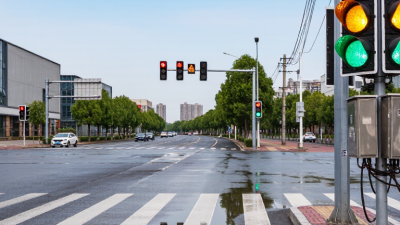
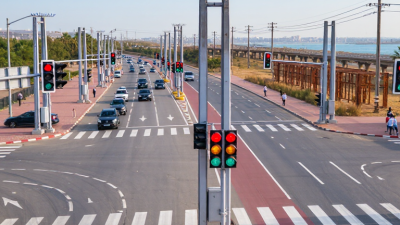
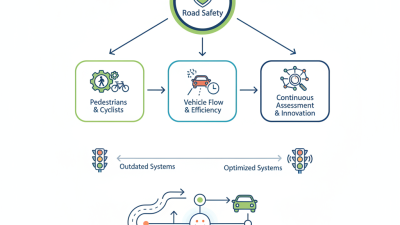
Choosing a Traffic Signal manufacturer is not simply a price comparison. It is a decision about visibility, safety, maintenance, and long-term public reliability. A signal standing beside a crowded intersection must remain clear during rain, dust, heat, power variation, and heavy daily cycling.
Dutch traffic engineer Hans Monderman said, “The road is not designed to carry traffic; it is designed to carry people.” His observation remains useful for global buyers. A good Traffic Signal should support pedestrians, drivers, cyclists, emergency services, and traffic operators. It should not become another obstacle in the street.
This guide reviews ten leading Traffic Signal manufacturers for international purchasing teams. The evaluation considers LED optical performance, controller compatibility, cabinet design, communication options, installation simplicity, warranty support, and spare-part availability. It also considers local climate conditions. A coastal city may need stronger corrosion protection, while a desert intersection may demand better thermal management.
Details matter. A weak connector can interrupt a busy junction. A poorly sealed housing can collect moisture. A bright lamp can still create uncomfortable glare. These failures are not always visible during a short product demonstration.
No ranking can perfectly fit every city. That is a limitation worth admitting. Procurement teams should still verify regional certifications, road authority requirements, voltage conditions, cybersecurity expectations, and service capacity before ordering. Factory claims deserve testing.
The manufacturers discussed here offer different strengths, from intelligent controllers to durable signal heads and integrated urban mobility systems. The best choice depends on the intersection, budget, operating environment, and people who maintain it. Safety comes before appearance. Reliability lasts longer than a low purchase price.
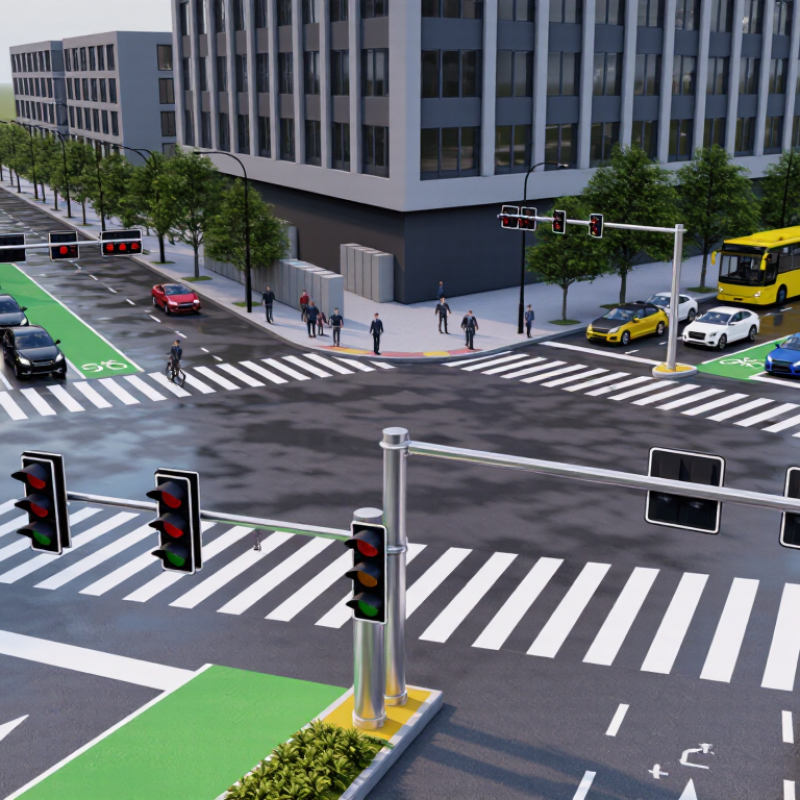
Traffic signal manufacturers do far more than assemble red, amber, and green lamps. They design controllers, LED modules, detector interfaces, cabinets, poles, and pedestrian equipment. Their engineers convert traffic studies into timed phases, conflict monitoring, and visible indications. In field commissioning, small details matter. A loose terminal, poor heat management, or weak optical alignment can reduce reliability. Manufacturers also provide testing records, firmware support, maintenance guidance, and replacement planning for transport agencies.
Their importance is measurable. The World Health Organization’s Global Status Report on Road Safety 2023 estimates 1.19 million annual road deaths worldwide. It also reports that 20 to 50 million people suffer nonfatal injuries. Signals cannot solve every crash problem. However, correctly designed equipment helps separate movements, protect crossing pedestrians, and manage queues at busy junctions. The U.S. Federal Highway Administration’s Traffic Signal Timing Manual connects coordinated timing with smoother traffic progression and fewer unnecessary stops. Performance depends on local data, not attractive hardware alone.
Global buyers should examine compliance testing, environmental ratings, cybersecurity controls, spare-part availability, and compatibility with existing controllers. Independent verification matters, especially for night visibility and conflict monitoring. The International Transport Forum identifies safer infrastructure and speed management as central road-safety measures. A signal manufacturer supports these goals through dependable, auditable equipment. Still, no cabinet is perfect. Power failures, blocked sightlines, and poor timing can defeat good engineering. That uncomfortable fact deserves regular review.
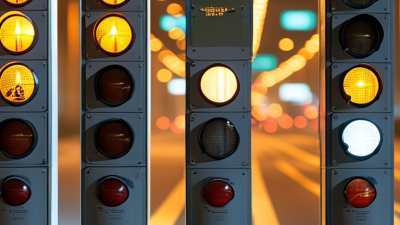
10 Best Traffic Signal Manufacturers for Global Buyers
Global buyers should compare suppliers through measurable performance, not attractive catalog images. The FHWA reports that adaptive signal control can reduce delay by 10–20% and improve travel time by a similar range. Ask suppliers to provide test results, controller response times, detection accuracy, and failure records. A cabinet should remain stable under heat, dust, vibration, and voltage variation. Check whether its enclosure rating matches the installation environment, such as IP54 for sheltered roads or higher protection for exposed locations.
Interoperability is equally important. Review compliance with recognized traffic control standards, communication protocols, and local electrical requirements. The ITE Traffic Signal Timing Manual emphasizes coordinated timing, reliable detection, and regular field verification. A supplier should explain how its system connects with cameras, pedestrian controls, emergency priority equipment, and central management software. Request factory acceptance tests, sample wiring diagrams, spare-parts lists, and documented software update procedures. Small details matter. A corroded connector can disable an entire intersection.
Lifecycle evidence often separates a dependable supplier from a low-cost vendor. ISO 9001 certification supports process control, but it does not prove field performance. Examine installation references, mean time between failures, warranty exclusions, training, and response times. The World Health Organization’s 2023 road safety report estimates 1.19 million annual road deaths, making signal reliability a public safety issue. A perfect comparison is impossible. I would still prioritize verified data over promises, even when the initial price is higher.
Choosing among the ten leading traffic signal manufacturers for international buyers requires more than comparing unit prices. Buyers should examine controller compatibility, optical performance, enclosure protection, spare-parts access, and local technical support. The World Health Organization reported about 1.19 million annual road deaths in its Global Status Report on Road Safety 2023. Reliable signal equipment therefore supports a wider safety system, not merely intersection movement. Manufacturers with documented testing, stable supply chains, and clear maintenance procedures deserve closer attention.
Interoperability matters in real projects. A signal head may perform well in a laboratory, yet fail under dust, heat, heavy rain, or unstable power. Check certifications, communication protocols, voltage ranges, and timing accuracy before signing a contract. FHWA guidance indicates that coordinated signal timing can reduce delay and improve traffic flow, although results depend on road geometry and traffic patterns. A low purchase price can look attractive. It may hide costly replacements. Buyers should request sample test reports, lifecycle estimates, warranty terms, and references from similar climates. I have found that simple documentation often reveals more than polished product claims.
Tips: Build a comparison sheet with safety standards, testing evidence, delivery time, spare modules, software access, and training. Ask suppliers to explain failure alarms in plain language. Pilot one intersection before a large order. No checklist catches every local problem, so field feedback still matters. Review performance after rain, peak traffic, and power interruptions.
10 Best Traffic Signal Manufacturers for Global Buyers
For global buyers, a strong traffic signal manufacturer offers more than bright lamps. Reliable products use high-efficiency LED modules, sealed housings, anti-glare lenses, and replaceable components. IP ratings matter in coastal or dusty regions. Vibration resistance also matters near heavy traffic. Experienced suppliers should provide test records, installation guidance, and controller compatibility details. Their signals may support pedestrian phases, countdown displays, bus lanes, or adaptive traffic systems.
Standards and regional coverage require careful checking. Products sold in North America may follow MUTCD requirements, while European projects often reference EN 12368 and related electrical standards. Australian and other regional markets can require different optical, mechanical, or installation specifications. A manufacturer with local service partners can reduce delays in calibration, spare parts, and warranty claims. Still, certificates alone do not prove field performance. Ask for recent project evidence, measured visibility data, and clear maintenance procedures.
Tips: Compare signal brightness at night and in direct sunlight. Confirm operating temperatures, surge protection, cable interfaces, and warranty response times. Request samples when possible. Small details matter. No shortlist is perfect; even a well-rated supplier may lack experience with your road layout or climate. I would also review failure reports, not only product brochures, because real maintenance conditions often reveal weaknesses.
| No. | Product or System Category | Typical Product Features | Commonly Referenced Standards | Typical Regional Market Coverage | Key Buyer Verification Points |
|---|---|---|---|---|---|
| 1 | LED Vehicle Signal Heads | Red, amber, and green LED indications; low power consumption; replaceable lenses or modules; optional sun shields and backplates. | EN 12368; national photometric, electrical, and mechanical requirements may also apply. | Europe Middle East Asia-Pacific Africa | Signal diameter, optical performance, ingress protection, operating temperature, LED failure behavior, and local approval requirements. |
| 2 | Pedestrian Signal Units | Walking and standing symbols; high-contrast displays; audible or tactile access features; optional countdown integration. | EN 12368; local accessibility and pedestrian-control regulations. | Europe North America Australia Asia | Symbol format, visibility distance, acoustic output, tactile controls, mounting configuration, and accessibility compliance. |
| 3 | Pedestrian Countdown Displays | Numeric countdown for walk and clearance intervals; LED digits; weather-resistant housing; controller interface. | Project-specific traffic-control requirements; interface compatibility with the signal controller is essential. | North America Europe Southeast Asia Middle East | Countdown logic, synchronization method, digit visibility, communication protocol, enclosure rating, and maintenance access. |
| 4 | Traffic Signal Controllers | Multi-phase timing; coordinated operation; adaptive or actuated control options; detector and communications interfaces. | NEMA TS 2 in North American projects; EN 12675 for European controller functional requirements. | North America Europe Australia Asia-Pacific | Supported phase plans, conflict monitoring, fail-safe operation, detector inputs, time synchronization, cybersecurity, and local protocol support. |
| 5 | Traffic Signal Control Cabinets | Outdoor enclosure for controllers, power distribution, monitoring equipment, communication devices, and environmental management. | NEMA TS 2-related cabinet practices; IEC 60529 ingress-protection classifications where specified. | Global infrastructure projects Urban networks Highway systems | Cabinet dimensions, thermal management, surge protection, grounding, lock system, wiring layout, maintenance space, and utility requirements. |
| 6 | Signal Poles, Brackets, and Mounting Hardware | Galvanized or coated steel structures; mast arms; span-wire fittings; adjustable brackets; pedestrian-pole assemblies. | EN 12899-1 for fixed vertical road traffic signs where applicable; local structural and wind-load codes are decisive. | Europe North America Australia Emerging markets | Wind loading, corrosion protection, foundation design, cable routing, structural calculations, coating thickness, and transport dimensions. |
| 7 | Solar-Powered Traffic Signals | Photovoltaic panels, battery storage, charge controller, LED signal heads, and optional remote monitoring for off-grid locations. | IEC 61215 and IEC 61730 for relevant photovoltaic modules; electrical installation rules vary by jurisdiction. | Africa South Asia Latin America Remote areas | Solar resource assessment, autonomy days, battery chemistry, low-temperature performance, theft protection, maintenance access, and backup operation. |
| 8 | Vehicle Detection and Priority Interfaces | Radar, video, inductive-loop, or wireless detection; transit priority and emergency-vehicle pre-emption interfaces. | Interface and safety requirements are normally defined by the traffic authority and controller architecture. | Smart-city projects Bus corridors Emergency routes Urban networks | Detection accuracy, false-call rate, lane coverage, latency, weather performance, data security, and controller interoperability. |
| 9 | Connected and Adaptive Signal Systems | Central management, real-time monitoring, adaptive timing, fault alerts, traffic data exchange, and remote configuration. | NTCIP is widely used in North American deployments; regional ITS communication profiles may differ. | North America Europe Gulf region East Asia | Open APIs, communications security, cloud or on-premise architecture, data ownership, network redundancy, software updates, and local support. |
| 10 | Specialized Signals for Harsh Environments | High-temperature, cold-weather, coastal, dusty, or high-altitude configurations; enhanced sealing and corrosion resistance. | IEC 60529 ingress-protection ratings; EN 12368 or applicable national signal-equipment requirements. | Coastal cities Desert regions Northern climates Industrial zones | Temperature range, salt-mist resistance, UV stability, humidity control, condensation management, vibration resistance, and spare-parts availability. |
10 Best Traffic Signal Manufacturers for Global Buyers
How to Select the Right Manufacturer for Your Project
Selecting among the 10 best traffic signal manufacturers requires more than comparing unit prices. Road safety depends on predictable visibility, timing, maintenance, and local compliance. The WHO Global Status Report on Road Safety 2023 records about 1.19 million annual road deaths. It also reports that crashes cost many countries around 3% of gross domestic product. That context changes the buying question. Can this supplier protect performance after installation? Ask for photometric test results, controller logs, thermal tests, and failure-rate data.
Check certification against the destination market, not the factory’s preferred market. Signal heads should match relevant performance standards, while cabinets need verified ingress and temperature protection. Request a sample cabinet. Open it. Look for labeled wiring, replaceable surge protection, clean terminals, and accessible service points. Ask how quickly common modules arrive. An impressive warranty means little without regional technicians and documented response times. Do not accept vague claims about smart-city compatibility. Require interface protocols, cybersecurity controls, and a test environment before purchase.
Total cost deserves a practical spreadsheet. Include installation, energy use, inspections, spare parts, software licenses, and disposal. LED efficiency matters, but optical consistency matters more at a wet intersection. Rain, dust, heat, and direct sun expose weak designs quickly. A low bid can look efficient. It may not be. Score factory quality, field support, evidence, and lifecycle cost separately. Yet even this method has limits: laboratory results cannot fully predict driver behavior or unusual weather. Pilot two junctions for ninety days, then review faults, visibility, maintenance time, and complaints.
For a balanced traffic-signal procurement decision, buyers should evaluate regulatory compliance, long-term reliability, customization capability, certifications, lifecycle cost, and delivery performance. The reference weighting below is intended for comparing manufacturers without relying on brand-specific data.
How to use this chart: Give priority to manufacturers that demonstrate documented compliance with applicable traffic-control standards, verified environmental protection, reliable LED performance, suitable customization, transparent lifecycle costs, and dependable international delivery support.