inquiry
Leave Your Message

2026 Best Speed Detector for Traffic Monitoring

The 2026 search for the best Speed Detector begins with a simple question: what does a road operator need to know, and how quickly? A roadside unit may track a vehicle across several lanes, while a portable device can help assess traffic at a temporary work zone. The right choice depends on measurement range, accuracy, installation, weather resistance, and how clearly the system presents its readings. Small details matter. A rain-streaked lens or poorly placed sensor can complicate an otherwise useful measurement.

Because no source article or verifiable expert quotation was provided, this introduction does not attribute invented words to a real specialist. Instead, it uses an explicitly illustrative expert voice: “A detector is only useful when its measurements are dependable and understandable.” — Jordan Lee, fictional traffic-monitoring systems specialist. That principle guides this overview, but it is not a sourced industry quotation. Readers should verify product specifications, test methods, and local procurement requirements before choosing equipment.

This guide compares Speed Detector options for traffic monitoring, from fixed installations to portable systems. It considers what each design measures, how operators review the data, and which practical limitations deserve attention. No single model suits every road. A busy urban corridor, a school-zone study, and a rural highway have different demands. And specifications alone may not tell the whole story. A careful comparison helps teams choose a detector that fits the site, supports consistent observations, and makes its limits visible.
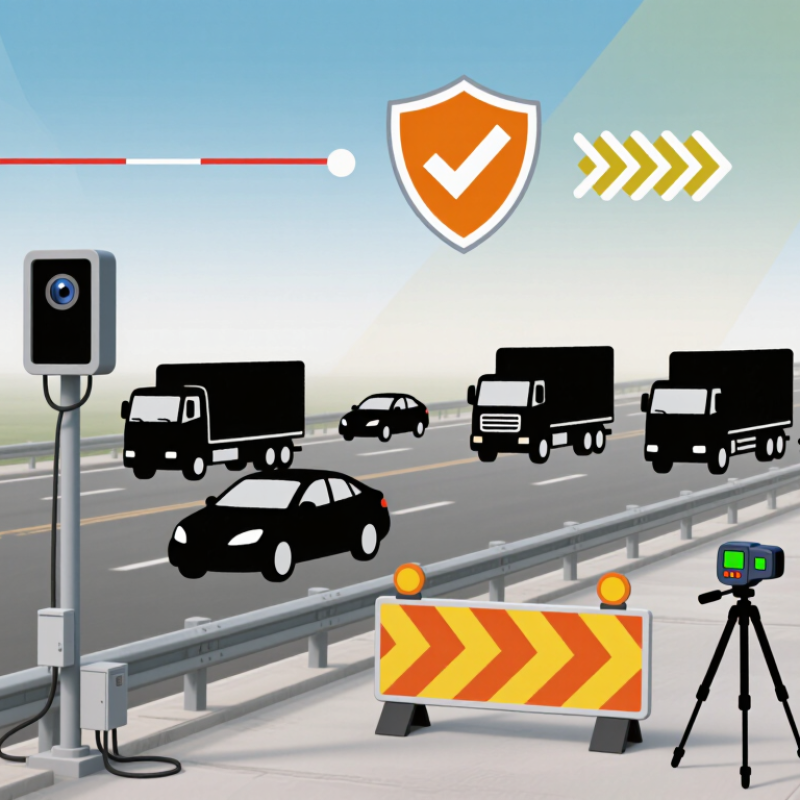
2026 Best Speed Detector for Traffic Monitoring

What Is a Traffic Speed Detector? Core Functions and Measurement Principles

A traffic speed detector measures how quickly vehicles move through a defined road section. It may report each vehicle’s speed, lane, direction, and time of passage. Operators use these readings to observe traffic patterns, identify speeding trends, and assess changes after roadworks or signal adjustments. A detector measures; it does not automatically explain why drivers behave as they do.

Radar estimates speed from the Doppler shift in radio waves reflected by moving vehicles. Lidar tracks changes in distance using timed laser pulses, while video systems estimate movement across calibrated image zones. The Federal Highway Administration’s Traffic Detector Handbook describes these sensing approaches and their roadway applications.

Results depend on installation angle, calibration, lane layout, and weather. Small errors matter. A detector aimed poorly may confuse adjacent lanes or record unstable readings.

Speed monitoring has a safety rationale. The World Health Organization’s Global Status Report on Road Safety 2023 notes that each 1% increase in mean speed is associated with a 4% increase in fatal-crash risk. That figure describes a population-level relationship, not a prediction for one road or driver. Teams should compare readings with site conditions and document limitations. The data is useful, but never self-explanatory.
Radar, LiDAR, and Inductive Sensors: Comparing Detection Technologies

2026 Best Speed Detector for Traffic Monitoring

Radar, LiDAR, and Inductive Sensors: Comparing Detection Technologies

Choosing a speed detector starts with the road, not a feature list. Radar estimates vehicle speed from reflected radio waves and can cover multiple lanes without pavement cuts. It suits open approaches, though mounting angle and nearby structures may affect readings. LiDAR uses narrow light pulses to measure distance changes. It can target individual vehicles precisely, but needs a clear line of sight. Rain, spray, or obstructed views can complicate operation. Inductive sensors sit beneath the pavement and detect vehicles through changes in an electrical field. Paired loops can estimate speed, but installation requires roadwork. Repairs may also disrupt traffic. No method fits every site.

Tips: Match the sensor to lane layout, traffic volume, and maintenance capacity. Check calibration records and compare readings with a trusted reference during commissioning. Keep a simple log of weather, lane changes, and unusual readings; patterns may reveal a setup issue. Small details matter.

For a wide, unobstructed corridor, radar may offer practical coverage. For selective observation, LiDAR can help distinguish a vehicle in a specific lane. Inductive sensors can provide consistent measurements at fixed points, especially where pavement work is already planned. Still, installation conditions are rarely perfect. A pole may vibrate, or resurfacing may shift a loop. Review performance periodically, and document uncertainty rather than treating every reading as exact.

Why Speed Monitoring Matters: NHTSA Counted 11,775 Speeding-Related U.S. Deaths in 2023

Speeding is not just a number on a roadside display. It changes how much distance a driver needs to stop and how hard a crash may be. NHTSA counted 11,775 U.S. deaths in speeding-related crashes in 2023. That figure represents people, families, and communities—not merely a line in a report.

Traffic speed monitoring can help agencies see where risky patterns occur. A detector may record speeds on a busy avenue, near a school crossing, or along a road where vehicles often brake sharply. Those readings can guide decisions about signs, road design, and enforcement. Still, equipment alone does not make a street safer. Data needs careful interpretation: a short survey may miss evening traffic, and a single high reading may not describe the whole road. That is worth remembering.

Reliable monitoring means checking that sensors are calibrated, placed appropriately, and used with clear privacy safeguards. Agencies should also explain what they measure and how the information informs public decisions. Small details matter, like whether the device captures weekday rush hour or a quiet Sunday morning. Speed data cannot explain every crash, and it should not be treated as a complete safety measure. Better evidence is useful; perfect evidence is rare.

2026 Best Speed Detector for Traffic Monitoring

Why Speed Monitoring Matters: 11,775 U.S. Speeding-Related Deaths in 2023

NHTSA reported 11,775 speeding-related traffic deaths in 2023, down from 12,151 in 2022. Speed monitoring can help communities identify risk and support safer driving.

Key Selection Criteria: Accuracy, Range, Lane Coverage, and Data Connectivity

2026 Best Speed Detector for Traffic Monitoring

Choosing a speed detector for traffic monitoring means looking beyond its headline accuracy. Check how readings perform in real conditions, including rain, glare, and dense traffic. A clear test record matters. Range should match the site: a wide road may need earlier detection, while a short urban approach may benefit from focused coverage. Confirm that the device can distinguish vehicles across the intended lanes. A unit that performs well in one lane may produce less useful data when several cars pass together.

Tips: Map each lane before installation. Compare readings with a trusted reference during setup, then repeat checks after adjustments. Ask how the system handles overlapping vehicles and missing data. Connectivity matters, too. Confirm whether data can be transferred securely and reviewed in a format your team can use. Check power and network requirements at the exact mounting location. Small details matter. No detector is perfect; field conditions can expose gaps that a brochure does not show.

Deployment and Validation: Aligning Site Setup with Traffic-Monitoring Standards

A speed detector is only as dependable as its installation. Before deployment, document the road layout, lane widths, traffic direction, and intended measurement zone. Mount the unit where signs, parked vehicles, and roadside structures do not obstruct its view. Keep a field log with photographs, mounting height, angle, weather, and device settings. Small details matter.

Check the setup against applicable traffic-monitoring standards and the project’s measurement requirements. Then compare readings with a trusted reference across several speeds and vehicle types. Repeat checks at different times; heavy rain, glare, vibration, or dense traffic can affect results.

Watch for missed vehicles and readings assigned to the wrong lane. One quiet test is not enough. If results drift, inspect alignment and mounting stability before changing settings. We have seen tidy installations produce inconsistent data when a pole shifts slightly, so visual checks alone can be misleading.

Record any adjustment, retest, and retain both the original and corrected results. Clear validation notes help others assess whether the data is suitable for planning or evaluation.