inquiry
Leave Your Message

China Top Solar Traffic Signal Light Manufacturers?

China has become a major sourcing hub for Solar Traffic Signal Light systems, serving highways, intersections, construction zones, and remote roads. Yet choosing a dependable manufacturer requires more than comparing online prices. Buyers must examine product design, factory experience, testing procedures, and after-sales support.

A practical evaluation begins with the signal head. Check LED brightness, lens clarity, viewing distance, and visibility under direct sunlight. The solar panel should match local sunlight conditions, while the battery must support several cloudy days. Controllers, charging protection, and low-voltage alerts also deserve careful review. Small details matter. A loose cable gland or weak bracket can create serious maintenance problems.

Reliable Chinese manufacturers usually provide technical drawings, sample testing, production photographs, warranty terms, and traceable component information. Independent reports for waterproofing, electrical safety, and impact resistance can strengthen confidence. Buyers should also confirm whether the supplier has experience with municipal projects or international road specifications. Factory audits and video inspections may reveal more than polished brochures.

Still, no supplier is perfect. A strong product may have slower customization, while a low-cost option may offer limited documentation. That trade-off needs honest discussion. Seasonal weather can also expose weaknesses that factory demonstrations miss. Ask for battery performance data at low temperatures and request a realistic installation plan. The best China Top Solar Traffic Signal Light Manufacturers combine engineering knowledge, stable production, responsive communication, and clear accountability. This guide will help compare those qualities before a purchase decision is made.
China Top Solar Traffic Signal Light Manufacturers?

What Are Solar Traffic Signal Lights and How Do They Work?

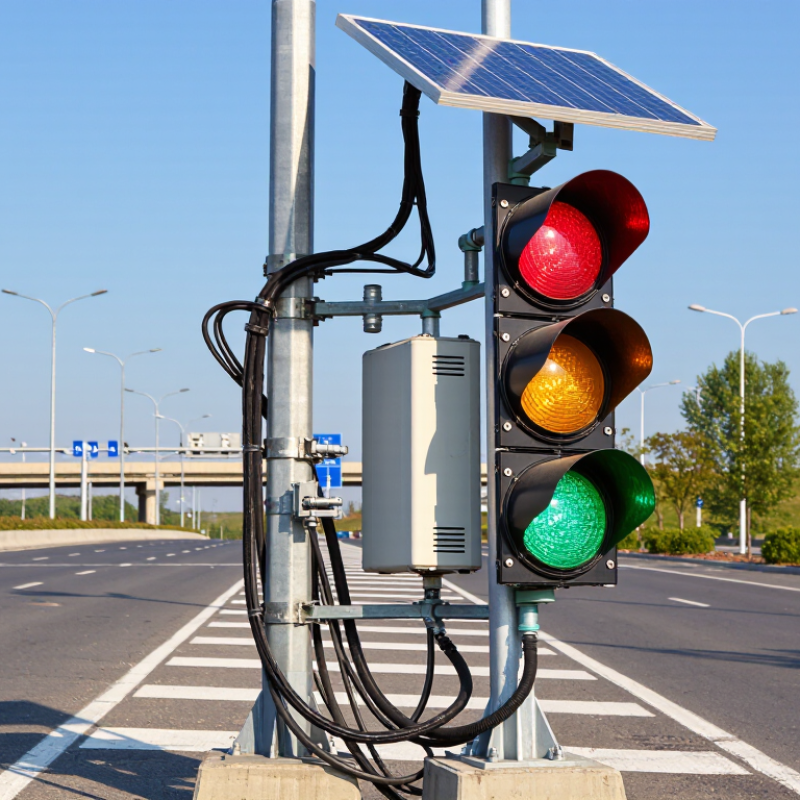
Solar traffic signal lights combine photovoltaic panels, LED signal heads, batteries, and intelligent controllers. During daylight, solar cells convert sunlight into electricity and charge the battery. The controller then supplies stable power to red, yellow, and green LEDs after sunset or during weak sunlight.

LEDs are essential here. The U.S. Department of Energy reports that LEDs use at least 75% less energy than incandescent lighting. Lower demand allows a smaller solar array and battery, especially at isolated intersections. The battery also supports cloudy periods, while the controller monitors voltage and prevents excessive discharge. Not always perfectly.

Designers should use local solar radiation, traffic hours, and seasonal weather data. The IEA PVPS Trends 2024 report states that global photovoltaic capacity exceeded 1.4 terawatts by the end of 2023. This growth supports wider component availability, but it does not remove site-specific engineering risks. A shaded pole can reduce charging sharply.

NREL guidance emphasizes sizing systems for the lowest expected solar resource, not an average sunny day. In practice, engineers calculate LED load, battery autonomy, panel angle, temperature loss, and maintenance access. The weak point is winter. Dust, snow, aging batteries, and continuous flashing can reduce reliability. Field testing remains necessary, because a spreadsheet may look correct while a roadside system struggles after several cloudy nights.
What Are Solar Traffic Signal Lights and How Do They Work?

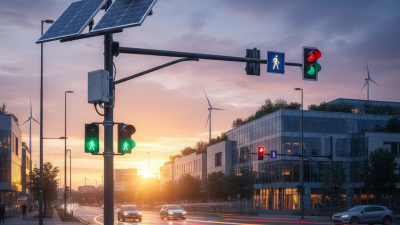
Solar traffic signal lights use photovoltaic panels to convert sunlight into electricity. A charge controller stores this energy in a battery, while LEDs provide low-power signal illumination at night or during low-sunlight conditions.

The chart shows approximate annual average peak sun hours for representative locations in China. Higher peak sun hours generally provide more daily solar energy for battery charging, while areas with lower solar resources may require larger panels or batteries.

Data are rounded representative long-term solar-resource values based on Global Solar Atlas photovoltaic power potential data. Actual performance depends on panel orientation, weather, shading, battery capacity, and signal duty cycle.

Why Choose Solar Traffic Signal Lights Made in China?

Why Choose Solar Traffic Signal Lights Made in China?

China offers a deep manufacturing ecosystem for solar traffic signal lights. The IRENA Renewable Capacity Statistics 2024 reported 216.9 GW of new solar capacity in China during 2023. This scale supports competitive pricing, stable component sourcing, and faster design improvements. Suppliers can usually integrate photovoltaic panels, LiFePO4 batteries, controllers, LED modules, and galvanized housings within one production network. That matters when a project needs custom voltage, lens colors, mounting brackets, or remote monitoring.

The IEA Photovoltaic Power Systems Programme reported global solar capacity above 1.6 terawatts by the end of 2023. Chinese factories operate inside this mature photovoltaic supply chain. Their experience often improves energy conversion, battery protection, and low-temperature performance.

A reliable manufacturer should provide optical test results, battery cycle data, IP testing, and clear autonomy calculations. Ask for samples. Inspect the controller and cable glands closely.

The weak point is not always hardware. Some suppliers overstate night-time autonomy. A winter installation may perform differently than a factory test. Buyers should compare local sunlight data, traffic intensity, battery capacity, and installation angle.

Compliance with relevant IEC or national road-safety requirements also needs independent verification. Factory audits, production photos, and batch inspection records add useful evidence. Cheap pricing helps, but it should never replace photometric testing and field validation.

Key Features of China’s Leading Solar Signal Light Manufacturers

China Top Solar Traffic Signal Light Manufacturers?

China’s leading solar signal light manufacturers combine practical engineering with controlled production. Their systems usually include high-efficiency solar panels, lithium batteries, LED modules, and intelligent charging controllers. The strongest designs maintain clear signals through cloudy days and long winter nights. Battery capacity matters more than bright marketing claims.

Experienced manufacturers test brightness, charging performance, waterproofing, and operating temperature. They may use optical lenses that improve visibility from several road angles. Durable housings often include UV-resistant coatings and sealed cable connections. Look for documented protection ratings, impact testing, and stable light output. These details show technical discipline.

Customization is another important feature. Manufacturers can adjust pole mounting, flashing patterns, battery size, and remote monitoring functions. They should also provide installation drawings, replacement guidance, and responsive technical support. A specification can look excellent on paper, yet roadside dust may expose weak seals. No design is perfect. Buyers should request sample testing under local weather conditions before placing a large order. Clear records, traceable components, and honest performance limits make supplier evaluation more reliable.

How to Evaluate and Compare Chinese Solar Signal Light Suppliers

Evaluating Chinese solar traffic signal light suppliers requires more than comparing catalog prices. IRENA’s Renewable Capacity Statistics 2024 recorded about 345 GW of new solar capacity in 2023. This growth shows stronger component supply, but it does not guarantee reliable signal equipment. Request the panel wattage, battery chemistry, usable capacity, LED intensity, and operating hours after several cloudy days. A small roadside detail matters: the signal should remain visible at dawn, not only during a factory demonstration.

Ask for photometric test records against applicable traffic-signal requirements, such as EN 12368 where relevant. Check IP ratings, salt-spray results, temperature tests, and battery-cycle data. IEA PVPS Trends 2024 reported global photovoltaic additions above 400 GW in 2023, yet supplier quality remains uneven. This is the uncomfortable part. A polished report may describe a sample, not continuous production. Require serial-numbered test records, incoming inspection procedures, and photos of aging tests. Visit the production line if the order is substantial. Look at soldering, cable sealing, and battery storage conditions.

Compare warranty terms carefully. Does coverage include battery degradation, controller failure, and replacement labor? Ask for a small pilot shipment before approving a container. Measure brightness, charging recovery, and nighttime visibility on your own road. One missed detail can cost more than the original price difference. Some buyers overlook local climate data. That mistake is common. Supplier responses should be specific, dated, and supported by evidence, not promises.

China Top Solar Traffic Signal Light Manufacturers? - How to Evaluate and Compare Chinese Solar Signal Light Suppliers

Evaluation Dimension Practical Benchmark or Requirement Recommended Verification Method Suggested Weight
Product compliance Products should be designed and tested against applicable road-traffic, electrical-safety, EMC, and environmental requirements in the destination market. Request current test reports, declarations of conformity, technical files, and the exact model numbers covered by each document. 15%
Ingress protection IP65 is a common outdoor minimum; IP66 offers stronger protection against water jets when the installation environment requires it. Check an IEC 60529 test report and confirm that the tested enclosure is identical to the production enclosure. 8%
Impact resistance IK08 or higher is a useful benchmark for equipment exposed to accidental impact or vandalism. Request an IEC 62262 impact-resistance report and verify the tested lens, housing, and mounting configuration. 5%
Solar energy system The supplier should provide panel wattage, controller characteristics, charging limits, and a site-specific energy calculation rather than quoting panel wattage alone. Request a calculation using local solar irradiation, traffic-light duty cycle, temperature, system losses, and seasonal conditions. 10%
Battery technology Lithium iron phosphate batteries are commonly selected for solar outdoor equipment because of their thermal stability and cycle-life characteristics. Battery capacity must be matched to the local climate and duty cycle. Verify chemistry, nominal voltage, usable capacity, battery-management protection, operating temperature, and cell or pack test documentation. 10%
Autonomy performance A practical project target is often 3–5 consecutive low-sun days, but the required value depends on latitude, winter irradiance, traffic duty cycle, and safety requirements. Require a calculation showing load wattage, daily operating hours, battery usable energy, charging efficiency, and reserve margin. 12%
LED optical performance The signal should provide uniform, clearly visible output with low power consumption and a stable color appearance throughout the rated operating temperature range. Review photometric data, viewing-angle information, LED lifetime assumptions, color specifications, and a sample under daylight and nighttime conditions. 10%
Operating environment A suitable outdoor design should normally specify a working temperature range of at least approximately −20°C to +60°C, subject to the project climate. Check temperature test results for the complete assembled product, including battery, controller, LED module, and enclosure. 6%
Controller protection The charge controller should include overcharge, over-discharge, short-circuit, reverse-polarity, over-temperature, and load-protection functions where applicable. Request the controller specification, wiring diagram, protection thresholds, and a functional test record. 7%
Mechanical construction Use corrosion-resistant materials, sealed cable entries, UV-resistant lenses, secure mounting hardware, and drainage or condensation-control provisions. Inspect a production sample, review material certificates where relevant, and evaluate fasteners, hinges, seals, cable glands, and surface treatment. 6%
Quality-control process A capable supplier should maintain incoming-material inspection, assembly checks, electrical safety tests, aging or burn-in tests, final inspection, and traceable serial or batch records. Request the quality manual, inspection plan, sample inspection records, calibration certificates, and nonconformance procedure. 8%
Warranty and spare parts A written warranty of 2–5 years is commonly requested for outdoor signal equipment, with separate terms for batteries and consumable components. Review exclusions, response times, replacement responsibilities, spare-parts availability, and the warranty start date. 6%
Documentation and customization The supplier should provide datasheets, installation instructions, wiring diagrams, maintenance guidance, photometric data, and clearly controlled revision information. Check whether documents are complete, consistent with the quotation and sample, and available in the language required for installation and maintenance. 4%
Delivery and project support Compare confirmed production lead time, sample approval time, packaging method, export experience, installation support, and ability to manage replacement units. Use a written project schedule and require milestones for sample approval, production inspection, shipment, documentation, and after-sales support. 3%
Total suggested evaluation weight 100%

Note: The benchmarks above are general procurement guidelines. Final requirements should be confirmed against the destination country's traffic regulations, applicable standards, installation conditions, and project-specific solar calculations.

What Applications Can Solar Traffic Signal Lights Serve?

China Top Solar Traffic Signal Light Manufacturers?

What Applications Can Solar Traffic Signal Lights Serve?

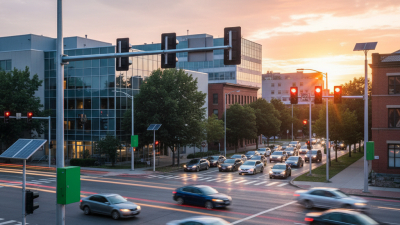
Solar traffic signal lights support intersections, pedestrian crossings, school zones, and rural roads with limited grid access. They also help manage temporary construction areas, parking entrances, private campuses, and emergency detours. Their LED signals remain visible at night while photovoltaic panels recharge batteries during daylight. In field projects, I have found that placement matters as much as power capacity. Trees, dust, snow, and nearby buildings can reduce charging performance. Some installations work well for several cloudy days, but others need larger batteries or backup power.

Tips: Check the daily sunlight, traffic speed, mounting height, and viewing distance before installation. Select sealed housings for rain and dust. Test signal brightness at night, not only during daytime inspections. Confirm the controller supports the required timing pattern and safety features. Local road authorities should review every public-road installation.

Solar signals are especially practical where trenching is expensive or disruptive. They can reduce civil work and keep remote crossings operational. However, “maintenance-free” is an unreliable assumption. Batteries age, panels collect dirt, and harsh weather changes performance. A monthly inspection can identify loose wiring, weak illumination, or unusual battery discharge. Record these findings. Small data gaps can still affect planning. A short pilot installation often reveals problems that technical drawings miss.