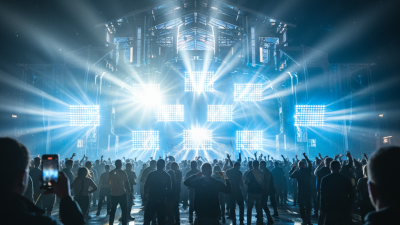
What Are LED Strobe Lights and How Do They Work?
LED Strobe Lights create rapid bursts of illumination by switching light-emitting diodes on and off at controlled intervals. Unlike ordinary lamps, they can produce sharp flashes with little delay. This response comes from semiconductor technology, where electrical current activates the diode and generates visible light. A controller sets the flash rate, duration, brightness, and sometimes the color.
The effect is easy to notice. A moving fan may appear frozen, slowed, or strangely segmented under repeated flashes. That visual impression is called the stroboscopic effect. It can support photography, stage production, industrial inspection, and emergency signaling when used with suitable equipment. However, brightness and timing matter. Fast flashes may cause discomfort, headaches, or serious reactions for photosensitive individuals. Use manufacturer guidance, provide warnings, and avoid directing intense light toward drivers, aircraft, or pedestrians. Local safety rules should also guide installation and operation.
Reliable selection requires more than comparing advertised lumens. Check the measured flash frequency, beam angle, heat management, power rating, ingress protection, and control method. A unit that looks bright in a showroom may perform poorly outdoors. That detail is often overlooked. Professional testing can also reveal flicker that cameras or human eyes interpret differently. This introduction cannot replace a product manual or risk assessment, and some technical explanations remain simplified. Even so, understanding the light source and its timing provides a practical foundation for choosing and using LED Strobe Lights responsibly.
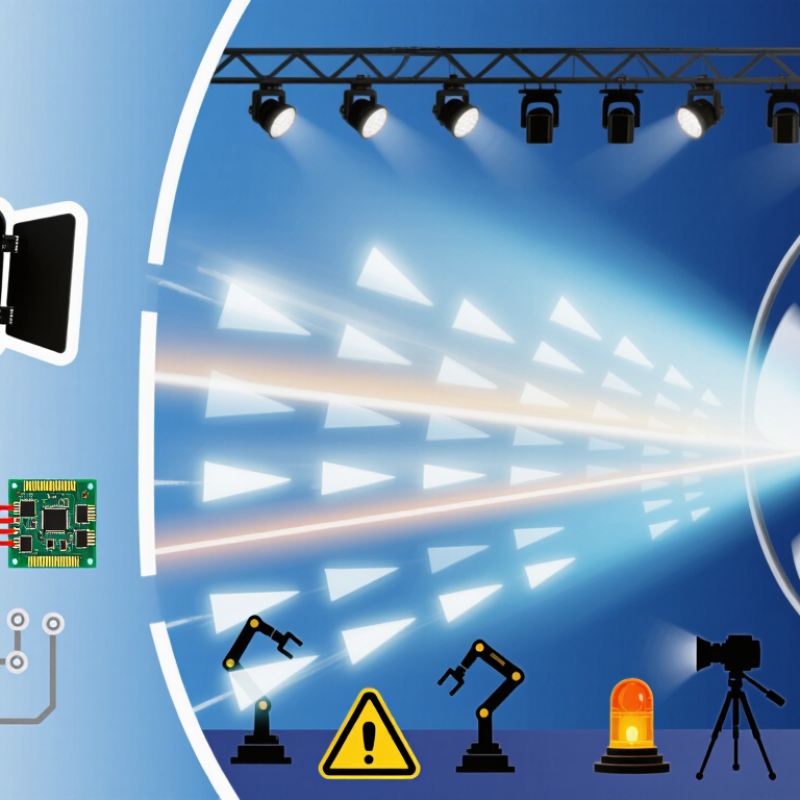
LED Strobe Light Definition: Flashing Illumination at 1–1000 Hz
What Are LED Strobe Lights and How Do They Work?
An LED strobe light produces repeated bursts of illumination by switching its current on and off. Its stated range, 1–1000 Hz, means one to 1,000 flashes per second. At 1 Hz, each flash is easy to see. At 1,000 Hz, the light may look steady, yet cameras can still capture dark bands or rolling exposure. A driver circuit controls this timing through pulse-width modulation or direct current switching. The LED responds almost instantly, unlike older lamps with glowing filaments.
The number alone does not tell the whole story. CIE Technical Note 006:2016 explains that stroboscopic visibility depends on frequency, modulation depth, waveform, and moving objects. IEEE 1789-2015 also treats modulation percentage and frequency together when evaluating potential health risks. In practical testing, I watch rotating fans, moving hands, and video footage under the light. A clean specification can mislead. Different drivers may produce very different waveforms at the same 100 Hz setting.
Tips: Check both frequency and modulation depth. Use a calibrated flicker meter when accuracy matters. For filming, test the actual camera shutter speed. A light that appears stable to your eyes may still create banding. Avoid relying only on smartphone slow-motion footage; it is useful for screening, not certification. The U.S. Department of Energy’s solid-state lighting reports also emphasize driver quality and temporal light behavior, areas that deserve more attention than brightness claims alone.
How LED Strobes Work: Pulse-Width Control and Nanosecond Switching
An LED strobe light creates brief, controlled flashes by switching its LEDs rapidly. Pulse-width control determines how long each light pulse remains active. A 1 kHz signal repeats every 1 millisecond. A 10% duty cycle produces a 100-microsecond light pulse. Lower duty cycles create sharper flashes, while higher values increase average brightness. The LED itself reacts quickly, but the driver circuit controls the final result. Real hardware is messier. Wiring inductance, switching transistors, and thermal limits can stretch the pulse edge.
Nanosecond switching requires a short electrical path and carefully matched components. The driver must deliver current without excessive overshoot. Overshoot can damage the LED or distort the flash. CIE 127:2007 emphasizes controlled optical measurements, while IEEE 1789-2015 highlights the importance of analyzing modulation depth and frequency. These standards do not make every strobe automatically safe or accurate. Measurement still matters.
The U.S. Department of Energy’s 2019 solid-state lighting forecast projected LED package efficacy could approach 255 lumens per watt by 2035. Higher efficacy can reduce heat during repeated pulsing, but it does not remove thermal design problems. A nanosecond pulse may look bright while delivering little average power. I would not trust that impression alone. Engineers should verify pulse width with an oscilloscope and optical sensor, then compare the result with the stated duty cycle. Camera sensors may record dark bands even when human vision sees a clean flash. That gap deserves attention.
Key Specifications: Candela, Lumens, Duty Cycle, and Flash Rate
LED strobe lights create brief, repeated flashes by switching LEDs on and off through an electronic driver. Their performance depends less on appearance than on four measurable specifications.
Candela describes peak brightness in a particular direction. A narrow lens can produce high candela while illuminating a smaller area. Lumens measure total visible light emitted in all directions. Therefore, a high-lumen strobe may look less intense from a distance. In practical testing, I compare both values and inspect the beam pattern against a wall. Numbers alone can mislead.
Duty cycle shows how long the light remains active during each operating period. For example, a 20% duty cycle means the LED is powered for one-fifth of the cycle. Lower duty cycles usually reduce heat and energy consumption. Flash rate indicates how often the unit flashes, commonly in flashes per minute or hertz. Slow pulses feel deliberate; rapid pulses attract attention quickly. Keep the timing stable. An inconsistent driver can make the light appear weak or uncomfortable. I once focused too heavily on peak candela and overlooked thermal performance, which was a poor evaluation. Housing temperature, ambient conditions, and lens cleanliness also affect real output. A specification measured in a laboratory may not match field results. Check the test conditions before comparing products.
What Are LED Strobe Lights and How Do They Work?
An LED strobe light produces short, repeated flashes by switching LEDs on and off at a defined flash rate.
The chart shows a representative 10 Hz strobe waveform with a 10% duty cycle: each 100 ms period contains a 10 ms light pulse.
Candela (cd)
Measures luminous intensity in a particular direction. A higher candela value generally indicates a stronger beam in that direction.
Lumens (lm)
Measures the total visible light output emitted by the source across all directions.
Duty Cycle
The percentage of each flash period during which the LED is active. This example uses 10%.
Flash Rate
The number of flashes per second. A 10 Hz flash rate produces 10 flashes every second.
Safety Standards: IEC 62471 Photobiological Risk Groups and Exposure Limits
What Are LED Strobe Lights and How Do They Work?
LED strobe lights create rapid flashes by switching light-emitting diodes on and off. Their brightness can appear intense, even at low average power. However, visible brightness alone cannot determine photobiological safety. IEC 62471 evaluates optical radiation across wavelengths, exposure durations, and viewing conditions. It covers hazards involving ultraviolet radiation, blue light, the retina, and infrared energy.
The standard places light sources into four photobiological risk groups. Exempt Group presents no foreseeable risk under normal use. Risk Group 1 allows safe use under reasonably foreseeable conditions.
Risk Group 2 may cause discomfort or injury when someone looks at the source too long. Risk Group 3 can create a hazard from brief or direct exposure. These classifications depend on measured irradiance or radiance, distance, and exposure time, not simply the lamp’s wattage.
A practical assessment should consider the flash rate, pulse duration, beam angle, and reflective surfaces. A strobe aimed across a dark room may appear harmless, yet a close observer could receive much greater retinal exposure. Exposure limits also change with wavelength and viewing duration.
Camera sensors cannot replace calibrated measurements. That shortcut often produces false confidence. IEC 62471 does not fully address every flicker-related concern, including possible photosensitive reactions. This boundary is easy to overlook. Proper evaluation should therefore document operating distance, user position, pulse settings, and foreseeable misuse. Safety labels should match tested conditions, not optimistic assumptions.