How to Choose LED Strobe Lights for Global Buyers?
Choosing Led Strobe Lights for international projects requires more than comparing brightness and price. The IEA’s 4E Solid State Lighting Annex reports that LED technology now represents a major share of global lighting sales, reflecting its efficiency and long service potential. However, a high adoption rate does not guarantee that every strobe product suits every application. A warehouse beacon, marine warning light, and industrial signal may require very different optical and environmental performance.
Reliable purchasing begins with measurable details. Buyers should examine flash frequency, luminous intensity, beam angle, duty cycle, operating temperature, ingress protection, and expected service life. The IEC 60598-1 safety framework provides a useful reference for luminaires, while IEC 62471 helps assess photobiological safety. Electromagnetic compatibility also matters, especially near radios, sensors, and automated equipment. A lamp that looks impressive in a showroom may perform poorly through rain, dust, vibration, or tinted covers.
Certification claims deserve careful checking. The U.S. Department of Energy’s Solid-State Lighting research reports emphasize thermal management, electrical reliability, and long-term performance as important LED design factors. These issues directly affect global purchasing decisions. Ask for test reports, not only product labels. Request samples.
MarketsandMarkets’ LED Lighting Market research also highlights continuing demand for efficient, connected, and application-specific lighting systems. Yet market forecasts cannot replace field testing. That assumption can fail. A responsible buyer should compare tested samples, installation conditions, warranty terms, replacement access, and regional compliance requirements before approving volume orders. This guide explains how to evaluate Led Strobe Lights with practical evidence, technical discipline, and room for honest uncertainty.
What Are LED Strobe Lights and How Do They Work?
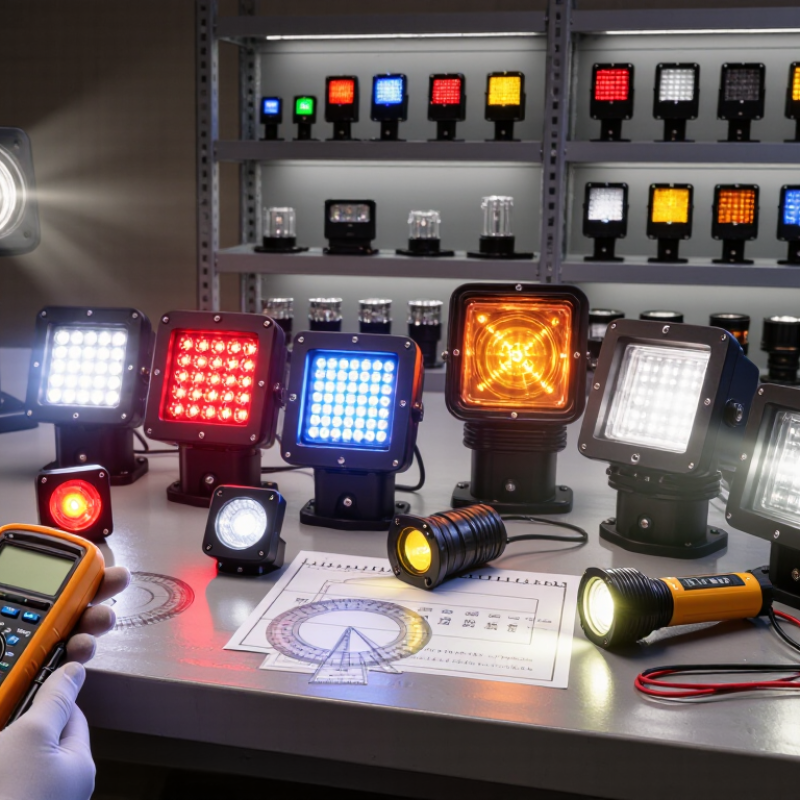
An LED strobe light is not simply a bright lamp. It produces rapid light pulses through a semiconductor, driver circuit, and timing controller. When current reaches the LED chips, electrons release photons almost instantly. The controller then interrupts or reduces current at a chosen frequency. This creates visible flashes, while a capacitor can support short, powerful pulses. Pulse width, flash rate, and duty cycle determine brightness, heat, and service life.
The International Energy Agency’s 2024 Energy Efficiency report states that LEDs held about half of global general-lighting sales in 2022. The U.S. Department of Energy reports that LEDs can use at least 75% less energy than incandescent lighting. However, strobe performance needs closer inspection. A high lumen rating may describe continuous output, not peak flash intensity. That difference matters.
Global buyers should check input voltage, frequency, flash rate, pulse duration, and thermal limits. Confirm whether the driver accepts 100–240 V AC or requires a fixed supply. Look for test evidence covering electromagnetic compatibility and photobiological safety, such as IEC 62471 and applicable IEC lighting requirements. IP ratings also matter in dusty or wet locations. A practical warning: published specifications can be incomplete. Ask for measured waveforms, operating-temperature data, and lifetime assumptions. The specification is still incomplete.
Which LED Strobe Light Specifications Matter Most?
How to Choose LED Strobe Lights for Global Buyers?
Which LED Strobe Light Specifications Matter Most?
When comparing LED strobe lights, start with flash intensity and visible range. Lumens alone can mislead because optics, lens design, and beam angle affect real-world visibility. A narrow beam may look brighter at a distance, while a wide beam covers more area. Check the stated flash frequency, too. Some applications need steady warning pulses, while others require adjustable patterns. I once selected a light based only on brightness. It performed poorly in a large, dusty workspace.
Voltage compatibility matters globally. Confirm the input range, such as 12–24V DC or a wider industrial supply. Check current draw before connecting the unit to existing equipment. Housing protection is equally important. An IP rating can indicate resistance to dust and water, but installation conditions still matter. Heat is often overlooked. Aluminum housing, ventilation, and thermal protection can support longer service life. Not every impressive specification reflects durable performance.
Tips: Ask for test data, wiring diagrams, and operating limits. Verify flash frequency, working temperature, vibration resistance, and connector type. Request regional compliance documents when importing. A useful test places the light at its intended distance, then checks visibility in sunlight, rain, and dusty conditions. Do not trust marketing language alone. Real installation feedback is valuable, though it may reveal weaknesses that the specification sheet hides.
How to Match Strobe Lights to Different Applications?
Choosing LED strobe lights globally requires more than comparing brightness. Match the light to the scene, hazard, and operating distance. On a loading dock, a wide lens and amber output can attract attention without creating harsh glare. A compact red strobe may suit a control panel, where status recognition matters more than long-range visibility. Measure the viewing angle, not only the rated luminous intensity.
For mobile equipment, select a vibration-resistant housing, secure mounting, and a flash pattern visible in daylight. Construction vehicles may need high ingress protection, sealed connectors, and a voltage range suited to unstable power systems. In cold storage rooms, check the minimum operating temperature before ordering. A light that works indoors may fail near a freezer door. Flash frequency also deserves care. Rapid pulses can improve noticeability, but they may distract workers or conflict with site safety procedures. Verify local workplace requirements.
Marine and washdown areas demand corrosion resistance, sealed cable entries, and an appropriate IP rating. IP numbers indicate tested protection, not unlimited exposure. Ask for test conditions and installation limits. For warehouses, synchronize multiple strobes only when the control system supports it. Otherwise, uneven flashes can confuse operators. Review wiring diagrams, duty cycles, and replacement access with an electrician or safety engineer. A common buying mistake is choosing the brightest model. More light is not always better. Consider distance, background color, ambient light, and the observer’s position. Prototype one unit on site when possible. Product sheets can miss real reflections.
How to Choose LED Strobe Lights for Global Buyers?
Recommended planning flash rates for different strobe-light applications.
Industrial Machinery
A 1–2 Hz flash rate is commonly used for visual machine warnings. Select at least IP54 indoors and IP65 or higher for exposed areas.
Fire and Life Safety
Fire alarm strobes commonly operate near 1 Hz. Always verify local fire-code requirements for flash pattern, coverage, candela, and synchronization.
Road and Emergency Vehicles
Vehicle warning systems often use faster patterns around 1.5 Hz. Check vehicle regulations, visibility requirements, and permitted colors in the target market.
Marine and Aviation
Marine installations typically need strong sealing and corrosion resistance. Aviation obstruction lights use regulated flash characteristics, so local authority approval is essential.
The values shown are representative planning benchmarks, not universal legal limits. Final selection should consider local standards, required visibility distance, operating environment, ingress protection, temperature range, and hazardous-area certification.
How to Compare Suppliers, Costs, and Long-Term Reliability?
Choosing LED strobe lights for global projects requires more than comparing unit prices. In my sourcing experience, supplier quality often appears in small details: clear wiring diagrams, stable test records, and fast answers to technical questions. Ask for samples before placing a large order. Check flash frequency, brightness, heat management, mounting strength, and performance after several hours of operation.
Compare the full landed cost, not only the quotation. Include packaging, shipping, import charges, testing fees, spare parts, and possible rework. A low-cost light can become expensive when the supplier requires a high minimum order or offers limited technical support. Request itemized pricing, production lead times, payment terms, and warranty conditions. Some suppliers promise long warranties but provide vague replacement procedures. That is a warning sign.
Long-term reliability needs evidence. Review factory inspection reports, aging-test results, ingress protection data, and production consistency across different batches. Ask whether critical components can be replaced without changing the entire fixture. Contact recent customers if possible, and check how complaints were handled, not just whether complaints existed. I once focused too heavily on price and overlooked connector quality. The products worked, but installation took longer than planned. That mistake changed my supplier checklist. A dependable partner should communicate clearly when a specification cannot be met. Honest limits are better than impressive promises.