2026 How to Choose the Right Road Safety Sign for Your Needs?
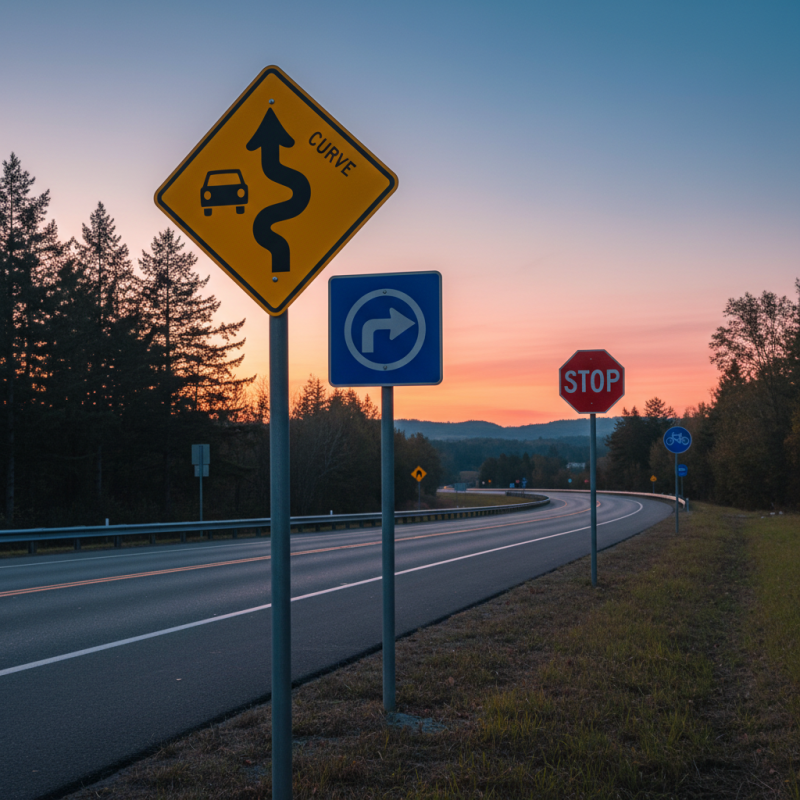
Choosing the right Road Safety Sign can drastically improve safety. According to David Thompson, a road safety expert, “Proper signage saves lives.” When selecting a sign, consider its purpose. Is it to warn? Or to instruct? Each Road Safety Sign serves a specific need.
Colors and symbols play a crucial role. Bright colors attract attention. Symbols should be easily identifiable. However, not every sign fits every situation. For instance, using a stop sign in a non-critical area may confuse drivers.
Reflecting on your specific context is essential. Think about the traffic flow and common hazards. Each environment presents unique challenges. Tailoring your choice of Road Safety Sign to your needs can lead to better outcomes. Remember, signs are only as effective as their relevance. Always evaluate their impact in real-world scenarios.
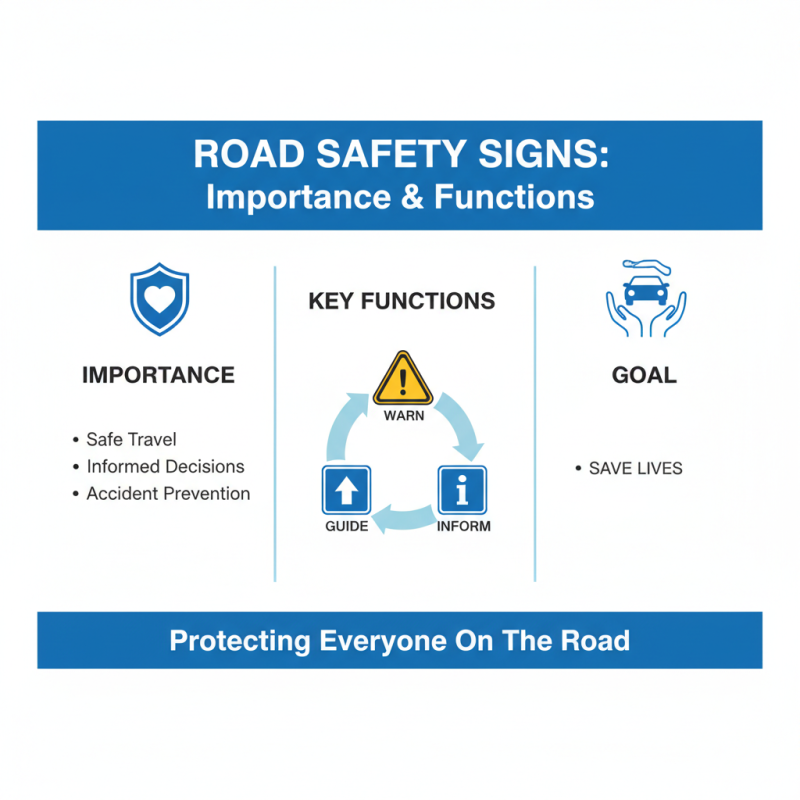
Understanding Road Safety Signs: Importance and Functions
Road safety signs play a crucial role in maintaining safe travel. They provide essential information to drivers, pedestrians, and cyclists. Understanding these signs helps everyone make informed decisions on the road. Each sign has a specific function, whether to warn, inform, or guide. This clarity can prevent accidents and save lives.
The importance of road safety signs cannot be overstated. They alert us to hazards or changes in road conditions. Imagine approaching a sharp turn without a warning sign. The potential for mishaps increases significantly. Yet, we often take these signs for granted. We need to recognize their value in our daily commutes. A stop sign promotes discipline in driving but can sometimes be ignored. This oversight can lead to severe consequences.
Choosing the right signs for specific needs is essential. Not every situation is the same. A construction area might require different signage compared to a school zone. Assessing the environment and traffic flow helps in making the right choices. Sometimes, signs can be overlooked due to poor visibility or placement. Reflecting on these details can improve overall road safety for everyone.
Different Types of Road Safety Signs: A Comprehensive Overview
When it comes to road safety signs, a variety of types serve different purposes.
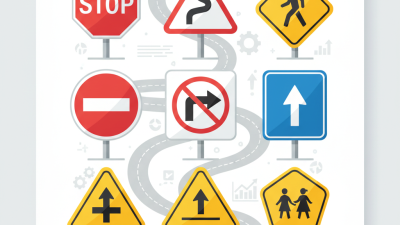
Regulatory signs, like stop and yield signs, inform drivers of laws to follow.
Warning signs, such as those indicating sharp turns or pedestrian crossings, alert motorists to potential hazards ahead.
Guidance signs provide directions or distances, helping you navigate safely. Each sign has its role, yet people often overlook their importance.
Choosing the right sign is not as straightforward as it seems. Drivers frequently miss key information in less visible signage.
Some signs blend into their surroundings too well, making them hard to notice.
It's crucial to consider the sign's placement too. A well-placed sign saves lives, while a poorly positioned one could cause confusion.
People often prioritize aesthetics over functionality when selecting signs. This can lead to overlooking essential design elements.
Clarity is vital; a sign should communicate its message at a glance.
Reflective materials can enhance visibility. However, what works in one location may not work in another.
Identifying local needs is essential.
Factors Influencing the Selection of Road Safety Signs
Choosing the right road safety sign involves several critical factors. One key element is visibility. A sign must stand out in various weather conditions. Studies show that nearly 30% of accidents occur due to poor visibility of signs. Using high-contrast colors can significantly improve recognition.
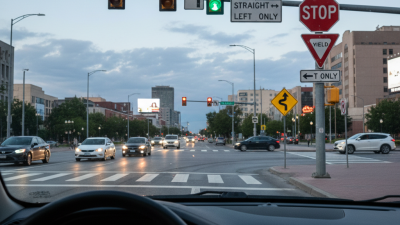
Another important factor is the local context. Different areas have unique traffic patterns. In urban areas, signs may need to accommodate higher pedestrian traffic. According to a report by the Traffic Safety Administration, areas with clear pedestrian signage saw a 25% decrease in accidents. Signs must be tailored to these specific needs.
Regulatory standards also play a role. Each state has guidelines governing sign dimensions and materials. Failure to comply can render a sign ineffective. Yet, many municipalities overlook these guidelines, leading to safety risks. A well-designed sign should balance compliance, visibility, and local context to enhance road safety effectively.
2026 How to Choose the Right Road Safety Sign for Your Needs? - Factors Influencing the Selection of Road Safety Signs
| Factor |
Description |
Importance Level |
Example Signs |
| Sign Visibility |
The ability of the sign to be seen and understood in different weather conditions and lighting. |
High |
Reflective Stop Sign, LED Speed Limit Sign |
| Regulatory Compliance |
Ensuring that signs meet local and national traffic regulations. |
Critical |
Yield Sign, No Parking Sign |
| Location |
Consideration of the placement of the sign to ensure maximum effectiveness. |
Medium |
Pedestrian Crossing Sign, Curve Ahead Sign |
| Sign Size |
The dimensions of the sign, which should be appropriate for the distance from which it will be seen. |
High |
Large Warning Signs, Small Directional Signs |
| Audience |
Understanding the demographics and types of users who will be encountering the signs (drivers, pedestrians, etc.). |
Medium |
Child Safety Zone, Elderly Crossing Sign |
Industry Standards and Regulations for Road Safety Signage
When choosing road safety signs, industry standards and regulations play a crucial role. These guidelines ensure that signs are effective and compliant with safety protocols. The Manual on Uniform Traffic Control Devices (MUTCD) provides invaluable resources. It establishes design, placement, and usage specifications that all road signage must follow. Compliance with these standards helps prevent confusion for drivers.
Awareness of local regulations is also essential. Each region may have specific requirements. For example, some states require unique colors or sizes for certain warning signs. Not all signs are created equal; the needs of urban environments differ from rural areas. Understanding these nuances is key.
Selecting the right sign isn’t just about aesthetics; it’s about ensuring safety. A poorly placed or designed sign can lead to accidents. Piloting new designs in small areas may reveal flaws in visibility or comprehension. Gathering community feedback can sometimes uncover blind spots in regulations. Always remember: road safety signs must communicate clearly and effectively to promote public safety.
Evaluating the Impact of Road Safety Signs on Traffic Safety Data
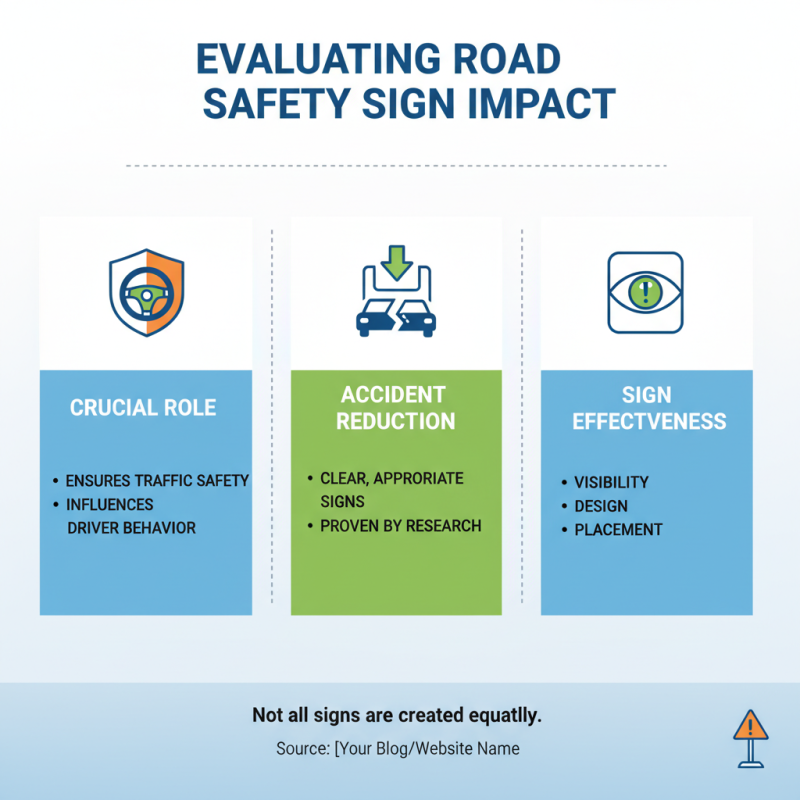
Road safety signs play a crucial role in ensuring traffic safety. Their influence on driver behavior is significant. Research shows that clear and appropriate signage reduces accidents. Not all signs are created equal, though. The effectiveness of a sign depends on its visibility, design, and placement.
When choosing a road safety sign, consider the environment. Is the area urban or rural? Bright colors may stand out on busy streets. On quiet roads, simpler signs may be more effective. Think about the message. It should be easy to read, even at a distance.
Tips: Use reflective materials for nighttime visibility. Consider adding symbols or icons to convey messages quickly. Regularly assess the condition of existing signs. If they are faded or damaged, safety is compromised. Reflect on how often signs are ignored. A sign's placement might need adjustment to capture driver attention effectively. Conduct surveys to gauge driver response. Their feedback can guide future improvements.