China has become a major source of Road Safety products for highways, construction zones, parking areas, and urban streets. Its factories produce traffic cones, water-filled barriers, reflective signs, solar warning lights, speed humps, delineators, guardrails, and crash cushions. However, the lowest price does not always indicate the best value.
Dr. Etienne Krug, a leading road safety specialist at the World Health Organization, has said, “Road safety is a shared responsibility.” That idea should guide every purchasing decision. A reliable product must protect road users, support clear visibility, and perform consistently under rain, heat, traffic impact, and repeated handling. Details matter. A cone needs a stable base, strong reflective bands, and flexible material. A solar warning sign needs dependable battery life, visible LEDs, and weather-resistant housing.
Chinese suppliers can offer competitive manufacturing, customization, and large-scale production. Experienced buyers should still examine factory records, material specifications, test reports, and quality-control procedures. Look for traceable batches. Ask for samples. Test products in realistic conditions.
Some claims sound convincing but remain incomplete. A bright sign may fail after several wet nights. A barrier may look strong but move too easily during impact. This is where careful evaluation matters.
The best products are not simply inexpensive. They match the road environment, comply with relevant local standards, and deliver dependable performance over time. Even this approach has limits. Product quality can vary between suppliers, and paperwork alone cannot replace field testing. A thoughtful guide must recognize both China’s manufacturing strengths and the practical risks of choosing without sufficient evidence.
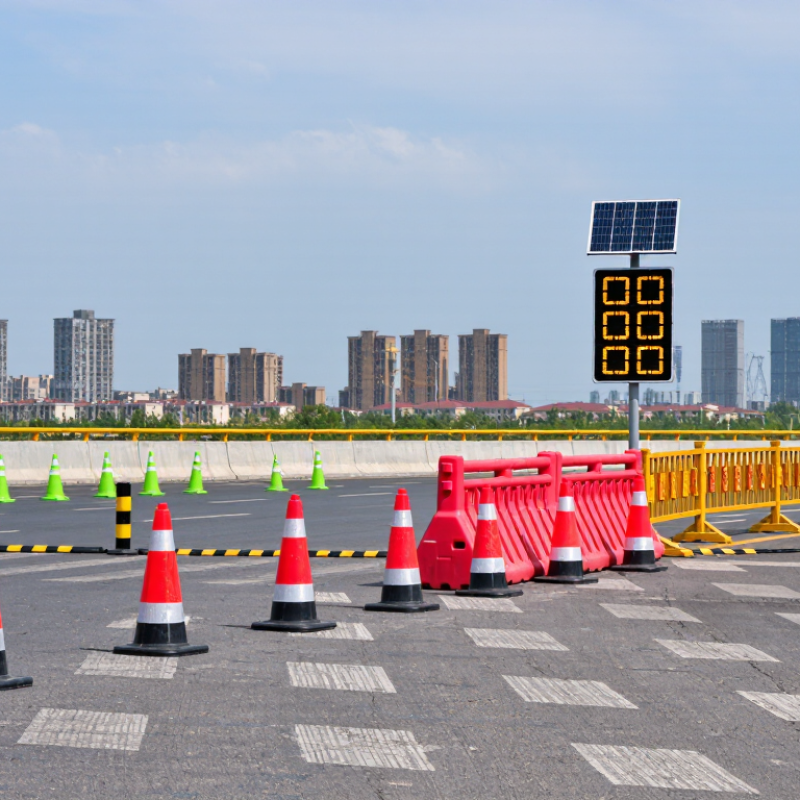
China manufactures a wide range of road safety products for highways, urban streets, parking areas, and construction zones. Common items include traffic cones, water-filled barriers, flexible bollards, guardrails, road studs, warning signs, and reflective tapes. Many factories also produce solar-powered warning lights, LED arrow boards, speed humps, and temporary lane separators.
Material selection affects service life. High-quality cones usually use flexible PVC or rubber that remains visible after repeated impact. Barriers often use high-density polyethylene, with molded handles and drainage points for easier deployment. Reflective signs require stable aluminum panels and weather-resistant films. Road studs need strong lenses, secure anchors, and accurate placement. Manufacturing experience helps, but inspection still matters.
Reliable suppliers normally check dimensions, color consistency, reflectivity, impact resistance, and ultraviolet aging. Buyers should request test records and inspect samples before large orders. A bright product is not automatically a safe product. Poorly sealed lights may fail after heavy rain. Weak bases can move in strong wind. Small details matter.
Some products look durable but become brittle in cold weather. Others fade faster than expected near coastal roads. This is where practical testing becomes essential. Factory quality control can reduce risk, yet installation conditions remain difficult to predict. Choosing the correct product requires checking traffic speed, road surface, climate, visibility distance, and maintenance access.
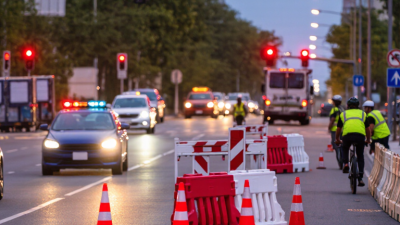
China offers a wide range of road safety products, but quality depends on tested performance, not appearance. The World Health Organization’s Global Status Report on Road Safety 2023 records about 1.19 million road deaths annually. This figure makes visibility and impact protection essential.
High-quality Chinese equipment should use durable retroreflective sheeting, stable pigments, and UV-resistant materials. Warning signs should meet relevant standards, such as EN 12899-1 or ASTM D4956, when required by the destination market. Cones and barriers need flexible bodies, weighted bases, and reliable recovery after impact. Solar warning lights should provide clear night visibility, sealed housings, and tested battery performance.
An IP rating helps, but it does not prove long-term durability. Salt-spray testing, temperature testing, and batch traceability provide stronger evidence.
A low price can mislead. I would not judge a product from catalog photos alone. A reflective panel may look bright indoors, yet perform poorly through rain or dust.
Tips:
Request independent test reports, sample approvals, and production records. Check visibility from a driver’s distance, not only from one meter away. Confirm dimensions and reflective grades before ordering. Ask how failed batches are handled. This detail matters.
The World Bank also links safer road design and equipment with reduced crash risks, although equipment alone cannot solve poor traffic planning. Some buyers still overlook installation quality, which weakens otherwise reliable products.
Choosing the best road safety products from China starts with evaluating the supplier, not the catalog. A bright sample can hide weak materials. Ask for product specifications, testing records, and production photos before discussing large orders. Check whether the supplier has experience with barriers, traffic cones, warning lights, or reflective signs for your climate.
Request samples from the same production line used for mass orders. Examine reflective brightness at night, rubber flexibility in cold weather, and color fading after outdoor exposure. A serious supplier should explain material grades, tolerances, packaging, and inspection procedures clearly. Factory audits can reveal basic details, such as storage conditions, calibration records, and worker quality checks. Small details matter.
Verify test reports with the issuing laboratory whenever possible. Do not rely on scanned certificates alone. Confirm that the products meet the standards required in your destination market. Review traceability, batch numbers, replacement policies, and delivery capacity. Ask how defects are handled after shipment. The answer often shows more than a sales presentation.
Communication deserves practical testing. Send a detailed drawing and request a written quotation with every assumption listed. Compare response time, technical accuracy, and willingness to admit limitations. Some suppliers promise every feature too quickly. That is a warning sign. I would rather work with a supplier who says “we need to test this” than one offering instant certainty. Even experienced buyers can miss hidden costs, including mold fees, export packaging, and repeated sample changes.
What Are the Best Road Safety Products from China?
Safety Standards and Certifications for Chinese Road Products
Road safety products should be judged by verified performance, not appearance or price. The WHO Global Status Report on Road Safety 2023 recorded about 1.19 million annual road deaths worldwide. It also reported 20–50 million non-fatal injuries. These figures make certification and field testing essential.
Chinese manufacturers commonly reference the GB 5768 series for road traffic signs and markings. Guardrails, cones, delineators, and warning lights may follow different Chinese standards. Export buyers should compare these requirements with EN 1317, ASTM specifications, or local highway rules. CCC certification applies only to listed product categories. It is not a universal safety approval. ISO 9001 shows quality-management control, while ISO 39001 concerns road-traffic safety management. Neither certificate alone proves crash performance. Ask for recent test reports from laboratories accredited to ISO/IEC 17025. Check impact results, retroreflectivity, corrosion resistance, UV exposure, and batch traceability.
Tips: Request the exact standard number and testing date. Confirm whether the report covers the supplied model, not a similar sample. Inspect packaging, serial labels, and installation instructions. A certificate alone can mislead. I have seen documents that looked complete but lacked test conditions. That weakness deserves careful review. Also check local approval before shipment, because national requirements can differ sharply. Keep spare parts and maintenance records available; neglected warning lights or damaged barriers quickly lose their protective value.
Selecting road-safety products from China should begin with road conditions, not catalog photos. The WHO Global Status Report on Road Safety 2023 records about 1.19 million annual road deaths worldwide. It also reports that low- and middle-income countries account for 92% of these deaths. Visibility and speed control deserve careful attention.
Dense urban streets need high-retroreflective delineators, compact LED beacons, pedestrian barriers, and clearly positioned warning signs. Wet headlights can weaken poor reflective materials. The FHWA Manual on Uniform Traffic Control Devices stresses consistent visibility, placement, and message clarity. For school zones, use speed cushions, flashing crossing signs, and barriers with rounded edges. They should remain visible at night. Small details matter.
Mountain roads require flexible posts, guardrail reflectors, and solar warning beacons for sharp bends. Coastal or rainy routes need galvanized or polymer-coated components, sealed electronics, and drainage-friendly bases. Construction zones benefit from water-filled barriers, portable variable-message signs, and weighted channelizers. The PIARC Road Safety Manual supports a safe-system approach, recognizing that people make mistakes and roads should reduce injury consequences. That principle changes purchasing decisions.
Chinese manufacturers can offer useful customization, but samples alone prove little. Request independent test reports for retroreflectivity, impact resistance, UV aging, and electrical ingress protection. Check installation drawings and replacement-part availability. A cheaper beacon may fail after one wet season. That assumption is risky. Product selection should also match the destination’s traffic standards, climate data, road speed, and maintenance capacity. Some projects still overbuy bright equipment while neglecting placement. That is an expensive lesson.
A practical comparison of commonly manufactured road safety products and the specifications suited to different traffic and weather conditions.
| Road Safety Product | Best Road Conditions | Recommended Specifications | Key Safety Function | Important Selection Criteria | Typical Service Considerations |
|---|---|---|---|---|---|
| Retroreflective Traffic Signs | Urban roads, highways, intersections, construction zones and locations with nighttime traffic. | Aluminum sign panels with weather-resistant printed or sheeting-based surfaces; select retroreflective performance according to the applicable local standard. | Improves sign visibility when illuminated by vehicle headlights. | Retroreflectivity, color stability, viewing angle, corrosion resistance, edge finishing and compliance with local sign dimensions. | Inspect for fading, peeling, dents, dirt and reduced nighttime brightness; clean without abrasive chemicals. |
| Solar-Powered LED Warning Beacons | Remote roads, temporary hazards, sharp bends, school zones and areas without reliable grid power. | LED beacon with photovoltaic panel, rechargeable battery, automatic dusk-to-dawn control and optional flashing modes. | Provides an active visual warning during darkness or poor visibility. | Battery capacity, solar charging performance, optical intensity, waterproof enclosure, operating temperature and anti-theft mounting. | Keep the solar panel clean and check battery condition, flashing operation and mounting security. |
| Flexible Delineator Posts | Curves, narrow lanes, road edges, temporary traffic diversions and areas exposed to occasional vehicle contact. | UV-resistant polymer or flexible plastic body with high-visibility retroreflective bands and a stable base. | Marks road alignment and helps drivers judge lane boundaries at night. | Flexibility, recovery after impact, UV resistance, base stability, reflective area and compatibility with local installation spacing. | Replace units that remain bent, become brittle, lose reflective material or have damaged bases. |
| Water-Filled Traffic Barriers | Urban construction areas, lane closures, pedestrian protection zones and temporary road works. | High-visibility polyethylene barrier sections with interlocking connectors, drain plugs and optional reflective panels. | Separates traffic from workers, pedestrians and work equipment while remaining transportable when empty. | Wall thickness, connection strength, ballast capacity, wind stability, temperature resistance and impact performance. | Check for leaks, cracks, damaged connectors, loss of ballast and displacement after impact or severe weather. |
| Conspicuity Traffic Cones | Temporary lane changes, maintenance work, parking control, accident scenes and indoor or outdoor traffic management. | Flexible PVC or rubber cone with a weighted base and one or more retroreflective collars; height should match local requirements. | Creates a clear temporary visual channel for vehicles and pedestrians. | Base weight, flexibility, visibility, collar adhesion, UV resistance, wind stability and resistance to cracking in cold weather. | Clean regularly and remove cones that are deformed, faded, split or missing reflective collars. |
| Raised Pavement Markers | Lane lines, medians, ramps and rural roads where drivers need additional nighttime lane guidance. | Polycarbonate or ceramic marker with reflective lenses and an adhesive or mechanically fixed installation system. | Provides tactile and optical lane guidance, especially in darkness or light rain. | Reflective intensity, compressive strength, skid resistance, drainage design, bonding method and compatibility with snowplows. | Ensure the pavement is clean and dry during installation; inspect for detachment, lens damage and excessive wear. |
| Temporary Road Studs and Lane Marking Tape | Short-term road works, temporary lane arrangements, event traffic control and rapidly changing work zones. | High-visibility tape or removable marking system with strong initial adhesion and clear day-and-night contrast. | Communicates temporary lane boundaries without relying solely on permanent pavement markings. | Application temperature, surface compatibility, removal behavior, wet visibility, abrasion resistance and traffic-load suitability. | Apply to clean surfaces, inspect after heavy traffic and remove before the temporary layout becomes confusing. |
| Guardrail and Barrier Reflectors | Mountain roads, bridges, tunnels, medians and roadside sections with limited lighting. | Weather-resistant reflector units mounted to guardrails, concrete barriers or posts; color and orientation should follow local traffic rules. | Outlines hazards and road alignment beyond the reach of ordinary pavement markings. | Reflective performance, mounting durability, impact resistance, drainage, corrosion resistance and correct directional color. | Check alignment, fasteners, lens cleanliness, corrosion and damage after collisions or road maintenance. |
| Anti-Glare Road Screens | Divided highways, elevated roads and curves where headlight glare from opposing traffic is a concern. | UV-stabilized polymer or metal screen mounted to a median barrier or guardrail, with spacing selected for the road geometry. | Reduces direct headlight glare and helps drivers maintain visual focus. | Wind load, structural fixing, UV resistance, visibility through the screen, maintenance access and local road authority requirements. | Inspect fixings, deformation, accumulated dust, corrosion and any obstruction to sight distance or drainage. |