



The "Evolution History" of Traffic Facilities: From "Manual Signaling" to "AI Full-Link Management"
When vehicles in modern cities pass in order under AI-controlled traffic lights and radar speed signs synchronize data to the traffic command center in real time, few people think that a century ago, traffic management relied on "manual signaling". The century-long evolution of traffic facilities is not only the iteration of technology, but also the continuous response to the demand for "efficient and safe travel" — from a single device to an intelligent system, every breakthrough is reshaping the operation logic of urban traffic.
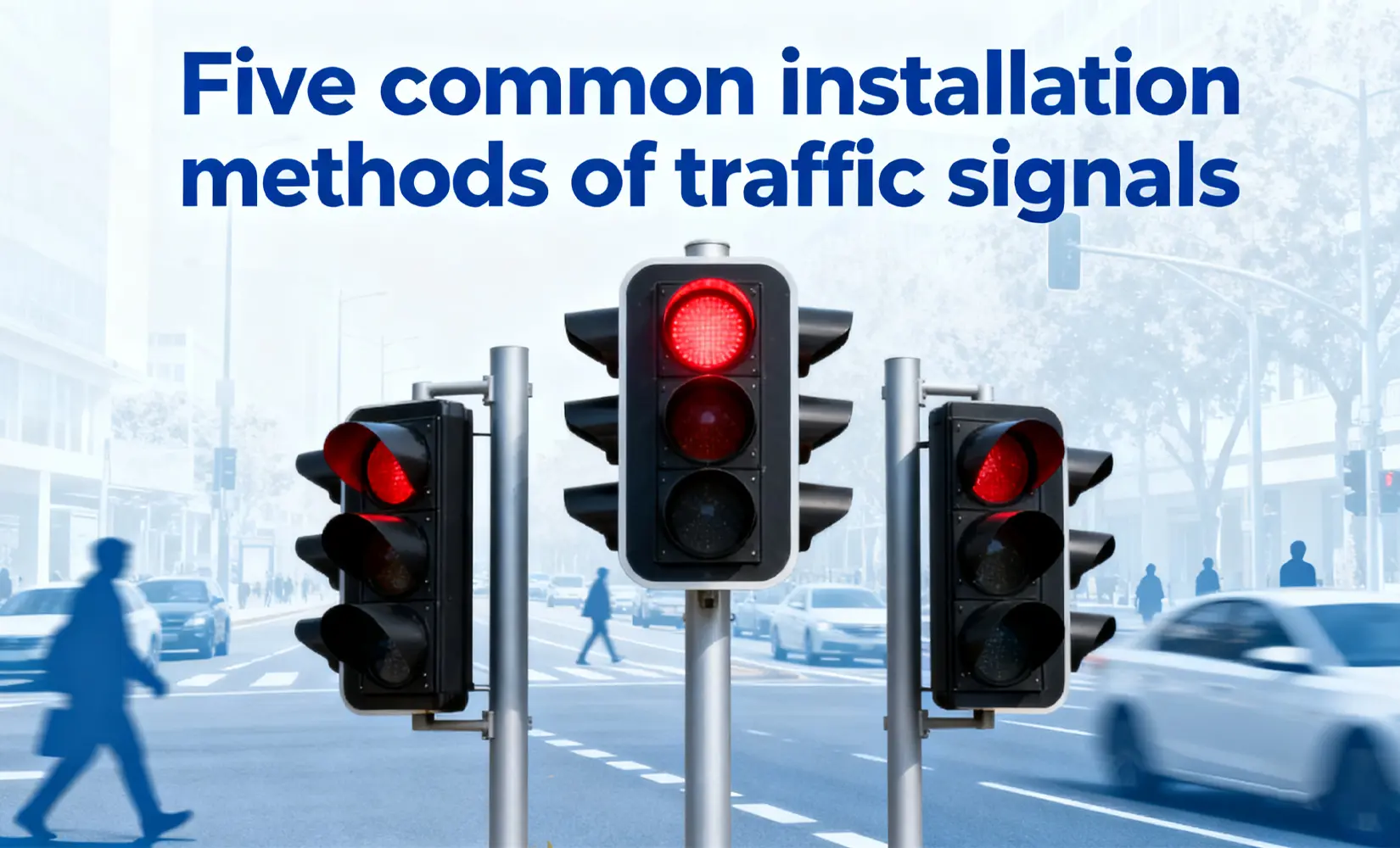
1920s: The "First-Generation Traffic Light" with Manual Rope Pulling — The "Enlightenment Era" of Traffic Management
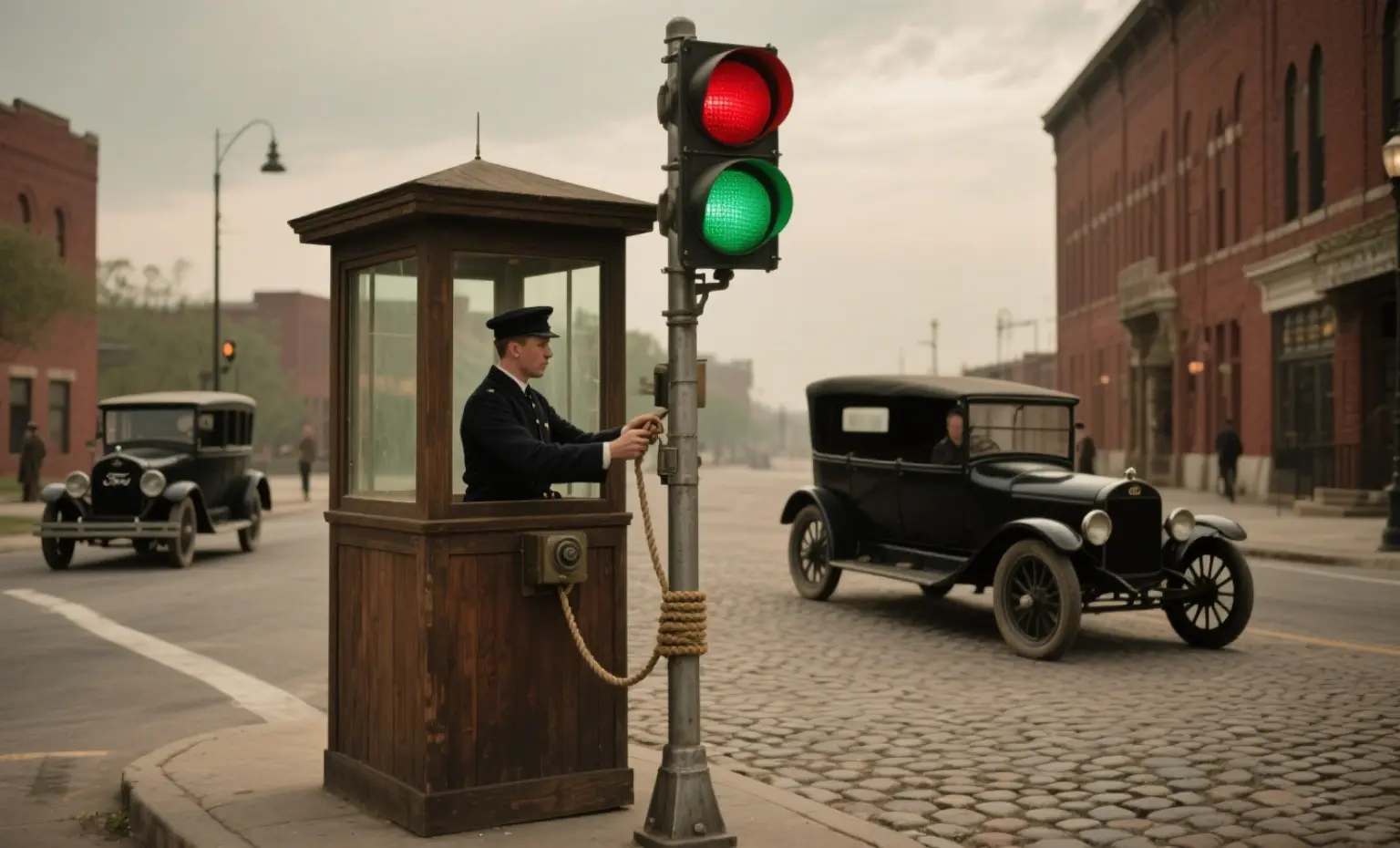
Around the 1920s, the world's first Modern electrical traffic light for road management was launched in Detroit, USA, opening a new era of traffic facilities. However, limited by the technology at that time, this traffic light relied entirely on manual operation: staff had to pull ropes in the intersection booth to switch between red and green light panels, and its function was single — it could only guide the passage of motor vehicles, with almost no control over pedestrians and non-motor vehicles.
More importantly, manual operation had obvious shortcomings: during peak hours, switching delays were prone to occur, leading to intersection congestion; in severe weather (such as heavy rain and heavy snow), the staff's sight was blocked, which might also cause misoperation. Even so, this "first-generation traffic light" still marked the initial transformation of traffic management from "manual command" to "equipment guidance", laying the foundation for subsequent facility upgrades.
1980s: The "Single-Point Breakthrough" of Radar Speed Signs — The "Preliminary Awakening" of Traffic Data
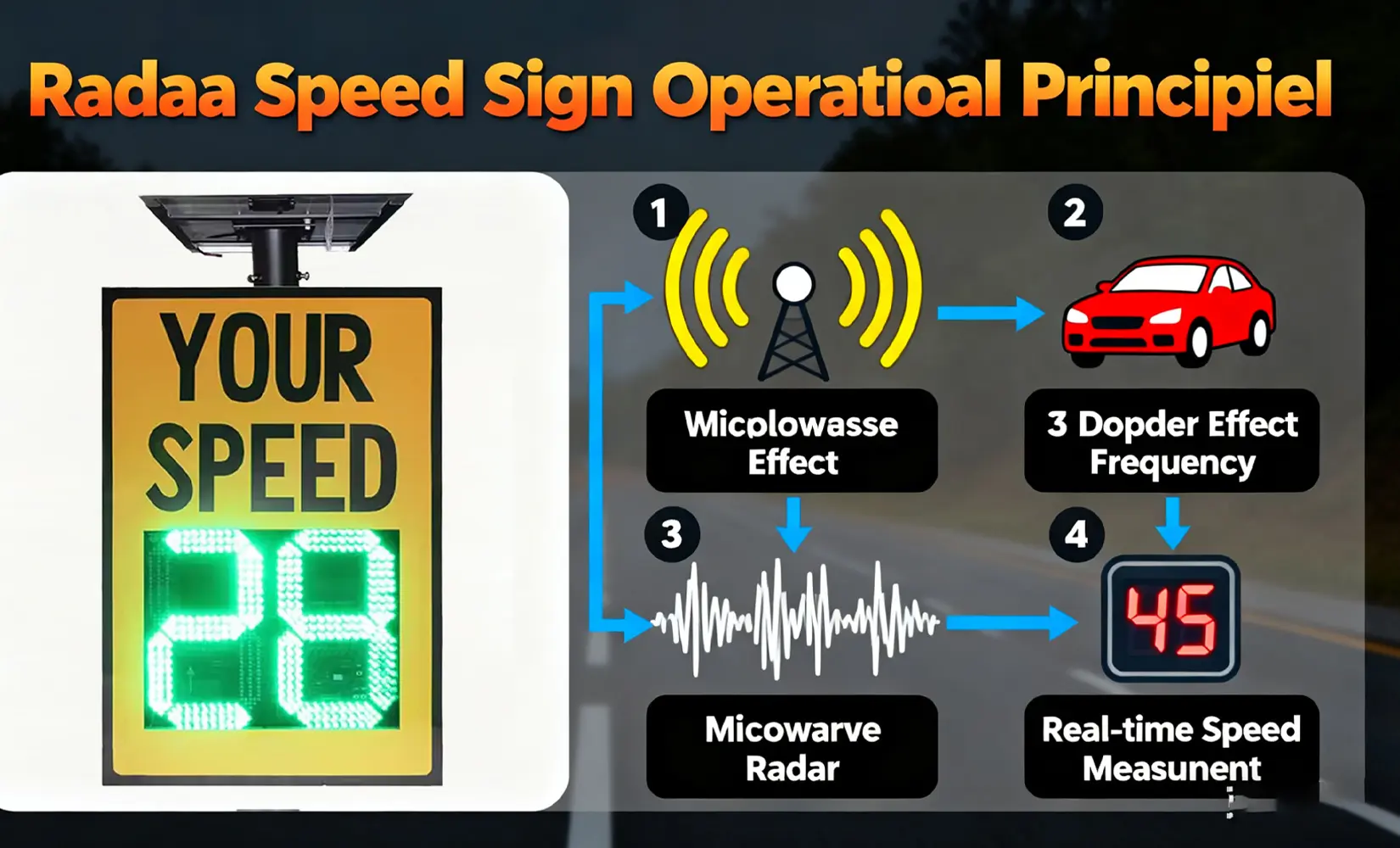
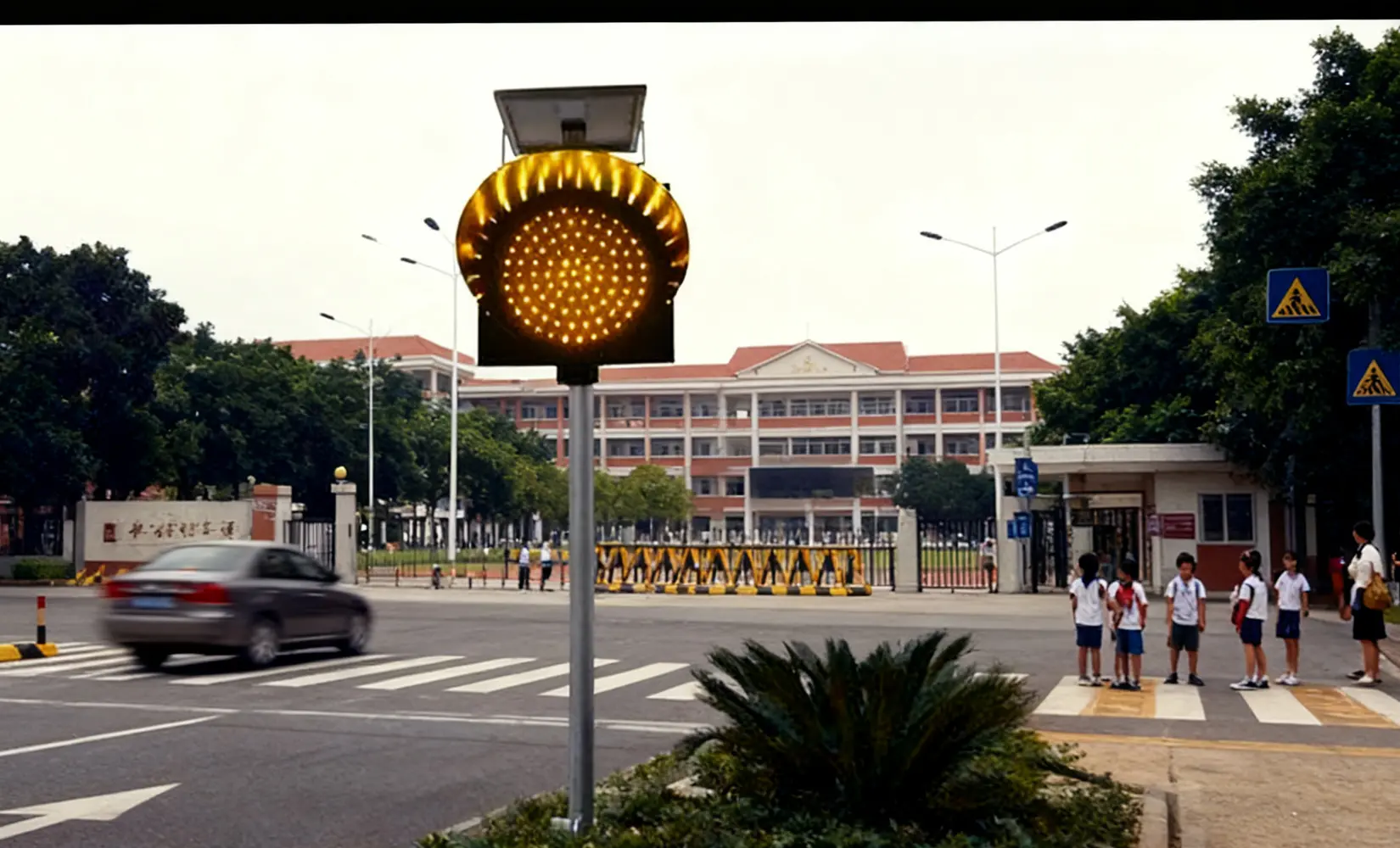
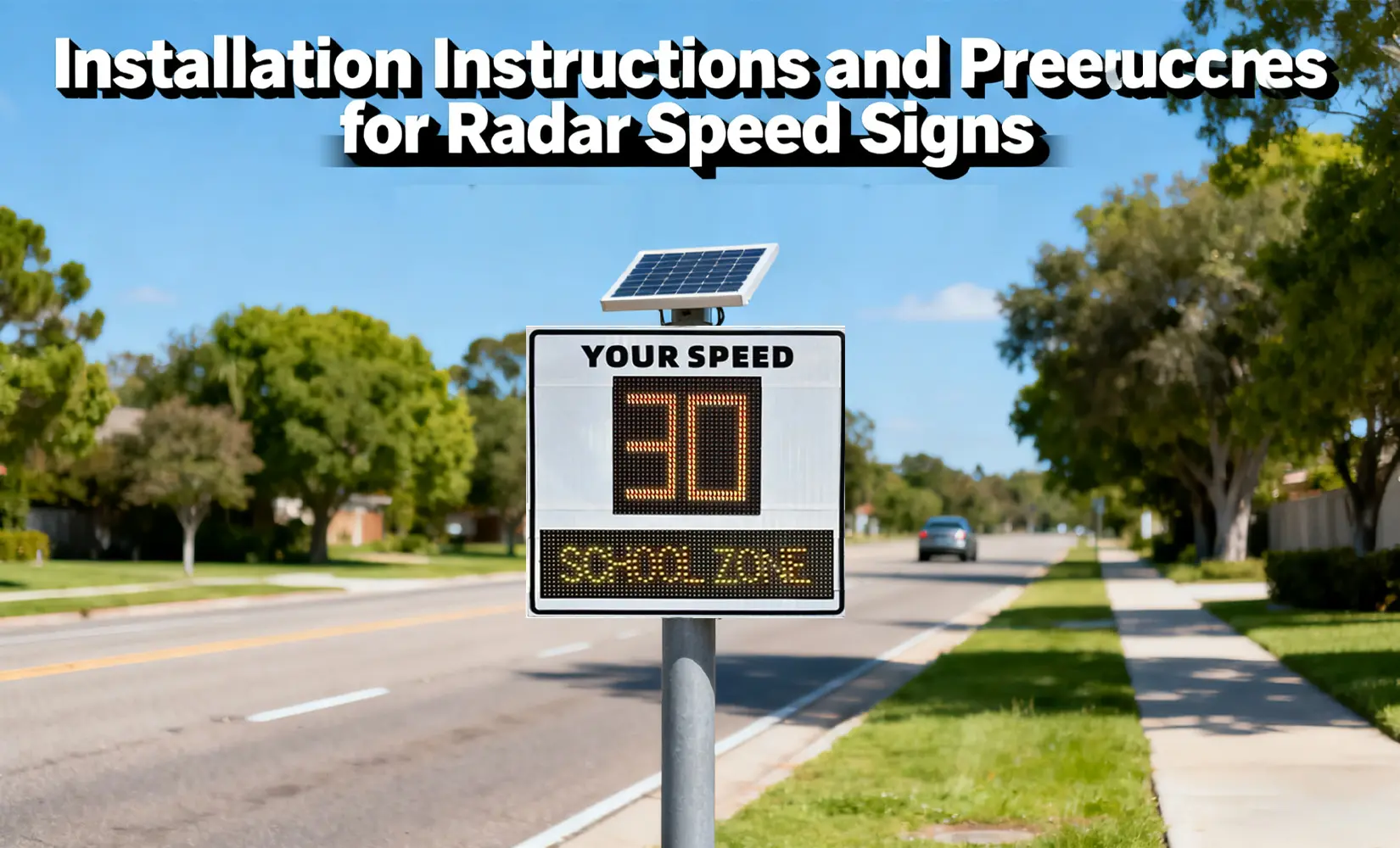
With the surge in car ownership, radar speed signs emerged in the 1980s, becoming the second milestone in the evolution of traffic facilities. Different from the first-generation traffic lights, radar speed signs introduced the concept of "technical monitoring" for the first time: through built-in radar sensors, they could capture the driving speed of vehicles in real time and display the data on the sign surface to remind drivers to slow down.
However, limited by the communication technology at that time, the function of radar speed signs still stayed in the "single-point monitoring" stage: the measured speed data could not be uploaded automatically, and staff had to go to the site regularly to copy the data; moreover, the devices were independent of each other and could not be linked with traffic lights, Warning Signs, etc. — for example, even if a large number of vehicles were detected speeding, the duration of the traffic lights ahead could not be adjusted in time to ease congestion. Even so, its emergence shifted traffic management from "passive guidance" to "active monitoring", laying the groundwork for subsequent "data linkage".
2020s: AI "Traffic Brain" with "Full-Link Management" — The "Intelligent Revolution" of Traffic Systems
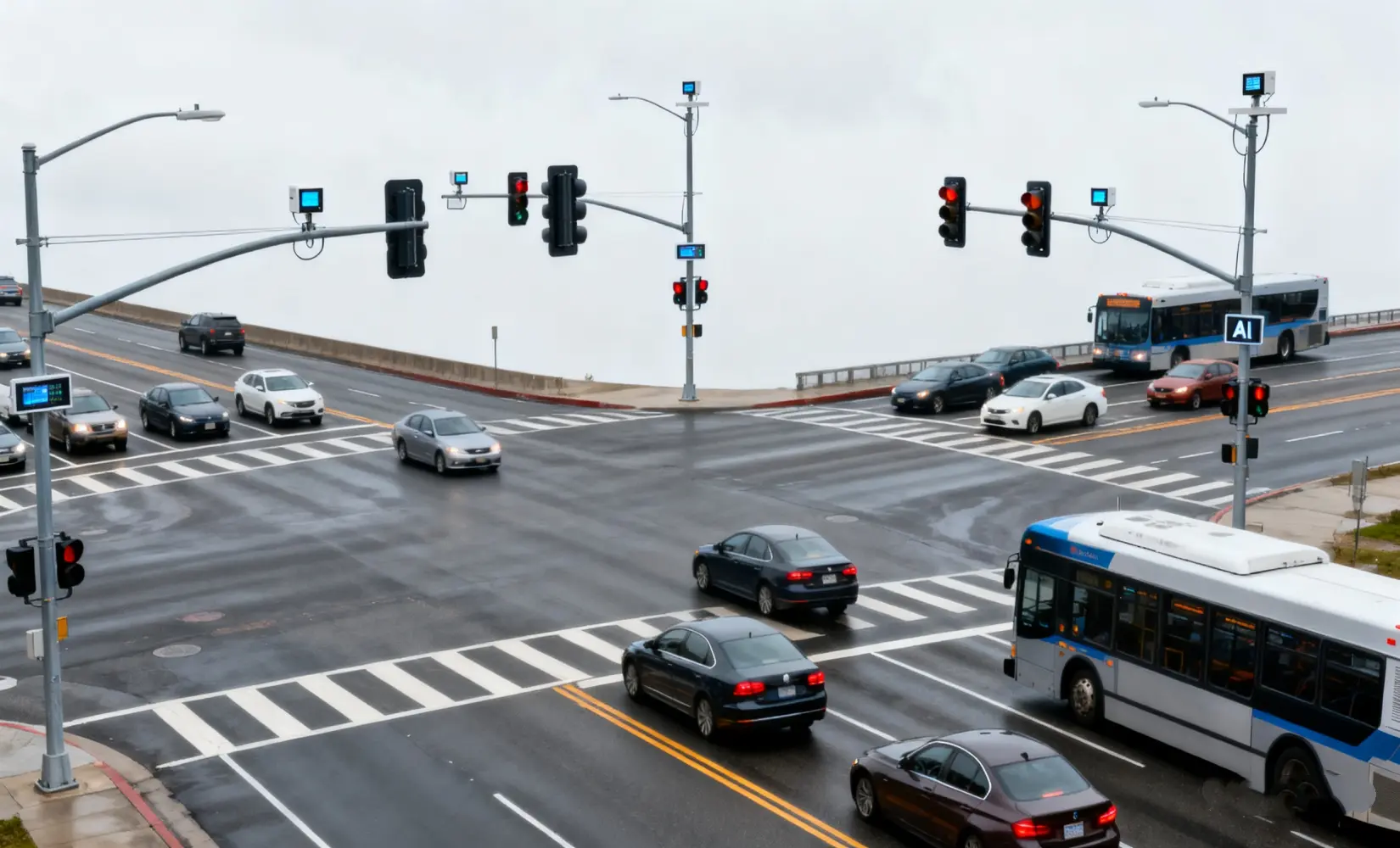
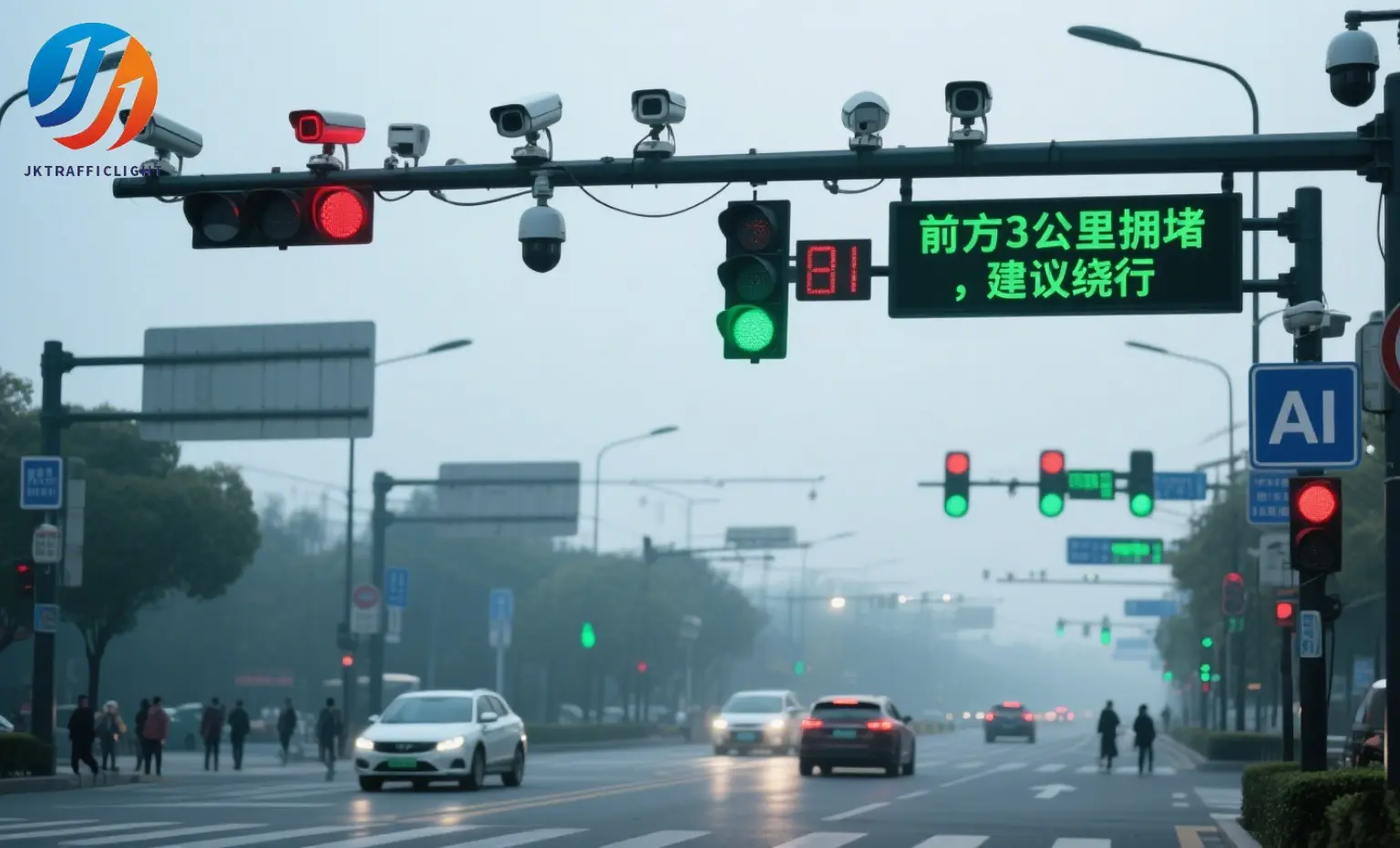
Entering the second decade of the 21st century, with the maturity of AI, 5G, and IoT technologies, traffic facilities have ushered in a "qualitative change" — intelligent traffic lights, networked radar speed signs, and AI traffic signs are no longer isolated devices, but form a "traffic brain" through data interconnection to achieve full-link management.
In the practice of an international pilot city, this system has shown strong capabilities: through cameras and sensors all over the intersections, the "traffic brain" can analyze traffic flow and pedestrian density in real time and predict the road conditions 15 minutes later; if it predicts that a certain road section will be congested, the system will automatically extend the green light duration of the upstream intersection, shorten the red light time of the downstream intersection, and at the same time remind vehicles to slow down in advance through the networked speed sign; the AI sign will update road condition information according to real-time data (such as "3 km ahead is congested, detour recommended"). Data shows that the traffic efficiency of the pilot area has increased by 50%, and the traffic accident rate has decreased by 35%, truly realizing the "on-demand regulation" of intelligent traffic management.
Choose a Traffic Solution Adapted to the Future: The Core Value of Compatibility and Scalability
The evolution of traffic facilities never stops, and choosing a set of equipment that "can keep up with the pace of the future" has become the core demand of urban managers around the world. The traffic product series of JKTRAFFICLIGHT is precisely developed based on this demand.
what you buy is not just a traffic light or a speed sign, but a complete solution that can continuously adapt to the future development of traffic — from the current "AI full-link management" to the future "autonomous driving collaboration", our products will always be a reliable partner in the evolution of urban traffic.