





Installation Guide for Solar Yellow Flashing Lights
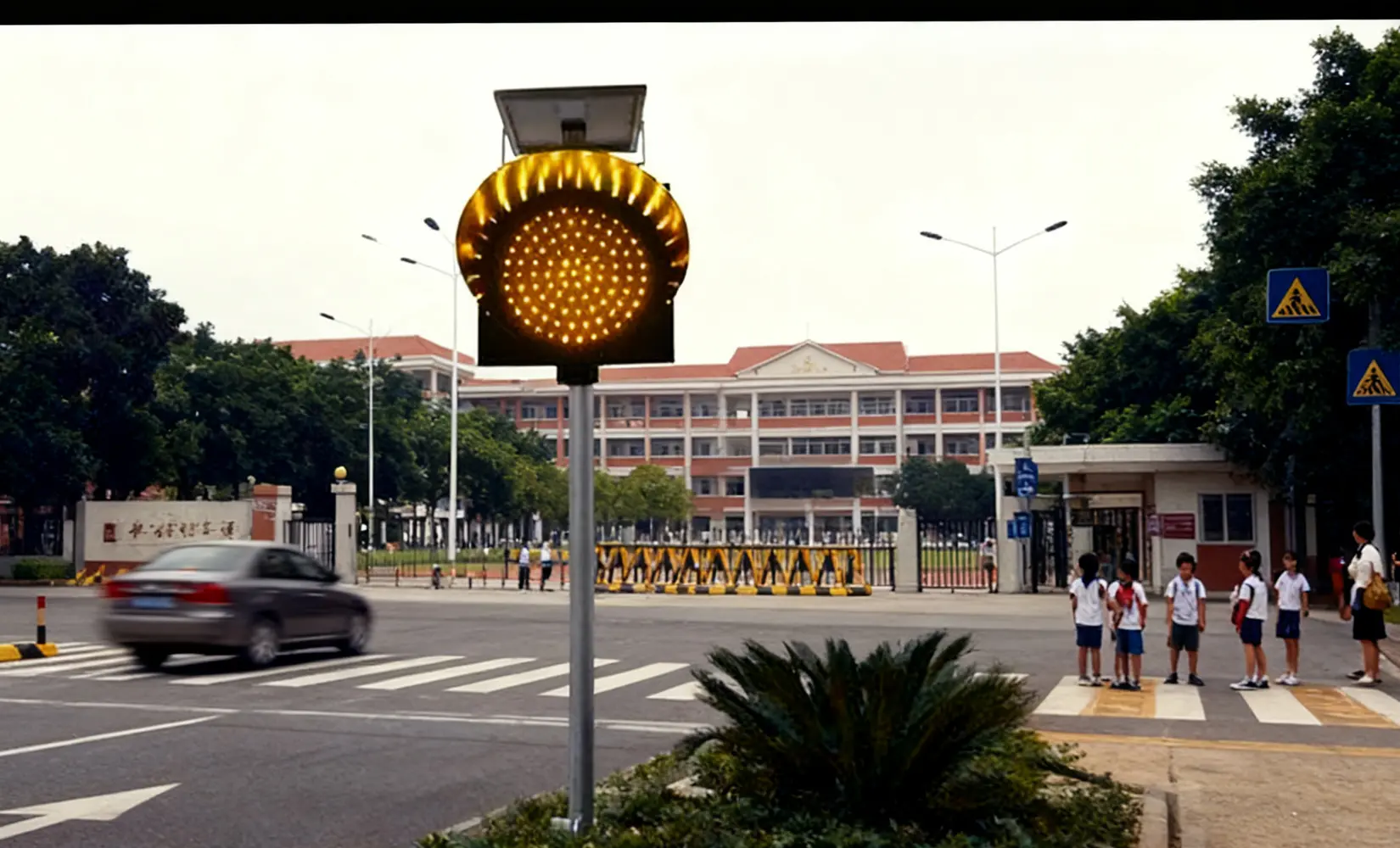
Solar yellow flashing lights, also known as solar yellow flashing warning lights, are a type of Traffic Signal product that uses solar energy as its power source and can effectively reduce the occurrence of traffic accidents. Yellow flashing lights are usually installed at schools, road crossings, village entrances and other places, serving as a warning to vehicles passing by on the road.
When the traffic volume at the intersection of urban and rural roads is not large and does not meet the conditions for installing traffic signals, yellow flashing lights are usually set up as warning and reminder.
However, there is generally no power supply condition on site. Under normal circumstances, Solar Yellow Flashing Lights need to be installed to solve the problem.
Today, let's take a look together at what issues need to be noted when installing solar yellow flashing lights.
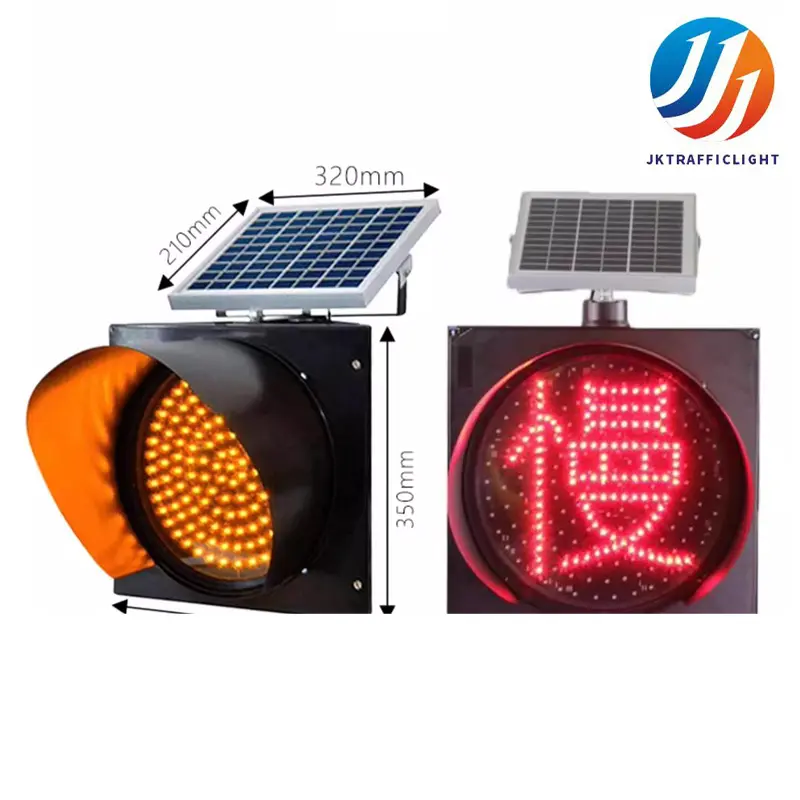
①. The Effect of Yellow Flashing Lights:
1.Yellow flashing lights have the characteristics of no need for external power supply, no wiring, simple and convenient installation, and no pollution. They are particularly suitable for school entrances, railway crossings, village entrances located on roads, and remote intersections with heavy traffic, inconvenient electricity usage, and a high risk of traffic accidents.
2. The yellow flashing light is equipped with a maintenance-free lead-acid battery. During use, no water needs to be added, there is no acid leakage, the internal resistance is low, and it can discharge both large and small currents. It features excellent noise resistance, strong resistance to overcharging and overdischarging, low self-discharge and long service life.
②. Installation Steps
1. Check whether there are any missing device accessories for the solar yellow flashing lamp that were provided at the factory.
2. When installing the dust-proof and sunshade cover, use stainless steel screws to tighten and fix the sunshade and dust-proof cover to the screw holes on the upper cover of the light box.
3. When installing, the light box should be placed at the center of the lane 100 meters away from the direction of oncoming traffic with the light source directly facing it, and it should be installed perpendicularly to the ground.
4. The height of the yellow flashing light device can be determined according to the demand, and the column of the traffic signal light pole can be customized according to the actual needs.
③. Installation Precautions
1. Selection of installation location
In practical applications, we sometimes receive feedback from customers that the new solar yellow flashing lights fail to work properly within less than a month after installation. Sometimes, they only stay on for two hours at night before stopping. This situation is mostly related to the installation location of the solar yellow flashing lights. If the solar yellow flashing lights are installed in a place where solar energy is never exposed throughout the year, the solar panels cannot generate electricity normally. The battery is never fully charged, so the solar yellow flashing light naturally won't work properly.
Note: When choosing the installation location, it is necessary to avoid objects such as large trees and buildings that can easily block sunlight to ensure that there is sufficient sunlight on the solar panels every day.
2. Installation Angle and direction of solar panels
To ensure the maximum conversion efficiency of the solar panels, they must face south, as indicated by the compass. Considering the Earth's rotation and revolution, it is recommended that the installation Angle of the solar panels be around 45 degrees.
3. Installation Angle and direction of the light panel
Solar yellow flashing lights mainly serve as a warning. When installing them, it is necessary to ensure that the front of the light panel faces the direction of oncoming motor vehicles, and the light surface should be slightly tilted forward. This is not only for the viewing Angle but also for waterproofing the light surface.