



How does AI+ smart traffic lights optimize urban traffic
Traditional timed traffic lights switch at fixed intervals and cannot be adjusted according to changes in traffic volume. During peak hours, vehicles at intersections will form long queues waiting. During off-peak hours, even if there are few vehicles on the road, drivers still have to waste time waiting for the traffic lights to turn green. This mode not only brings inconvenience to travel and reduces efficiency, but also may aggravate urban traffic congestion.
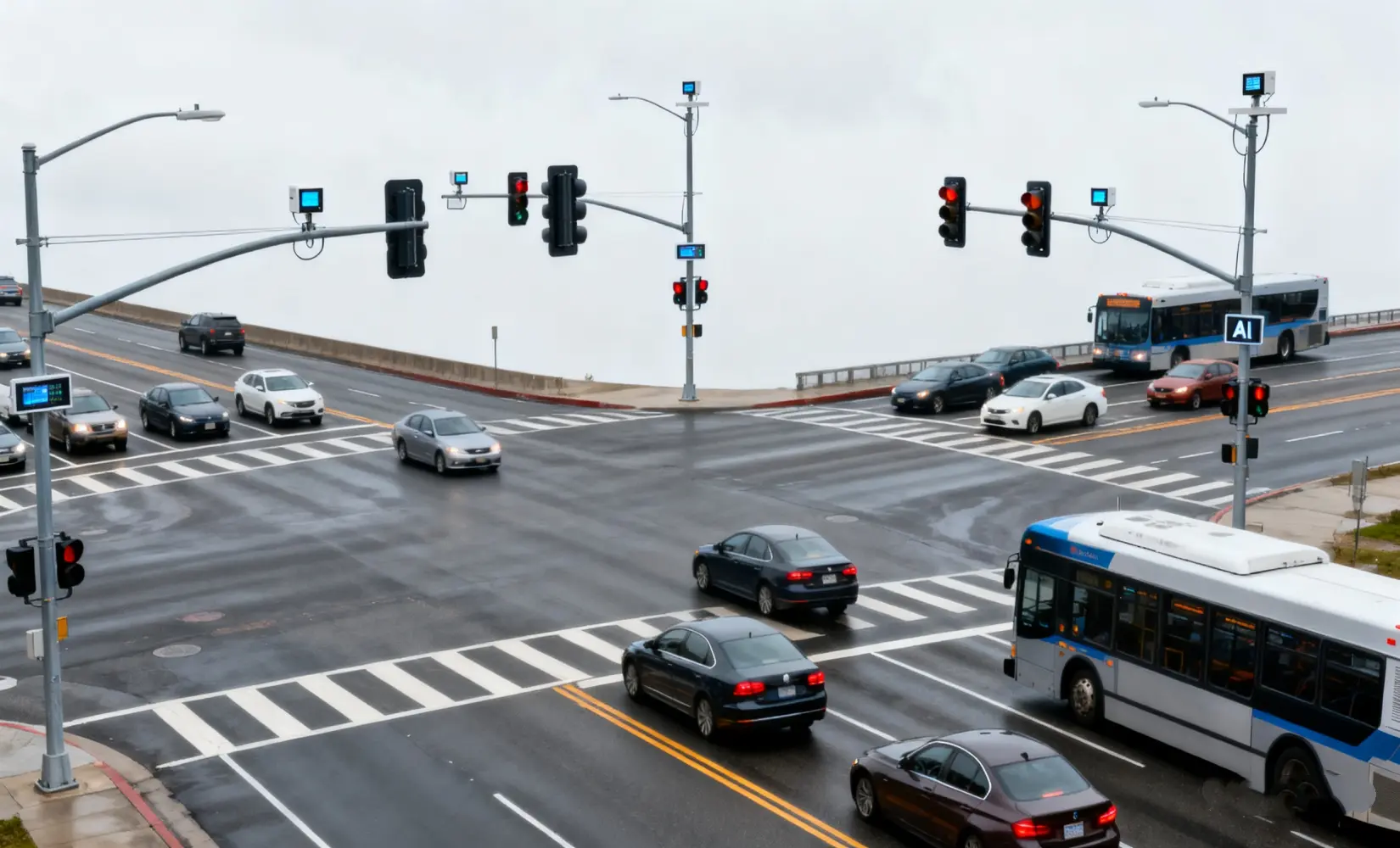
To address this issue, AI + smart traffic signals have emerged. It collects real-time intersection data through video flow detectors, including vehicle occupancy rate, queue length, etc. Then input these data into the AI algorithm for analysis; Finally, based on the analysis results, the green light duration in each direction of the intersection is automatically optimized to form a complete closed loop of "perception - analysis - adjustment".
In actual operation, AI + smart traffic signals can be flexibly adjusted according to the traffic flow. When there is a concentration of vehicles in a certain direction, the green light duration in that direction will be appropriately extended to help vehicles pass quickly. Meanwhile, at each intersection, there is a maximum green light cycle limit. Even if there are still vehicles in that direction, the signal will be switched after reaching the maximum cycle to ensure the right of way in other directions and avoid taking up too much time in a single direction.
Previously, some cities have piloted "adaptive control" at multiple intersections, initially operating only during the peak hours of Baiping. After nearly a year of algorithm optimization and repeated debugging, a large number of intersections have been successfully upgraded to "new generation smart traffic signals", achieving 24-hour all-weather sensing control and stable operation. The optimized traffic lights enable vehicles to "stop at most once" in most situations. Whether it is the heavy traffic during peak hours or the sparse traffic during off-peak hours, they can be precisely matched, significantly reducing time waste. These smart traffic lights have covered key areas within the city, including those around transportation hubs and sections frequently visited by citizens, effectively enhancing travel efficiency.
In the future, the application of AI + smart traffic signals will be further deepened. It will not only expand its coverage but also focus on the ramps on and off expressways, ground intersections, and more roads around transportation hubs. By continuously optimizing the technical algorithms and scene adaptation capabilities, its accuracy in perceiving and regulating traffic flow will be constantly enhanced, thereby continuously improving the operational efficiency of urban traffic. This will enable more drivers to truly enjoy the convenience of more efficient and smoother "smart travel", and also inject strong impetus into urban traffic moving towards a smarter and more unobstructed future.
The application of AI and smart Traffic Signals is not only an upgrade in urban traffic management, but also a practice of technology empowering people's livelihood. It has transformed traffic signals from "passive waiting" to "active adaptation", effectively enhancing the efficiency of traffic operation and also making people look forward to a more convenient and efficient urban travel environment in the future.