



How can traffic lights and road traffic signal controllers be linked to double intersection efficiency?
Intersections are crucial nodes in the vast network of urban transportation, and the coordinated operation of traffic lights and traffic signal controllers is the core element in ensuring smooth traffic flow at these nodes. Their efficient integration is becoming a powerful tool for alleviating traffic congestion and improving traffic efficiency. At JKTRAFFICLIGHT, with over 23 years of experience in the traffic signal field, we understand that the intelligence of an intersection determines the smooth flow of the entire road. Today, let us explain how the integration of traffic lights and traffic signal controllers can double intersection efficiency.
一、Core Principle: Intelligent Collaboration and Precise Control
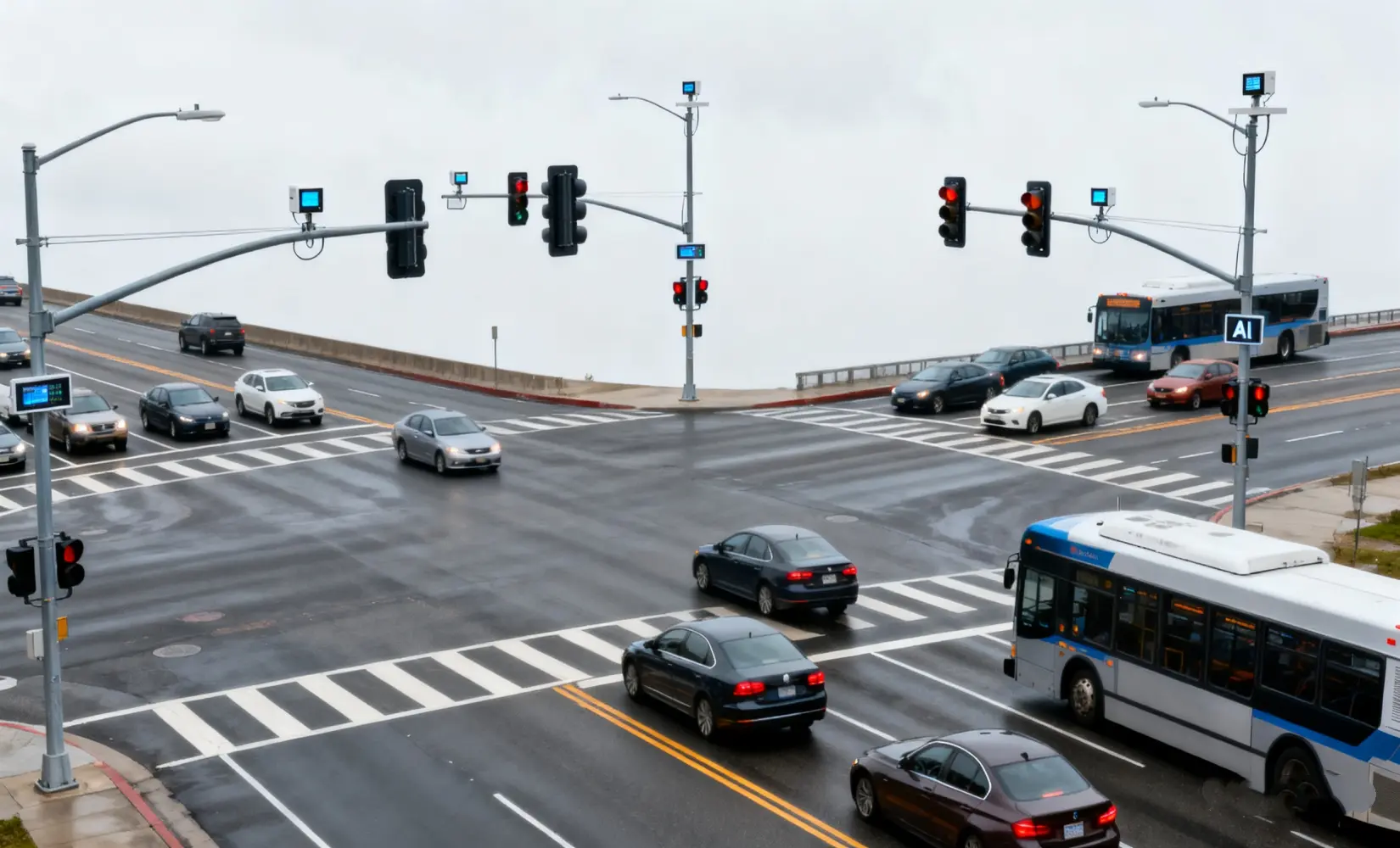
Traffic signal controllers are like the "brains" of the traffic system, while traffic lights are its "hands and feet" that execute its commands. Traditional traffic lights mostly rely on timed control, switching between red, green, and yellow according to preset time intervals. This makes them difficult to adapt to complex and changing traffic flows. However, today's advanced traffic signal controllers use a variety of devices, including induction coils, video surveillance, and radar, to collect real-time data on traffic flow, speed, and queue length in all directions of the intersection. Based on this precise data, traffic signals use complex algorithms to dynamically adjust traffic light switching times. For example, when traffic in a certain direction increases, the traffic signal controller automatically extends the green light duration in that direction and reduces it in other directions, allowing vehicles to pass quickly, avoiding idle waiting and achieving optimal resource allocation.
二、Tailoring to Local Conditions: Personalized Optimization Solutions for Different Intersections
No single strategy solves all problems. JKTRAFFICLIGHT provides optimized solutions for different types of intersections:
1. Busy Arterial Road Intersections: Green Wave Coordinated Control
On urban arterial roads, traffic flows are high and multi-directional, prone to periodic congestion. JKTRAFFICLIGHT's traffic signal controller uses precise calculations to coordinate traffic lights at multiple intersections along the entire road, setting "green wave bands" so that vehicles traveling at the recommended speed can pass through multiple green lights consecutively. This not only improves efficiency but also reduces fuel consumption and emissions caused by frequent stops and starts. For example, if two adjacent intersections are 1,000 meters apart and the average vehicle speed is 40 kilometers per hour, the traffic signal controller calculates that it will take approximately 90 seconds for vehicles to pass this distance. Based on this, the traffic signal controller adjusts the time difference between the two intersections' green lights to ensure smooth traffic flow.
2. Intersections near schools and commercial districts: Dynamic time-slot division and sensor-based control
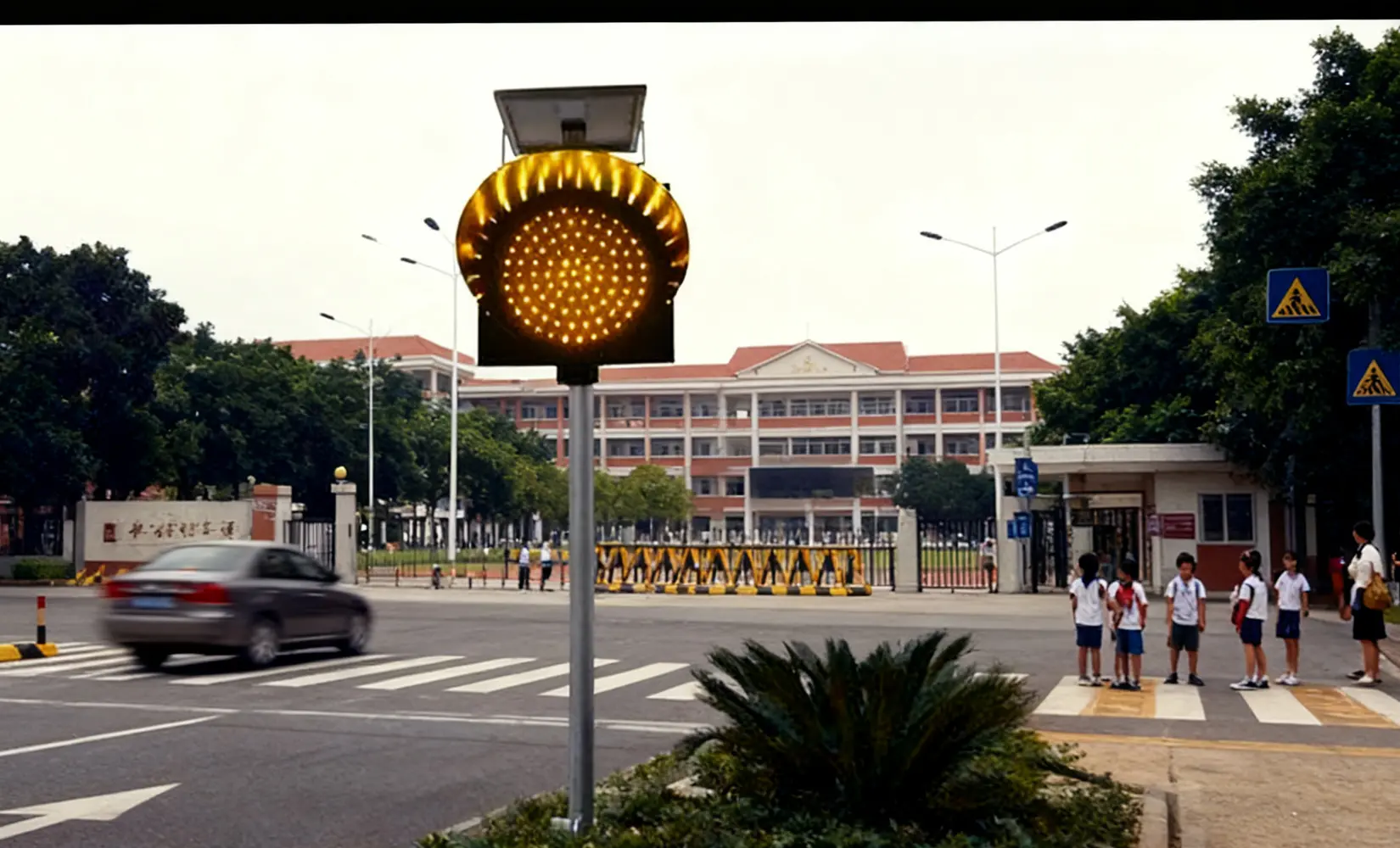
Traffic flow around schools and commercial districts exhibits distinct time-slot characteristics and fluctuations. During peak hours like school commute and lunchtime, pedestrian and vehicle flows exhibit short, concentrated "tidal" patterns. Traffic signal controllers employ dynamic time-slot division strategies at these intersections, setting multiple signal timing plans based on traffic flow characteristics during different time periods. For example, during peak business hours from 10 a.m. to 10 p.m., traffic signals increase the green light duration for pedestrians while shortening the green light cycle for vehicles. However, through sensor-based control, when the queue length in a particular direction reaches a certain threshold, the green light duration in that direction is temporarily extended, effectively alleviating traffic congestion.
3. Irregular intersections (such as five-way intersections and irregular intersections): Combined with channelized design
Irregular intersections, due to their complex geometry and traffic flow, have always been a challenge to traffic optimization. Through detailed analysis of traffic flow at the intersection, traffic signal controllers designate dedicated left-turn and right-turn lanes and waiting areas. Traffic signal controllers flexibly allocate green light durations based on traffic flow in each lane. For example, when vehicles are waiting on a less-traffic fork in the road, the traffic signal controller will adjust the green light duration appropriately based on the number of waiting vehicles and traffic flow in other directions, ensuring orderly passage of vehicles in all directions.
三、Technology Empowers the Future: JKTRAFFICLIGHT's Commitment
As a professional traffic signal product manufacturer and solutions provider, JKTRAFFICLIGHT offers not only high-quality signal light and signal machine hardware, but also a complete suite of intelligent, efficient, and reliable traffic control solutions.
Our intelligent road traffic signal controllers feature:
- Powerful computing power: A built-in high-performance processor rapidly processes complex traffic data.
- Stability and reliability: An industrial-grade design withstands harsh environments, ensuring 24/7 uninterrupted operation.
- Open compatibility: Compatible with a wide range of signal lights.
The linkage between traffic lights and traffic signals, through intelligent sensing, precise calculations, and flexible control, implements personalized optimization strategies tailored to the characteristics of different intersection types. This is driving the smooth operation of urban traffic, significantly improving intersection efficiency and bringing greater convenience to citizens.