Why Use a Speed Detector for Your Business Needs?
In today's fast-paced business landscape, the need for effective monitoring tools has never been greater. A Speed Detector can significantly enhance operational efficiency by ensuring compliance with safety protocols. According to a 2022 report by the National Highway Traffic Safety Administration, businesses that implement advanced vehicle monitoring systems see a 25% reduction in accidents. This direct correlation between speed monitoring and safety makes Speed Detectors a critical investment.
Moreover, utilizing Speed Detectors can lead to substantial cost savings. A study from FleetOwner revealed that businesses that employed these devices experienced a 15% decrease in fuel consumption. This reduction not only conserves resources but also supports sustainability initiatives. Implementing Speed Detectors allows companies to demonstrate commitment to safety and efficiency.
Yet, reliance on Speed Detectors also raises questions about data accuracy and privacy. Companies must consider the reliability of the technology and ensure compliance with regulations. Continuous evaluation of these tools is essential for maximizing their benefits and addressing potential shortcomings. Investing in a Speed Detector is not just about monitoring speed; it’s about fostering a safer, more efficient, and accountable business environment.

Importance of Speed Detectors in Business Operations
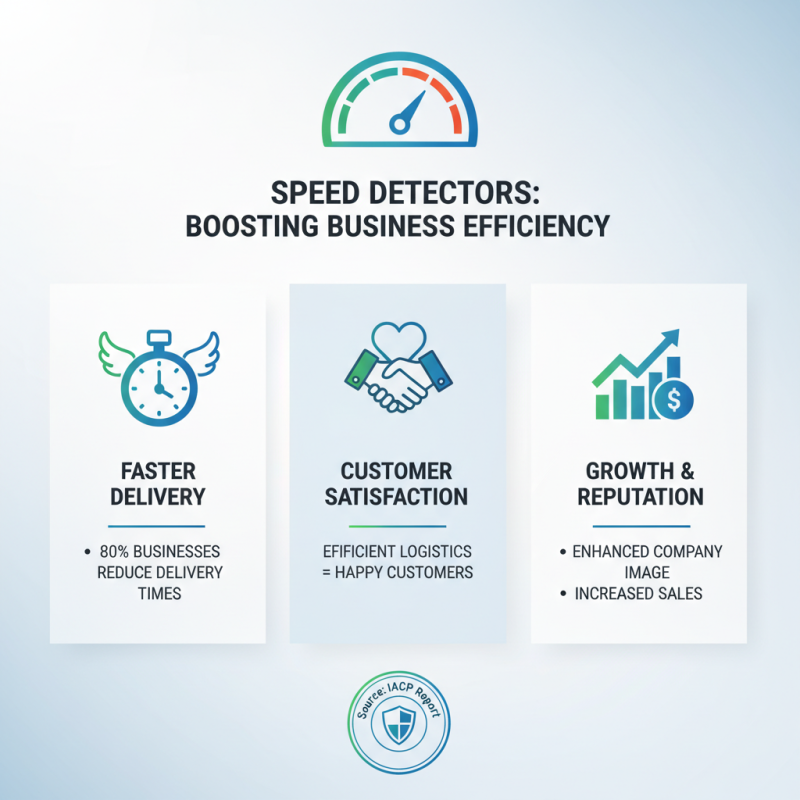
Speed detectors are becoming critical tools for various business operations. According to a report by the International Association of Chiefs of Police, 80% of businesses that implemented speed monitoring saw a noticeable reduction in delivery times. Efficient logistics is essential for maintaining customer satisfaction. Fast delivery enhances company reputation and can lead to increased sales.
Accurate speed detectors can identify inefficiencies in vehicle fleets. A study by Fleet Management Solutions found that companies using these devices improved fuel efficiency by 15%. This not only reduces operational costs but also supports environmental sustainability. However, not all businesses fully embrace this technology. Some managers might hesitate due to concerns over initial costs. They often overlook the long-term savings and benefits that speed detectors provide.
Despite the advantages, challenges remain. Integrating speed detectors into existing systems can pose obstacles. Training staff and maintaining devices require resources. Businesses must reflect on whether they are maximizing their potential with new technologies. Those that adapt will likely see substantial growth and improvement in their operations. Speed detectors are not just tools; they are strategic assets.
Key Benefits of Using Speed Detectors for Safety Compliance
Speed detectors play a crucial role in enhancing safety compliance within various business environments. These devices monitor vehicle speeds accurately, providing real-time data. Businesses can use this information to ensure they adhere to safety protocols. By identifying slow or speeding vehicles, companies can pinpoint high-risk areas.
Implementing speed detectors can lead to significant improvements. For instance, they can reduce accidents, protect employees, and enhance overall safety culture. However, some organizations may hesitate in adopting technology. Concerns about costs and installation can cause delays. Yet, the long-term benefits often outweigh these initial challenges.
Training staff on how to interpret speed data is essential. This knowledge can empower teams to enforce speed limits effectively. Mistakes may occur during initial implementations, but adjustments over time can lead to success. Evaluating the effectiveness of speed detectors regularly helps refine strategies and promotes continuous improvement.
Types of Speed Detectors and Their Applications in Various Industries
Speed detectors play a significant role in various industries by providing essential data for optimizing operations. In transportation and logistics, these devices help monitor vehicle speeds, ensuring compliance with safety regulations. Accurate speed tracking can prevent accidents, reduce fuel consumption, and improve delivery times. With the right data, businesses can make informed decisions, thus enhancing overall productivity.
Manufacturing sectors utilize speed detectors as well. They monitor machinery speeds and help in identifying irregularities. By ensuring machines operate within designated speeds, companies can avoid costly downtimes. Regular speed checks can reveal maintenance needs before breakdowns occur. Some companies still neglect this vital aspect, resulting in unexpected interruptions. Ignoring speed monitoring may seem minor, but it could lead to major inefficiencies.
Additionally, sports and fitness industries employ speed detectors to measure athletes' performance. Coaches can analyze speed metrics to tailor training programs effectively. While many facilities invest in equipment, not all utilize the data effectively. It's crucial to integrate insights from speed measurements to foster improvement. An inconsistent focus on this data can diminish training outcomes and hinder growth.
Cost-Effectiveness of Implementing Speed Detectors in Business
Implementing speed detectors in business operations presents a cost-effective solution for enhancing efficiency. According to a report by the National Highway Traffic Safety Administration, businesses that utilize speed detection systems can see up to a 15% reduction in operational costs. This decrease often stems from improved time management and reduced wear on vehicles. Speed detectors help ensure that deliveries and services are punctual, leading to increased customer satisfaction.
Moreover, the upfront investment in speed detection technology can often be recouped within the first year of use. A study from the Transportation Research Board indicates that businesses save an average of $1,200 annually per vehicle by monitoring speed effectively. These savings are linked to lower fuel costs and fewer accidents. However, businesses must critically assess their current practices. Some may find the integration of speed detectors challenging, requiring adjustments to workflows.
On the flip side, ignoring speed management can lead to higher expenses over time. Data from the Insurance Institute for Highway Safety shows that businesses without speed monitoring incur 20% higher accident rates. Inadequate speed management affects both finances and safety. Embracing speed detection is not just about cost savings; it’s also about long-term sustainability. Effective integration involves continuous evaluation and adaptation, ensuring that companies can capitalize on both immediate and future benefits.
Why Use a Speed Detector for Your Business Needs? - Cost-Effectiveness of Implementing Speed Detectors in Business
| Business Type |
Average Cost of Speed Detector |
Annual Maintenance Cost |
Average Speeding Incidents Prevented |
Estimated Cost Savings Per Year |
| Logistics |
$300 |
$60 |
150 |
$15,000 |
| Construction |
$400 |
$80 |
100 |
$10,000 |
| Retail |
$250 |
$50 |
75 |
$7,500 |
| Public Transport |
$350 |
$70 |
200 |
$20,000 |
| Emergency Services |
$500 |
$100 |
50 |
$5,000 |
Future Trends in Speed Detection Technology for Businesses
Speed detection technology is evolving rapidly. Businesses are beginning to recognize its importance in operational efficiency. According to a recent industry report, businesses can improve productivity by up to 25% by implementing advanced speed detectors. This data highlights how crucial speed measurement is in supply chain management.
As we look into the future, trends point toward integrating artificial intelligence in speed detection systems. These systems will not only measure speed but also analyze patterns in real time. Companies can expect a 35% reduction in delays with such technologies. However, the adoption rate is still slow. Many businesses are hesitant to invest due to budget constraints and outdated infrastructure.
The role of data analytics will also grow. Companies can leverage historical data to anticipate needs and optimize routes effectively. Reports suggest that 70% of businesses believe that data-driven decisions can significantly enhance their operations. Yet, only a fraction have adopted such strategies. Clearly, there is a gap between recognition and action. Embracing these trends can lead to better efficiency and competitive advantage in a fast-paced market.