Top 5 Traffic Signal Tips for Global Buyers to Enhance Safety?
Traffic signals play a vital role in road safety. According to Dr. Emily Carter, a leading expert in traffic management, “Effective traffic signals can prevent accidents and save lives.” With increasing global urbanization, the importance of reliable traffic signals cannot be overstated.
For global buyers, understanding the key aspects of traffic signals is essential. Reliable traffic signal systems enhance visibility and communication between vehicles and pedestrians. Small innovations can make significant differences. Simple designs, flashing lights, and clear signage contribute to better safety outcomes.
However, there are challenges. Not all regions have the same infrastructure or technology. Buyers must consider local needs and conditions. Incorporating local feedback is crucial. A traffic signal solution should adapt to diverse environments. It’s a continuous learning process, and buyers need to evaluate their choices regularly.

Top 5 Traffic Signal Tips for Global Buyers to Enhance Safety
When considering traffic signal purchases, safety should always be a top priority. According to the World Health Organization, approximately 1.3 million people die in road traffic crashes each year. Ensuring your signaling devices enhance safety can significantly reduce these statistics.
**Tip 1: Prioritize Visibility**
Select signals with high visibility features. Studies show that LED signals increase awareness by 40%. They must be prominent and easily seen during day or night. Pay attention to size and brightness. These factors can save lives.
**Tip 2: Consider Smart Technology**
Smart traffic signals adapt to real-time traffic conditions. By utilizing sensors, they can adjust the timing of lights. This reduces congestion and potential accidents. A recent report indicates smart technology can decrease delays by 30% and improve safety outcomes.
While these tips are beneficial, not every implementation is perfect. There are challenges in integrating new technologies into existing systems. It’s essential to evaluate infrastructure compatibility. Adaptation may not always lead to immediate improvements. Regular assessments and updates of technology are crucial for ensuring ongoing safety.
Top 5 Traffic Signal Tips for Global Buyers to Enhance Safety
| Tip Number |
Tip Description |
Expected Outcome |
| 1 |
Ensure compliance with local regulations and standards. |
Improved legal compliance and reduced liability risks. |
| 2 |
Assess the traffic volume and patterns in the area. |
Optimal traffic flow and reduced congestion. |
| 3 |
Choose signals with energy-efficient technologies. |
Lower energy costs and environmental impact. |
| 4 |
Opt for user-friendly designs for pedestrians and impaired individuals. |
Enhanced safety and accessibility for all road users. |
| 5 |
Regular maintenance and timely upgrades of signal systems. |
Increased reliability and longevity of the traffic signals. |
Understanding Global Traffic Signal Standards and Regulations
Understanding global traffic signal standards is crucial for enhancing safety. Traffic signals are designed to improve road safety and manage vehicle flows. According to a report by the International Road Assessment Programme, effective traffic signals can reduce accidents by up to 40%.
Different countries follow varying standards regarding colors, shapes, and placement of signals. The Manual on Uniform Traffic Control Devices (MUTCD) in the U.S. specifies these elements. However, many nations lack stringent regulations, leading to confusion. A study showed that inconsistent traffic signals contributed to 25% of urban accidents.
Despite the importance of these regulations, some regions still ignore them. Inadequate training for local authorities can lead to improper installation and maintenance of traffic signals. This inconsistency presents a risk for drivers and pedestrians alike. Assessing global standards helps identify areas for improvement, promoting safer road environments worldwide.
The Role of Smart Traffic Systems in Accident Reduction
Smart traffic systems play a crucial role in reducing accidents worldwide. According to the World Health Organization, traffic collisions claim over 1.3 million lives yearly. Implementing smart technologies can significantly mitigate these numbers. For instance, adaptive traffic signals can optimize flow based on real-time data, reducing congestion and the likelihood of collisions.
In cities that use smart systems, accident rates have dropped by as much as 30%. These systems incorporate sensors to detect vehicle and pedestrian movement. They adjust signal timing accordingly. This responsiveness enhances safety for all road users, especially in high-traffic areas. Yet, it's essential to acknowledge that the transition to smart systems may face challenges, like infrastructure limitations in some regions.
Moreover, while smart traffic signals improve safety, over-reliance on technology can present risks. A sudden system failure could lead to confusion. Additionally, not all cities have the budget for these upgrades. Studies suggest that even basic investments in traffic management can yield a substantial return in safety improvements. Continuing to evaluate the effectiveness and accessibility of these systems is vital as cities grow and traffic patterns evolve.
Top 5 Traffic Signal Tips for Global Buyers to Enhance Safety
Analyzing the Impact of Visibility and Placement on Signal Effectiveness
Effective traffic signals are essential for road safety. However, their effectiveness often hinges on two critical factors: visibility and placement. A signal obscured by trees or buildings fails to alert drivers in time. Studies show that well-placed signals can reduce accidents significantly. Strategically situated signals enhance both driver awareness and pedestrian safety.
Visibility also involves color brightness and lens clarity. Signals that fade in sunlight or during bad weather can lead to confusion. Regular maintenance is not just recommended; it's necessary. Even the best signals lose effectiveness without proper upkeep. Reflective materials can aid visibility during night and adverse weather conditions. This simple addition can save lives.
The height and angle of traffic signals can't be overlooked either. Signals placed too high may not be seen by smaller vehicles. Angling signals toward approaching traffic can further improve awareness. Local governments often underestimate these details. Each intersection is unique, requiring tailored solutions. Continuous assessment of visibility and placement helps ensure traffic signals fulfill their vital role in safety.
Evaluating Data-Driven Approaches for Signal Timing Optimization
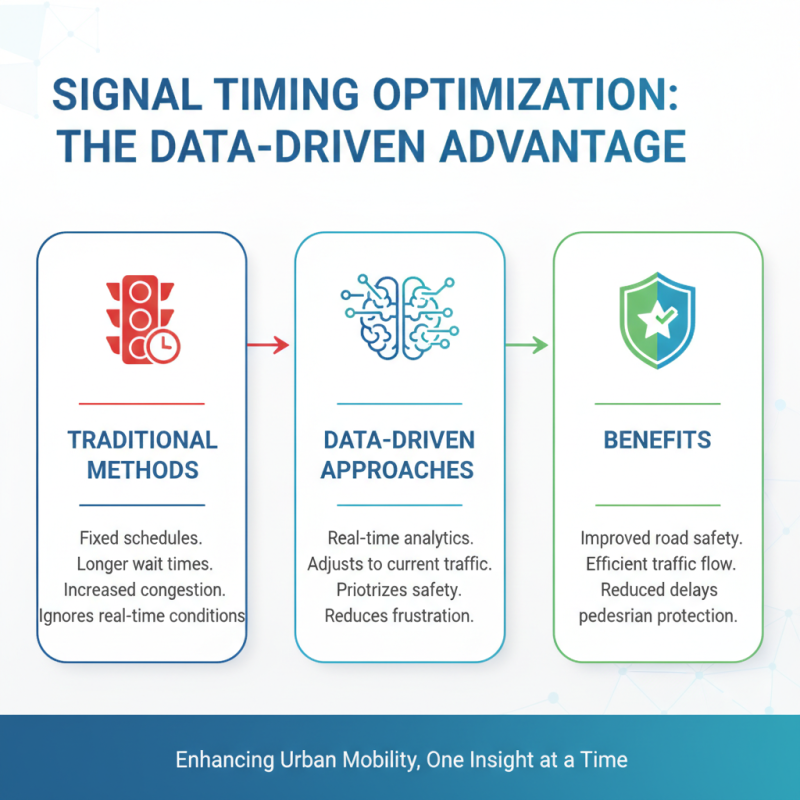
Evaluating data-driven approaches for signal timing optimization is crucial for enhancing road safety. Many cities rely on traditional timing methods without considering real-time data. This can lead to longer wait times and increased frustration among drivers. Real-time analytics can adjust traffic signals based on current conditions. For instance, if there’s an unexpected surge in pedestrian traffic, signals can shift to prioritize their safety.
Looking into pedestrian and vehicle flow, studies show that optimized signal timing can reduce accidents significantly. Cities with adaptive signal systems report quicker commutes and safer crosswalks. Yet, not every jurisdiction has implemented these technologies effectively. There is often hesitance due to budget constraints or lack of technical expertise.
Understanding these challenges is essential. It's about balancing resources with safety measures. The goal is to create a system that reflects real-world needs. Ongoing evaluation and adjustment must be part of any successful traffic strategy. Data-driven methods offer the potential for improvement, but they require commitment and collaboration.
Conclusion
The article "Top 5 Traffic Signal Tips for Global Buyers to Enhance Safety" provides crucial insights for enhancing the safety and effectiveness of traffic signals worldwide. It begins by exploring the importance of understanding global traffic signal standards and regulations, which ensures compliance and promotes uniformity. The discussion further delves into the integration of smart traffic systems, emphasizing their potential in reducing accidents through real-time data and adaptive control.
Additionally, the article highlights how the visibility and placement of traffic signals greatly impact their effectiveness, urging buyers to consider these factors carefully. It also examines data-driven approaches for optimizing signal timing, which can significantly improve traffic flow and safety. Lastly, best practices for ensuring the durability and maintenance of traffic signals are presented, underscoring the importance of long-term reliability in traffic management systems. Overall, these tips aim to equip global buyers with the knowledge necessary to make informed decisions that enhance public safety.