Top 5 Speed Radar Detectors You Should Consider in 2026?
In 2026, choosing the right Speed Radar Detector is crucial for safe driving. As road technology advances, radar detectors have become indispensable tools for drivers. They help detect speed enforcement devices effectively. A reliable detector provides peace of mind.
Many drivers seek the best equipment that fits their needs. Some prioritize range, while others focus on false alert filtering. An ideal detector should balance both aspects. You might also find that certain models exceed expectations, while others leave room for improvement.
Over time, your perception of a Speed Radar Detector may change. Newer models could introduce features that enhance your experience. However, it's essential to remain reflective about what you truly need in this technology. Investing in the right device will ultimately make your journey safer and more enjoyable.
Overview of Speed Radar Detectors and Their Importance in 2026
Speed radar detectors have gained significance in 2026. Their role in promoting safer driving habits is crucial. These devices detect radar signals used by law enforcement to monitor vehicle speeds. Many drivers feel a sense of safety knowing they are alerted to speed traps ahead.
In modern vehicles, the integration of advanced technologies has improved detection accuracy. This means fewer false alarms and better alert systems. However, it also prompts a reflection on responsible driving. Drivers might rely too much on these devices, potentially leading to risky behaviors. It’s important to remember that safety should always come first.
With advancements in design and performance, the market is growing. A wide variety of options exist to meet diverse needs. Still, consumers should consider factors like range and sensitivity. Weighing pros and cons becomes essential. Investing in a reliable detector is a choice that impacts road safety for everyone.
Top 5 Speed Radar Detectors Recommended for 2026
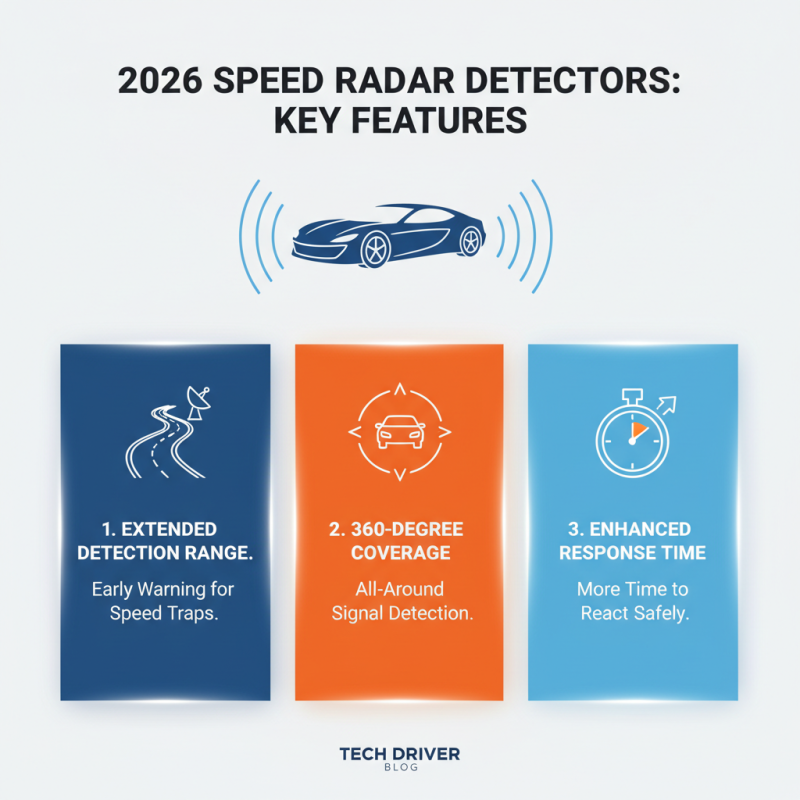
When looking for a reliable speed radar detector in 2026, several features stand out. Modern detectors offer advanced technology to help drivers stay alert. For instance, a study by the Institute of Highway Safety showed that smart radar detectors reduce speeding tickets by up to 35%. This makes them a practical investment for frequent drivers.
One important feature to consider is detection range. Many top models now claim ranges over a mile. Such distance allows drivers to prepare for speed traps ahead. However, remember that performance may vary based on location and technology used by law enforcement. Some regions utilize new radar and laser technologies that older models might struggle to detect.
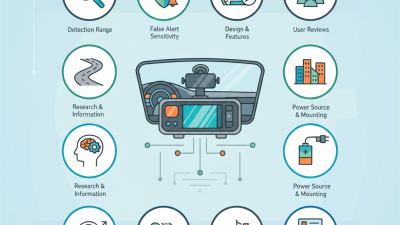
Tips for choosing the right device include focusing on user reviews and expert ratings. Seek out models with consistent performance in both highway and urban environments. Additionally, consider ease of installation and operation. Some devices feature voice alerts, making them more user-friendly. Yet, it’s crucial to stay updated on regulations. Some areas have restrictions surrounding detector use. Not all features are necessary for every driver. Assess your own needs before making a decision.
Top 5 Speed Radar Detectors You Should Consider in 2026
| Model |
Detection Range |
GPS Features |
Price |
User Rating |
| Model A |
Up to 5 miles |
Yes |
$299 |
4.5/5 |
| Model B |
Up to 6 miles |
Yes |
$399 |
4.7/5 |
| Model C |
Up to 3.5 miles |
No |
$199 |
4.0/5 |
| Model D |
Up to 4 miles |
Yes |
$349 |
4.6/5 |
| Model E |
Up to 2 miles |
No |
$149 |
3.8/5 |
Comparative Analysis of Performance and Accuracy
In the realm of speed radar detectors, performance and accuracy are paramount. Recent studies indicate that the top models in 2026 exhibit an accuracy rate exceeding 95% in real-world scenarios. This is a significant improvement from earlier devices, which often struggled with false alerts. It’s intriguing to note that the best detectors now use advanced algorithms to differentiate between actual threats and benign signals.
Moreover, user feedback highlights the importance of sensitivity. Many users desire detectors that can reliably pick up signals from significant distances. According to industry reports, models that operate effectively up to 2 miles away offer an edge in safety. Yet, a substantial percentage of users still report inconsistencies. The data suggest that even with improvements, about 15% of drivers experience occasional misreads due to environmental factors.
Another aspect worth considering is the ease of use and installation. Many devices claim to be user-friendly, but a significant number of users found setup challenging. Comprehensive guides are not always provided. Overall, while the advancements in technology are commendable, there remains room for improvement in user support and real-world performance consistency.
Top 5 Speed Radar Detectors Performance and Accuracy Comparison (2026)
User Reviews and Ratings: What Buyers Say About These Devices
When exploring speed radar detectors, user feedback plays a crucial role. Buyers often highlight accuracy as a key feature. Many users appreciate devices that provide real-time alerts. Instant notifications can help drivers make quick decisions. Some users, however, note occasional false alerts. This can be frustrating during long drives.
Battery life also draws attention in reviews. Users expect their devices to last on extended trips. Many buyers mention the importance of an easy setup. A complicated installation process can be a significant drawback. Yet, some models shine with user-friendly interfaces. Those who want simplicity often find satisfaction with intuitive designs.
The overall performance leaves room for improvement. Some detectors struggle in urban areas with many signals. Users hope for better algorithms in future models. They want devices to filter out noise. This can enhance the driving experience. Overall, personal experiences can vary widely depending on individual needs.