inquiry
Leave Your Message

Top 10 Facts About Stop Sign You Need to Know?

A Stop Sign is a critical traffic tool. It serves as a reminder for drivers to pause and assess their surroundings. Many people see it daily but understand little about its importance.

This article flags ten essential facts about Stop Signs that everyone should know. Each fact reveals how these red octagons contribute to road safety. Some might overlook them, but they play a vital role in preventing accidents. The design, placement, and signaling are all intentional and significant.

Understanding Stop Signs is not just for drivers. Pedestrians and cyclists benefit from them too. Yet, despite their presence, misunderstandings about their purpose remain common. This exploration aims to shed light on these often-misunderstood signs. Dive deeper into their history, significance, and even the debates they spark.
Top 10 Facts About Stop Sign You Need to Know?

History and Evolution of the Stop Sign

Top 10 Facts About Stop Sign You Need to Know?

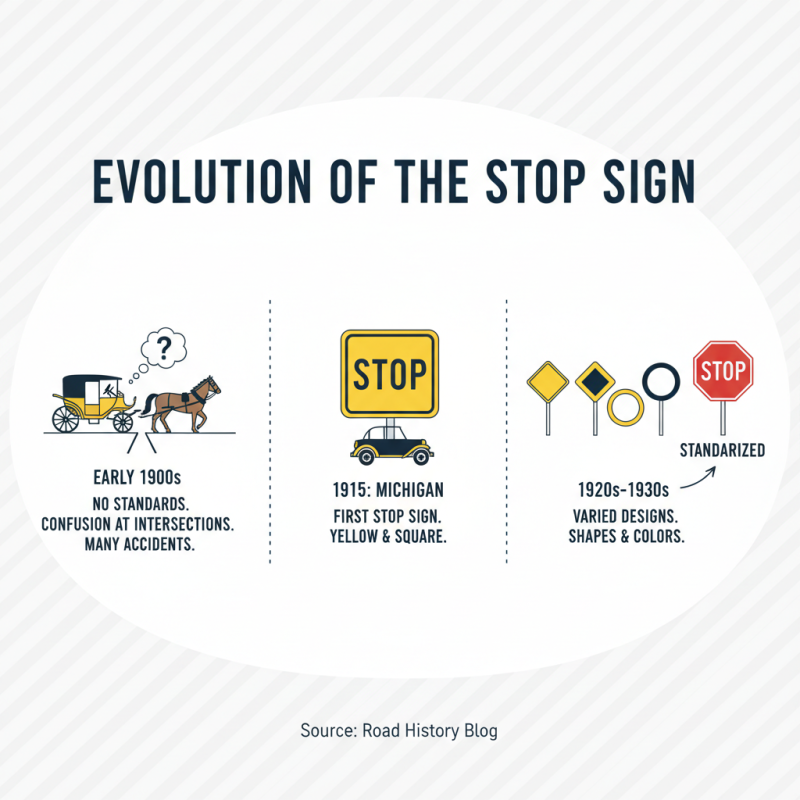
The stop sign has a rich history that dates back to the early 20th century. Initially, road signs were not standardized. They varied significantly across towns and states. The first recorded stop sign appeared in Michigan in 1915. It was merely a yellow sign with black lettering. Drivers had to make their own decisions at intersections. This led to many accidents.

In 1922, the American Association of State Highway Officials (AASHO) recommended a new design. The octagonal shape was chosen for its distinctiveness. The red color was adopted in the 1950s for improved visibility. Yet, not everyone understood the importance of stopping at these signs. Many drivers still treated them as mere suggestions.

Over the decades, the stop sign evolved further. Reflective materials were introduced, enhancing visibility at night. Still, some people ignore these critical signals. They rush through intersections, putting everyone at risk. The evolution of the stop sign reflects our changing attitudes toward road safety, signaling a need for ongoing education and awareness.

Design and Symbolism of Stop Signs Across the World

Stop signs are not just simple red octagons. They vary in design and meaning across different cultures. In Japan, for instance, stop signs feature a unique shape and colors to grab attention. Their design considers local traffic behavior and safety concerns. According to a report by the World Health Organization, road traffic injuries are a leading cause of death globally. This statistic highlights the importance of effective traffic signs.

The symbolism behind stop signs can also differ. In some countries, they symbolize caution, while in others, they represent a hard stop. This distinction can lead to confusion for international travelers. A study published in the Journal of Transportation Safety examining sign recognition found that uniformity enhances compliance. Yet, variations exist, prompting a need for reflection on how well these designs communicate their purpose.

Research indicates that well-designed stop signs increase driver compliance. The visibility and distinctiveness of a sign play crucial roles. In Germany, a rectangular stop sign is used, which seems less effective than the standard form in other nations. This inconsistency raises questions on whether universal standards should be enforced. Improving designs may reduce accidents. Nonetheless, attention to cultural differences is essential for enhancing road safety worldwide.

Legal Importance and Regulations Surrounding Stop Signs

Top 10 Facts About Stop Sign You Need to Know?

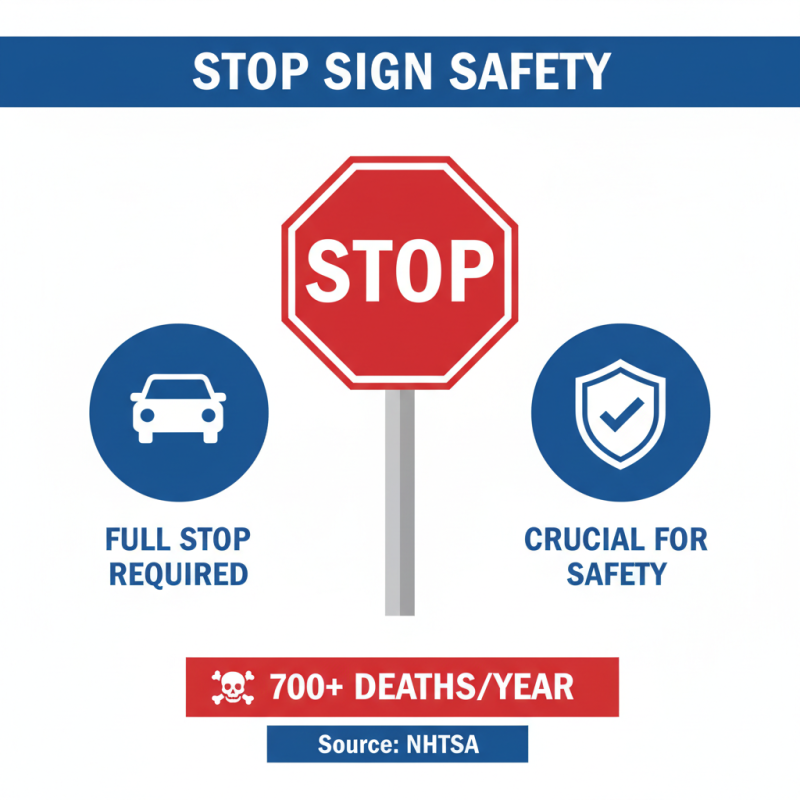
Stop signs are crucial for road safety. They instruct drivers to come to a complete stop. According to the National Highway Traffic Safety Administration (NHTSA), around 700 people die each year in accidents linked to stop sign violations. Understanding the legal importance of stop signs is essential for all drivers.

Regulations surrounding stop signs vary by location. Most jurisdictions mandate that drivers must stop completely at these signs. Failing to do so can result in fines or worse. In a study by the Insurance Institute for Highway Safety, 20% of drivers admitted to rolling through stop signs without stopping. This habit poses significant risks.

Tips for safer driving: Always double-check intersections before proceeding. Maintain a distance from the stop line to get a clearer view. Remember, impatience can lead to accidents. Also, young drivers often overlook the importance of stop signs. Educating newer drivers is vital for safer roads. Stay alert and practice patience at every stop sign.

Common Misconceptions About Stop Signs and Their Use

Many drivers misunderstand the purpose of stop signs. It's not just about stopping; it's about ensuring safety at intersections. According to the National Highway Traffic Safety Administration, failing to stop at a stop sign contributes to approximately 20% of intersection collisions. This statistic underscores the need for education on proper stop sign usage.

Tip: Always come to a complete stop at the sign, even if the intersection seems clear. This helps to minimize risks and improve reaction time.

Another common misconception is that stop signs are merely suggestions. This is far from the truth. They are legal commands meant to protect all road users. Ignoring them can lead to serious consequences. A study found that many accidents occur due to rolling stops, often when drivers misjudge the need to halt completely.

Tip: Look both ways before proceeding. Even at a stop sign, remain vigilant for pedestrians and cyclists.

Moreover, there's confusion about the role of stop signs in different traffic conditions. Some believe that during low traffic times, stopping isn't necessary. However, safety experts advocate for strict adherence to traffic signs at all times, regardless of traffic density. Compliance ensures everyone's safety.

Top 10 Facts About Stop Signs

Impact of Stop Signs on Road Safety and Traffic Flow

Stop signs play a vital role in maintaining road safety. They alert drivers to stop and assess their surroundings. This simple action can prevent collisions at intersections. However, many drivers roll through stop signs. This often leads to accidents that could have been avoided.

The presence of stop signs influences traffic flow significantly. They create intervals where vehicles must pause. This can result in delays, especially during rush hours. Drivers might become frustrated. In some cases, these frustrations lead to aggressive driving behaviors. It's crucial for drivers to remember the purpose of stop signs. They are meant to enhance safety, not hinder progress.

Education on stop sign importance is essential. Many drivers underestimate their role in preventing accidents. It's not just about obeying the law; it’s about protecting lives. Traffic safety campaigns should emphasize this. Reflection on our driving habits can make a difference. Each stop should be seen as a chance to increase awareness, not just a delay.

Top 10 Facts About Stop Sign You Need to Know

Fact Number Fact Impact on Road Safety Impact on Traffic Flow
1 First introduced in the 1920s. Increased awareness of traffic rules. Initial confusion but long-term improvement.
2 Standardized shape and color (octagonal red). Enhanced visibility and recognition. Promotes quicker reactions from drivers.
3 This sign indicates a full stop is necessary. Significantly reduces speed-related accidents. Can lead to delays during high traffic.
4 The placement of stop signs is crucial for effectiveness. Improper placement can lead to accidents. Effective placement can streamline flow.
5 Compliance is higher at well-lit intersections. Reduces night-time accidents significantly. Promotes steady traffic, even at night.
6 Stop signs are often placed at intersections. Essential for preventing right-angle collisions. Can cause bottlenecks if too many are present.
7 They are not always followed, leading to "rolling stops." Increases risk of collisions. Disrupts orderly traffic flow.
8 Regular maintenance is required to keep stop signs visible. Poor visibility can lead to serious accidents. Neglect can lead to unclear traffic situations.
9 There are alternative traffic control measures. Roundabouts can reduce stops and increase safety. Alternates can improve continuous flow.
10 Education and enforcement improve compliance rates. Increased awareness can lower accidents. Education can enhance overall traffic efficiency.