China Top LED Strobe Lights Suppliers for Global Buyers?
For global buyers, sourcing reliable Led Strobe Lights from China requires more than comparing prices. A supplier’s catalog may show bright beams, compact housings, and fast delivery promises. Real performance appears under repeated testing, not studio photography. Experienced purchasing teams examine flash energy, refresh rate, color consistency, thermal control, and operating noise. They also ask how each unit performs after hours of continuous use.
A dependable manufacturer should provide clear technical sheets, sample units, factory quality records, and traceable production information. Buyers can request testing evidence for EMC, RoHS, and relevant market requirements. Documents should match the exact model. IP ratings deserve attention too. A sealed outdoor fixture needs different protection from an indoor stage light. Small details matter, including connector strength, fan replacement, firmware stability, and carton protection.
This guide introduces China’s leading Led Strobe Lights suppliers for international buyers. It focuses on manufacturing capability, product consistency, customization, communication, and after-sales support. Factory visits, video inspections, and independent sample testing can reduce uncertainty. Still, rankings are never permanent. A supplier with excellent samples may struggle during peak seasons. Another may offer honest service but limited design resources. That is why buyers should compare evidence, not slogans, and record unanswered questions before ordering. Reliable sourcing is practical work. It is rarely perfect.
What Are LED Strobe Lights and Where Are They Used?
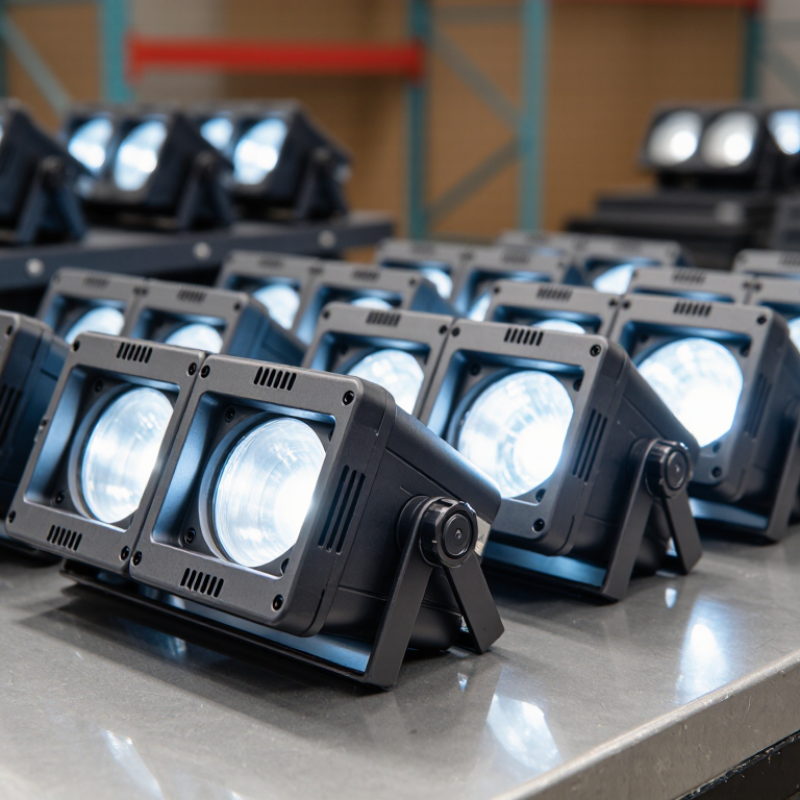
An LED strobe light is a solid-state fixture that emits rapid, repeated flashes. Its circuit controls flash frequency, brightness, duration, and sometimes color. Unlike a steady LED lamp, it creates visual pulses for attention, signaling, or controlled events. Common applications include industrial equipment, emergency vehicles, aviation areas, stage production, warehouses, and traffic warning systems. The flash pattern must remain visible without creating unnecessary glare.
The International Energy Agency’s Energy Efficiency 2023 report estimates that lighting uses about 15% of global electricity. That figure includes general lighting, not strobes alone. The U.S. Department of Energy reports that LED technology can use at least 75% less energy than incandescent lighting and last up to 25 times longer. Actual savings vary. Duty cycle, heat, optics, and power quality still matter. Small details matter.
For global buyers, a useful specification should state flash rate, luminous intensity, beam angle, ingress protection, operating temperature, and control method. IEC 62471 testing can help assess photobiological safety, while IEC 60529 ratings describe dust and water protection. A China-based supplier should provide sample units, test records, and consistent batch measurements. I would not trust a bright sample alone. A practical test should check flash stability after extended operation, connector temperature, and visibility from different angles. One weakness remains: datasheets often describe ideal conditions, not dusty factories or cold outdoor sites.
LED Strobe Lights: Typical Flash-Rate Ranges by Application
LED strobe lights produce rapid, high-intensity flashes for visual signaling, attention guidance, photography, and entertainment. The chart shows representative operating ranges commonly used in each application; actual settings depend on local regulations, equipment design, and safety requirements.
Frequency is measured in hertz (Hz), where 1 Hz equals 60 flashes per minute. These ranges are technical reference values, not market-share data.
Why Source LED Strobe Lights from Chinese Suppliers?
China Top LED Strobe Lights Suppliers for Global Buyers?
Why Source LED Strobe Lights from Chinese Suppliers?
Chinese suppliers offer strong production depth for LED strobe lights. Their factories often combine LED assembly, optical design, metalwork, and controller testing. This reduces coordination between separate vendors. It can also shorten sample development.
The numbers support LED adoption. The U.S. Department of Energy reports that LEDs use at least 75% less energy than incandescent lighting. They can also last up to 25 times longer. The International Energy Agency reports that LED products now represent a major share of global lighting sales. These figures matter for event venues, warning systems, and industrial equipment with frequent operating hours.
China also provides flexible production quantities and customized housing options. Buyers can request different flash patterns, lens colors, voltage ranges, and mounting methods. However, low pricing is not proof of quality. I have seen attractive samples fail during heat testing. That uncomfortable detail deserves attention. Supplier audits, aging tests, and documented photometric data remain necessary.
Tips: Ask for LM-80 or equivalent LED reliability records, ingress protection evidence, and thermal test results. Confirm flash frequency, duty cycle, cable specifications, and operating temperature. Request a pre-shipment inspection. Small details often prevent expensive returns. Use independent laboratory testing when the application has strict safety requirements.
How to Evaluate China’s Top LED Strobe Light Suppliers?
How to Evaluate China’s Top LED Strobe Light Suppliers?
A capable supplier should prove performance, not merely display bright samples. The U.S. Department of Energy reports that LED packages commonly achieve 80–150 lumens per watt, far above traditional incandescent lighting. However, strobe products need more than high brightness. Ask for measured flash intensity, frequency accuracy, beam angle, thermal performance, and lifetime data. Request test records from calibrated laboratories. Product photos are not evidence.
Check compliance documents carefully. IEC 60598-1 supports general luminaire safety, while IEC 60529 defines ingress protection ratings such as IP65. IEC 62471 also helps assess photobiological risks from intense light. EMC reports should match the exact model, not a similar housing. The International Energy Agency’s lighting analysis shows LEDs now dominate new lighting deployments, but quality still varies across markets. Growth does not guarantee reliability.
Visit the factory, when possible. Review incoming component checks, soldering controls, burn-in testing, and final inspection records. Ask how suppliers handle failed samples and replacement claims. A serious supplier can explain capacitor selection, heat-sink design, and driver protection in plain language. Small details matter, such as sealed cable glands and consistent connector crimping. No scorecard is perfect. I would still reserve a pilot order before signing a large contract. Sample testing can miss failures caused by vibration, moisture, or repeated thermal cycling. A supplier’s ISO 9001 certificate is useful, but it cannot replace independent product testing and shipment-level quality records.
What Standards and Certifications Should Global Buyers Check?
When comparing China’s LED strobe light suppliers, global buyers should check compliance before brightness, price, or delivery speed. Ask for the exact model number on every certificate. A document covering a similar product is not enough. For European sales, review CE conformity, EMC test results, RoHS evidence, and applicable IEC safety standards. For the United Kingdom, verify the required UKCA documentation. Other markets may require regional electrical safety and radio-frequency approvals.
Check the test report, not only the certificate image. The report should identify the factory, product model, input voltage, testing laboratory, and issue date. Confirm that the laboratory has suitable accreditation. Also review photobiological safety under IEC 62471, especially for high-intensity flashing units. Ask about flicker frequency, duty cycle, heat control, insulation, grounding, and ingress protection. An IP rating matters when lights operate near dust or moisture.
Supplier reliability needs more than paperwork. Request a quality-control plan, sample inspection records, and traceability for LEDs, drivers, and housings. Verify whether production samples match tested samples. This is often overlooked. A certificate may remain valid while internal components change. Buyers should also examine warnings, installation instructions, warranty terms, and spare-part support in clear English. Some suppliers provide complete files quickly, but gaps appear during technical review. That weakness deserves attention before any large order.
How to Compare Pricing, Customization, and Export Services?
Comparing China’s LED strobe light suppliers requires more than checking the lowest quotation. Request an itemized price for LEDs, housing, control systems, packaging, testing, and tooling. Clarify whether the price is based on EXW, FOB, or another trade term. A low offer may exclude export cartons or inspection fees. That mistake can become expensive.
Customization should be measured with evidence, not promises. Ask for drawings, sample photos, and a written specification sheet. Check brightness, flash patterns, operating temperature, mounting holes, cable length, and connector types. Confirm the minimum order quantity for custom colors or logos. Standard models usually reduce cost and delivery time. Custom work needs testing. Sometimes, buyers request changes too late.
Export service shows a supplier’s practical reliability. Review its experience with commercial invoices, packing lists, certificates, shipping labels, and destination-specific documentation. Ask how products are protected inside cartons, especially when lenses can crack during transit. A capable export team should explain production milestones and provide inspection records. Factory audits, video inspections, and pre-shipment sampling add useful confidence. Still, documents can be incomplete. Keep communication in writing, and compare the supplier’s answers with the sample received. The best comparison is rarely perfect, but clear records expose hidden cost, weak quality control, and avoidable delivery risk.