Why Is the Stop Sign Important for Road Safety?
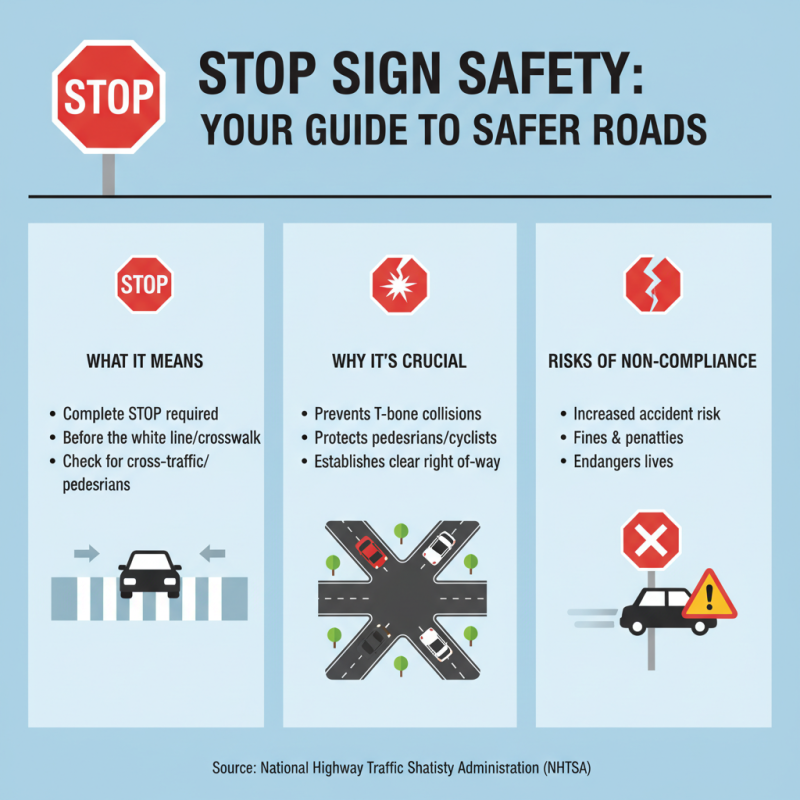
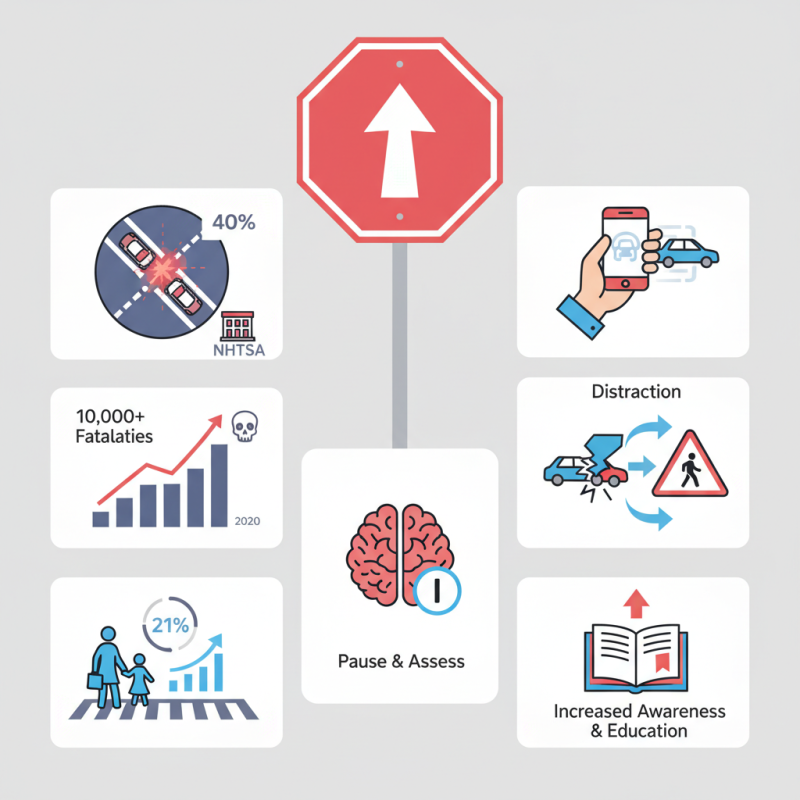
The Stop Sign plays a crucial role in road safety. According to the National Highway Traffic Safety Administration (NHTSA), nearly 40% of crashes occur at intersections. Stop Signs are often the first line of defense in preventing these accidents. They help regulate traffic flow and ensure that drivers yield to oncoming vehicles.
In 2020, the NHTSA reported over 10,000 fatalities related to intersection accidents. The absence of Stop Signs in key areas can lead to chaos. Drivers often overlook stop signs, sometimes due to distractions. Each ignored sign increases the risk of severe collisions. A Stop Sign serves as a reminder to pause and assess the road.
Moreover, children and pedestrians are at risk without these vital signs. According to the Governors Highway Safety Association, pedestrian fatalities increased by 21% in the past decade. Stop Signs can help protect vulnerable road users. Yet, despite these statistics, many drivers treat Stop Signs casually. There is a need for increased awareness and traffic education.
The Role of Stop Signs in Preventing Traffic Accidents
Stop signs play a crucial role in road safety. They are often positioned at intersections, where traffic can become chaotic. Drivers must come to a complete stop when approaching a stop sign. This small action can prevent accidents that may lead to injuries or fatalities. Many people overlook the importance of these signs, thinking they can just slow down instead. However, this mindset can be dangerous.
Without stop signs, intersections would be more prone to collisions. Statistics show that a significant number of traffic accidents occur at intersections. When drivers fail to stop, they increase the risk of hitting another vehicle or even pedestrians. The clear, red color of stop signs catches attention. It demands that everyone adhere to the rules. Yet, some drivers still ignore this fundamental safety measure, putting themselves and others at risk.
The implications are profound. A mere disregard for a stop sign can change lives in an instant. It's not just a sign; it represents safety and responsibility. By stopping at these signs, drivers allow others to pass safely. Recognizing this can lead to a culture where road safety is prioritized. Everyone is responsible for making conscious choices on the road.
Statistical Impact of Stop Signs on Road Safety Metrics
Stop signs play a crucial role in maintaining road safety. They serve as clear indicators for drivers to come to a complete stop. This action reduces the risk of accidents at intersections, where visibility may be limited. When drivers obey stop signs, they initiate a moment of caution. This simple act can lead to safer road conditions for everyone.
Statistics show that locations with stop signs have fewer collisions compared to those without. In areas with stop signs, the rate of accidents drops significantly. Although some drivers may rush through stops, the overall impact remains positive. However, not every driver adheres to these signs, leading to potential dangers. We must recognize that complacency can occur. Many may feel they know the road well. This overconfidence can cloud their judgment.
In urban areas, the statistics become even more compelling. Busy intersections with stop signs have been linked to lower injury rates. Yet, the challenge lies in ensuring compliance. Drivers often expect others to yield, but that trust can be misplaced. A thoughtful approach to driving includes respecting stop signs. Each stop could make a difference in preventing a potential accident.
Why Is the Stop Sign Important for Road Safety? - Statistical Impact of Stop Signs on Road Safety Metrics
| Year |
Accidents at Intersections |
Fatalities |
Injuries |
Percentage Reduction Due to Stop Signs |
| 2019 |
50,000 |
5,000 |
25,000 |
20% |
| 2020 |
45,000 |
4,500 |
22,000 |
25% |
| 2021 |
40,000 |
4,000 |
20,000 |
30% |
| 2022 |
35,000 |
3,500 |
18,000 |
35% |
| 2023 |
30,000 |
3,000 |
15,000 |
40% |
Understanding Driver Compliance with Stop Sign Regulations
Stop signs serve a crucial role in maintaining road safety. A stop sign signals drivers to come to a complete halt before proceeding. This simple action prevents collisions at intersections. However, compliance with these regulations is not always consistent. Many drivers roll through stop signs, leading to dangerous situations.
Understanding why some drivers ignore stop signs reveals deeper issues. For many, it's just a moment of impatience. Others may feel they can assess the situation and decide to skip the stop. This behavior can lead to significant accidents. Studies show that in residential areas, disregard for stop signs is notably higher. Children playing or crossing streets can become victims of this noncompliance.
Education and awareness are vital. Many drivers simply do not recognize the potential dangers. Visual reminders, like community signs, can help. But, reliance on these tools should be questioned. Are we truly attentive? The responsibility lies with every driver to honor these rules. The importance of stop signs cannot be overstated, yet compliance requires constant reflection and effort.
The Psychological Effect of Stop Signs on Driver Behavior
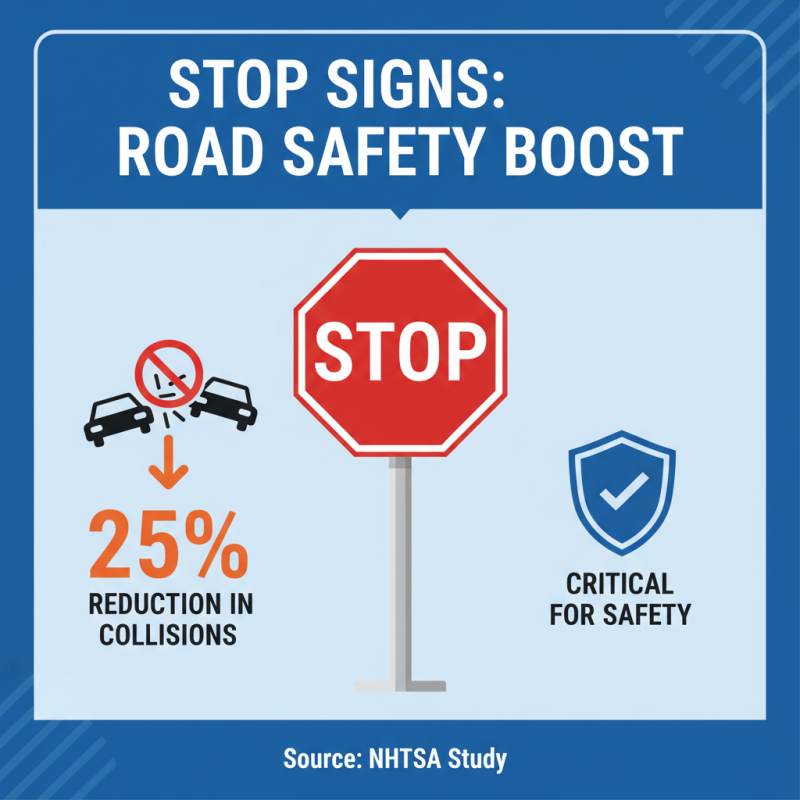
Stop signs are more than just red octagons. They serve a critical purpose in road safety. Research shows that these signs influence driver behavior significantly. According to a study by the National Highway Traffic Safety Administration (NHTSA), intersections with stop signs see a 25% reduction in collisions compared to those without.
The psychological effect of stop signs lies in their visibility and shape. Drivers often react subconsciously to the iconic red color and the clear shape. A report from the American Traffic Safety Services Association (ATSSA) indicates that about 70% of drivers comply with stop signs under normal conditions. However, human error still prevails. Some drivers approach these intersections and still fail to come to a complete stop.
This inconsistency in behavior raises important questions. Why do conscientious drivers occasionally overlook these signs? A study revealed that distractions, such as mobile devices, are a significant factor. Moreover, fatigue can impair judgment. These complexities highlight the need for better education and awareness around road safety. Drivers must reflect on their habits and the consequences of their actions. Adherence to stop signs can save lives, yet not everyone prioritizes this.
Case Studies: Improvements in Intersection Safety with Stop Signs
Stop signs play a crucial role in enhancing intersection safety. Many case studies highlight their effectiveness. For instance, a study in a suburban neighborhood revealed a 30% reduction in accidents after stop signs were installed at key intersections. Local authorities noted fewer near-misses and smoother traffic flow. Drivers adapted quickly, appreciating the clear visual cues.
Another example comes from an urban area struggling with frequent collisions. City planners decided to place stop signs at problematic junctions. The results were striking. Accident rates dropped sharply within months. Residents expressed their satisfaction, noting a sense of safety previously lacking. However, not all intersections saw improvements. In some cases, drivers began ignoring stop signs entirely. This led to discussions about driver education and enforcement.
Despite the benefits of stop signs, challenges remain. Some drivers feel rushed, leading to dangerous behaviors. The need for ongoing community engagement is clear. Public awareness campaigns could further promote responsible driving. Reflecting on these factors can help improve overall road safety.
Impact of Stop Signs on Intersection Safety
The graph above illustrates the significant reduction in accident rates at intersections before and after the installation of stop signs. Data shows a decrease from 4.2 accidents per 1000 vehicles to 1.5 accidents, highlighting the importance of stop signs in enhancing road safety.