Choosing a suitable Solar Traffic Signal Light is crucial for enhancing road safety. Recent studies estimate that solar traffic solutions can reduce energy costs by 60%, making them more appealing to municipalities. These lights harness solar energy, which can lead to significant long-term savings and a smaller carbon footprint.
Dr. Sarah Patterson, a leading expert in sustainable transportation systems, emphasizes, “Investing in solar traffic technology is investing in a safer, greener future.” Her insights highlight the urgency of addressing traffic management challenges with innovative solutions. The right solar traffic signal can enhance visibility, reduce reliance on traditional power, and improve response times.
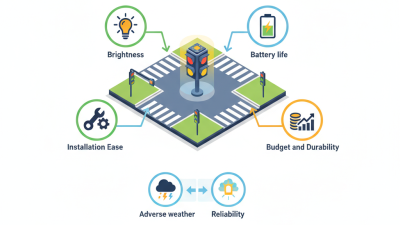
Still, selecting the best option may feel overwhelming. With various models available, understanding your specific needs is essential. Consider landscape, light brightness, and battery life. Each choice impacts how effectively these systems will perform. A poorly chosen system can lead to inefficiencies or increased costs, underscoring the importance of informed decision-making.
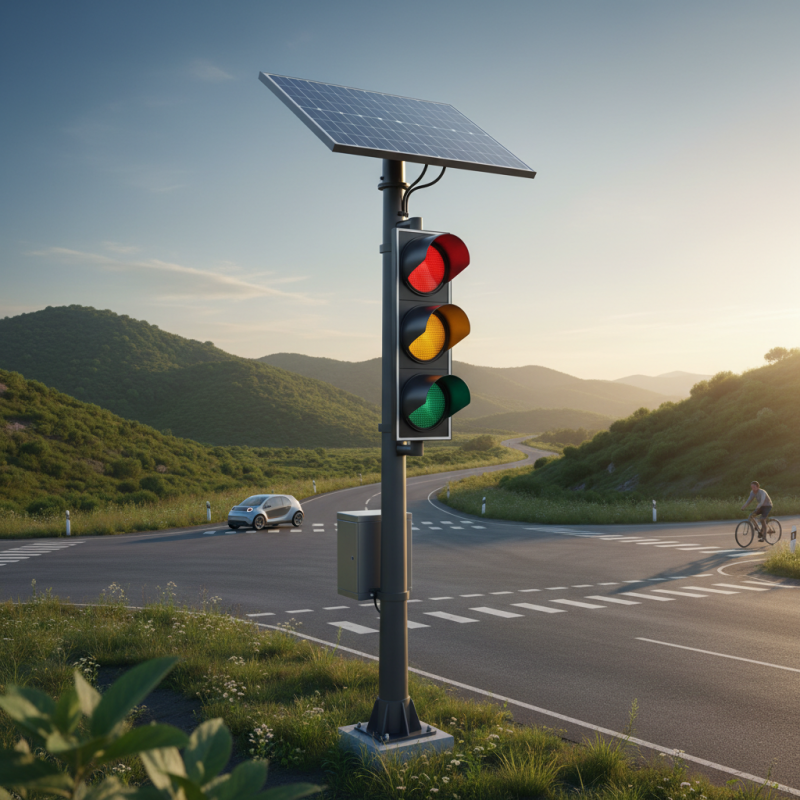
Solar traffic signal lights have emerged as an effective way to enhance road safety. Understanding their key technologies is crucial for making an informed choice. These lights use solar panels to harness energy from the sun. This renewable energy source reduces reliance on traditional power grids. The solar panels are often paired with energy-efficient LED bulbs. LEDs are brighter and last longer than traditional bulbs, ensuring maximum visibility.
When selecting a solar traffic signal light, consider its features. Look for adjustable brightness settings that adapt to ambient light. Some models include sensors to detect motion or traffic flow. This can optimize energy usage, prolonging battery life. Battery capacity is another critical factor. Higher capacity batteries ensure that the light functions even on cloudy days.
While solar traffic signal lights boast many benefits, they also require maintenance. Dust and debris can dull the solar panels, reducing efficiency. Regular cleaning is necessary to maintain their performance. Additionally, installation sites should be assessed for adequate sunlight exposure. Improper placement may hinder the system’s effectiveness. Being aware of these factors can greatly enhance the utility of solar traffic signal lights.
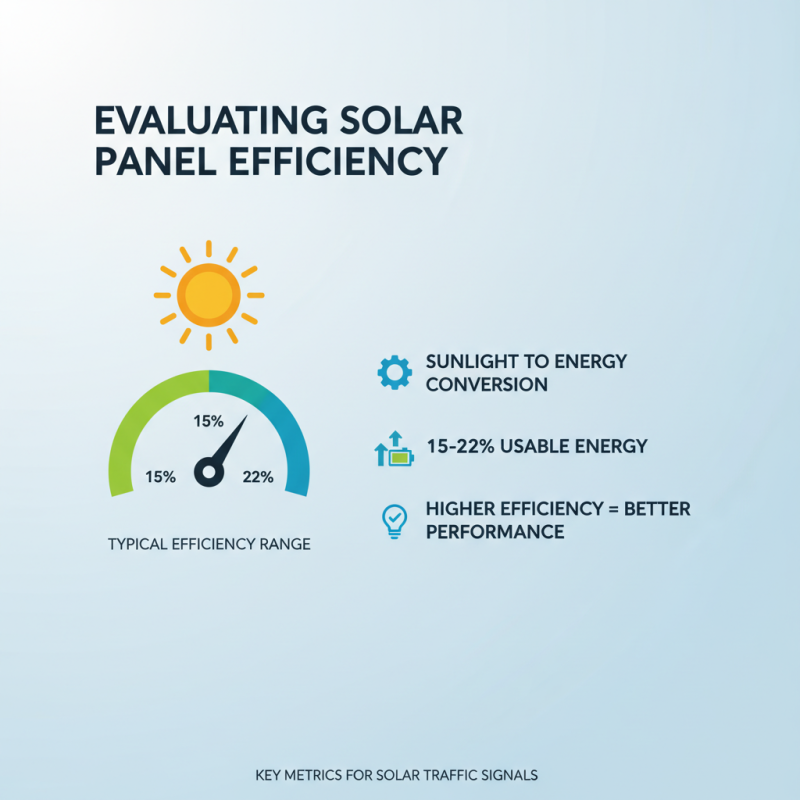
When choosing a solar traffic signal light, understanding solar panel efficiency is crucial. Efficiency metrics influence how well the light functions under varying conditions. Consider the rated efficiency of solar panels, typically between 15-22%. This figure indicates the percentage of sunlight converted into usable energy. Higher efficiency panels often yield better performance.
Another critical metric is the power output measured in watts. A light with adequate wattage ensures visibility in low-light conditions. However, panel size and installation location can affect this output. Assess how weather and sunlight exposure impact performance. Not all panels work equally in shade or during inclement weather.
Evaluate industry standards like the IEC 61215 and IEC 61730 certifications. These ensure durability and safety. Understanding these standards can safeguard your investment. Reflect on what features matter most for your environment. Every installation site presents unique challenges. What works well in one area may not suffice in another. Prioritize what fits your specific needs.
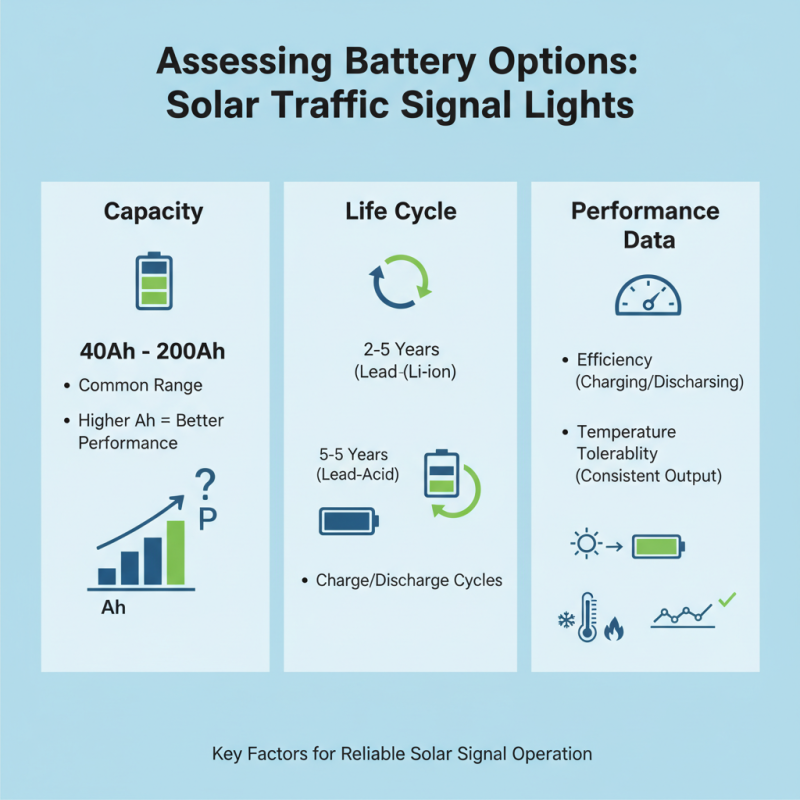
When selecting a solar traffic signal light, battery options are crucial. The capacity of the battery directly affects the operational efficiency. A common capacity for reliable solar signal lights ranges from 40Ah to 200Ah. However, higher capacity does not always guarantee better performance.
Battery life cycle is equally important. Most lithium-ion batteries typically offer 3000 cycles, while lead-acid batteries provide around 500 cycles. A study found that the average lifespan of solar-powered systems could diminish unexpectedly based on poor battery selection.
Performance data reveals that temperature can drastically influence battery efficiency. For instance, batteries can lose up to 20% of their capacity in extreme cold. Regular performance checks should be implemented to mitigate these risks. It's essential to evaluate the environmental conditions where the system will be installed. This ensures the chosen battery can perform optimally in varying temperatures and scenarios.
When selecting a solar traffic signal light, placement is vital. Visibility directly impacts its effectiveness. Choose locations where drivers and pedestrians can see the lights easily. Bright sunlight can enhance visibility during the day, but shadows can obstruct it. Think about surrounding trees or buildings that may interfere with sight lines.
Consider the height of the signal light. It should be high enough for clear visibility yet low enough for pedestrians to notice. The angle can also affect how light is perceived from different distances. A signal light placed too low may be missed by speeding vehicles, while a high placement can reduce its effectiveness for nearby pedestrians.
Evaluate the environment carefully. Busy intersections or narrow streets require more attention to placement. The risk of accidents increases when signals are not clearly visible. Take time to observe traffic patterns before making a decision. In some cases, the best location may not be the most obvious one. Small adjustments can lead to significant improvements.
When considering solar traffic signal lights, a cost-benefit analysis is crucial. Initial investments in solar technology can be higher than traditional options. However, long-term savings often outweigh these costs. Solar lights reduce electricity bills and lower maintenance needs. They can last significantly longer than their conventional counterparts.
One important tip is to calculate your long-term savings accurately. Look at energy costs in your area. Factor in the maintenance expenses and life expectancy of the devices. These metrics will offer a clearer picture of potential savings.
Another tip is to assess your environmental impact. Solar lights do not rely on fossil fuels, which decreases carbon footprints. They contribute positively to sustainable practices. However, it’s essential to reflect on the lifespan and performance in varied weather conditions.
By understanding both the immediate costs and long-term benefits, you can make a well-informed decision. This approach ensures that your investment aligns with both budget and sustainability goals.