How to Choose the Best Led Strobe Lights for Your Needs?
Choosing the right LED strobe lights can be intricate. These lights play a critical role in safety and visibility. According to recent industry reports, the global market for LED strobe lights is expected to grow by 5.1% annually. This growth reflects their increasing usage in various sectors.
When selecting LED strobe lights, consider brightness and durability. Many models claim to be bright, yet not all meet safety standards. The American National Standards Institute (ANSI) has set guidelines for light output. Ensuring compliance can prevent potential hazards.
It’s essential to balance features and cost. Some users prioritize flashy designs over functionality, which can lead to regret. Many lights promise longevity, but actual performance may vary. Investigating user reviews could reveal insights into reliability. Select wisely to ensure you meet your specific needs effectively.
Understanding the Different Types of LED Strobe Lights Available
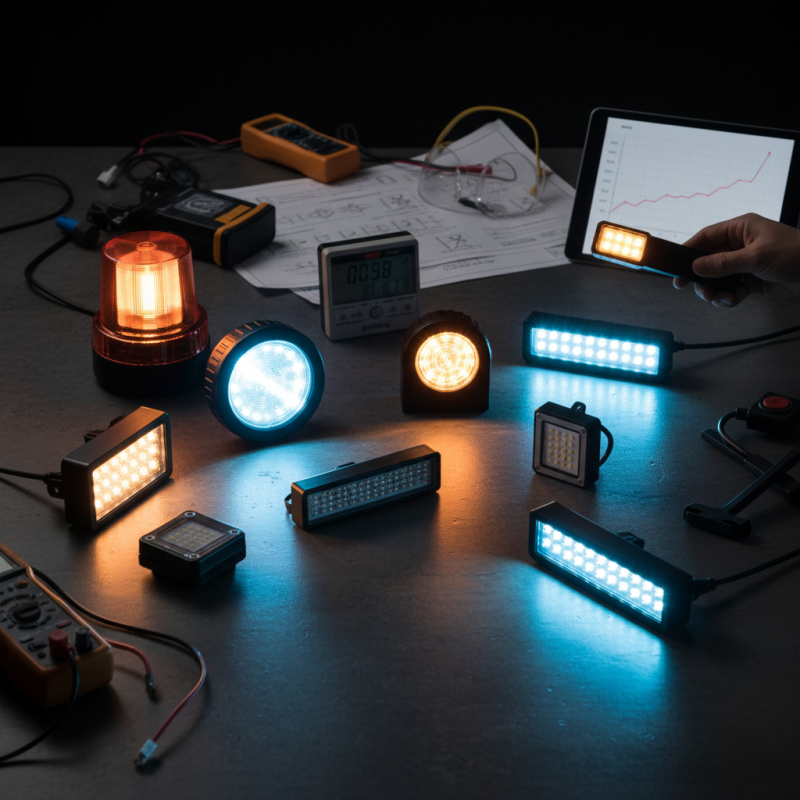
When selecting LED strobe lights, understanding the available types is crucial. There are various styles designed for specific needs. For instance, some are compact and portable, ideal for outdoor events or emergency situations. Others are built for more permanent installations. The choice depends on your intended use.
Consider the brightness of the strobe lights. Some models emit intense flashes, while others offer softer illumination. The color of the light also matters. Common options include white and blue, but amber and red lights can be useful too. Such choices may impact visibility greatly.
Another aspect to ponder is the power source. Some strobe lights rely on batteries, making them easy to position. Others require a direct power connection. Weighing these factors is vital to reflect on your preferences and needs. Also, keep in mind that different environments may require different types of lights.
Key Factors to Consider When Choosing LED Strobe Lights
When selecting LED strobe lights, several key factors come into play. Brightness is paramount. Reports indicate that lights with a minimum of 1,000 lumens are ideal for attracting attention in emergencies. The color of the light also matters. Studies suggest that brighter colors, like white and amber, are more visible. They cut through darkness effectively.
Another important aspect is the power source. Many strobe lights offer battery or direct power options. Battery-powered variants are portable but may require frequent charging. On the other hand, wired lights often provide constant power. It’s essential to weigh convenience against reliability. Some users find battery life unreliable in critical situations, leading to frustration.
Durability is crucial, too. LED strobe lights should withstand harsh weather conditions and rough handling. Research shows that IP ratings provide insight into water and dust resistance. A rating of IP65 or higher is typically recommended. However, not all lights meet this standard, so it’s essential to check specifications carefully. Lastly, consider the mounting options. Some lights come with versatile mounting systems, making installation easier in various locations. This feature can save time and effort when setting up in a pinch.
Evaluating the Brightness and Power Requirements of Strobe Lights
When choosing LED strobe lights, brightness is crucial. Measured in lumens, this value indicates how much light is produced. According to industry reports, effective strobe lights range from 200 to 1200 lumens. Lower models may not be adequate for larger spaces. Brightness impacts visibility and effectiveness during emergencies. It’s essential to assess your specific needs and the environment.
Power requirements are another key consideration. Many strobe lights operate on 12V to 24V systems. However, some models can operate at higher voltages. The greater the power, the brighter the flash. Experts suggest a minimum power rating of 10 watts for basic applications. High-intensity situations, like outdoor use or large areas, may require at least 50 watts.
While the specifications are important, real-world performance often diverges from stated values. Be cautious of exaggerated claims. Testing different options in your intended environment provides a better understanding of efficacy. Pay attention to user feedback on brightness and power consumption to find a model that suits your requirements.
Brightness and Power Evaluation of LED Strobe Lights
This chart illustrates the brightness (measured in lumens) and power requirements (watts) of various LED strobe lights to aid in selecting the best option for your needs.
Assessing the Durability and Environmental Resistance of Strobe Lights
When choosing LED strobe lights, durability and environmental resistance are crucial. Strobe lights face various conditions, from extreme temperatures to heavy rain. Their ability to withstand these factors greatly affects their performance and lifespan.
Look for lights with sturdy enclosures. Materials like polycarbonate or aluminum often provide better protection. Waterproof ratings, like IP65 or higher, ensure the light can handle wet conditions. Remember, not all strobe lights will resist corrosion or rust effectively. This can lead to breakdowns over time.
Consider the operating temperature range. Some lights perform well in cold but fail in heat. Check the manufacturer’s specifications. It’s also important to test the lights under different conditions. You might find that a light shines bright but struggles when faced with moisture. Always reflect on your specific needs, since the ideal choice may vary based on your environment.
How to Choose the Best Led Strobe Lights for Your Needs? - Assessing the Durability and Environmental Resistance of Strobe Lights
| Model |
Durability Rating |
Water Resistance |
Operating Temperature Range |
Power Source |
| Strobe Light A |
IP68 |
Yes |
-20°C to 50°C |
12V DC |
| Strobe Light B |
IP65 |
Yes |
-10°C to 40°C |
AC and DC |
| Strobe Light C |
IP67 |
Yes |
-30°C to 60°C |
Battery-operated |
| Strobe Light D |
IP54 |
No |
0°C to 45°C |
Solar-powered |
Comparing the Cost and Value of Various LED Strobe Light Options
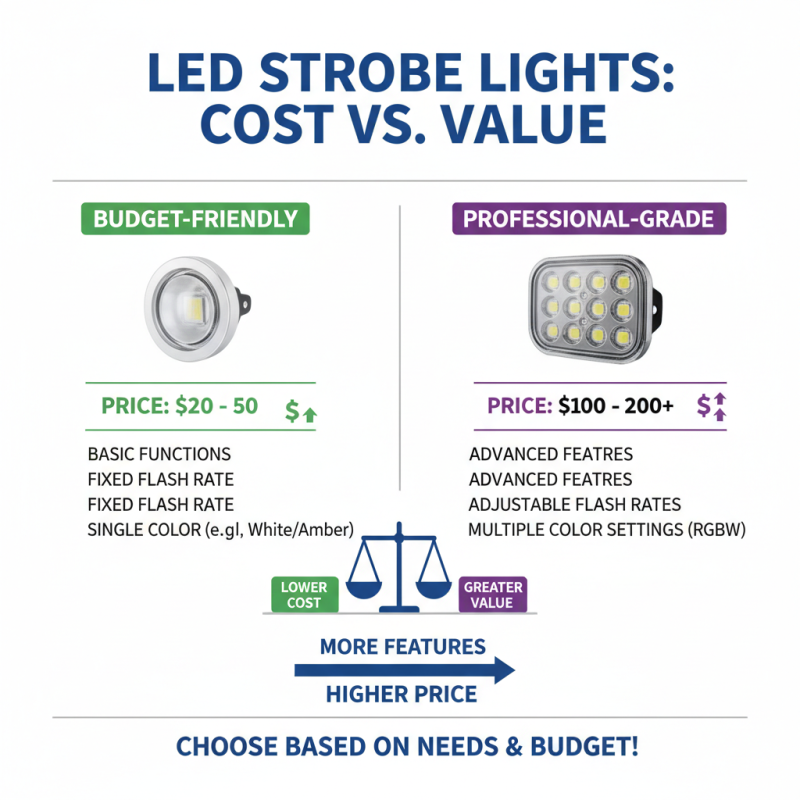
When considering LED strobe lights, the balance between cost and value is crucial. A recent industry report highlighted that prices can vary significantly, with options ranging from $20 to over $200. Cheaper models might only offer basic functions. Professional-grade lights, however, can be equipped with features like adjustable flash rates and multiple color settings, enhancing their usability.
Another important aspect is longevity. According to a study, high-quality LED strobe lights can last up to 50,000 hours, while cheaper versions might burn out after just a few thousand hours. This longevity translates to lower replacement costs over time. However, investing in expensive units requires careful consideration of your specific needs.
Not everyone requires the advanced features of premium options. Users may find satisfactory performance from mid-range lights without overspending. Yet, there is a risk in choosing the lowest-priced lights; their performance may ultimately fail to meet expectations. Evaluating both initial costs and long-term value is essential for making the right choice.