inquiry
Leave Your Message

7 Best Radar Speed Signs for Buyers in 2026

Choosing a Radar Speed Sign in 2026 means weighing more than the number displayed on its face. The right model must suit its road, power source, mounting point, and maintenance plan. A sign beside a school entrance faces different demands from one on a long rural approach. Small details matter: Can drivers read the display in bright sun? Can staff retrieve speed data without repeated site visits?

The safety case is clear, but the device is only one part of it. NHTSA’s 2023 speeding data reports 11,775 deaths in speeding-related crashes, about 29% of all traffic fatalities that year. FHWA’s Traffic Calming ePrimer places speed-feedback signs within a broader set of speed-management tools, not as a stand-alone fix. Numbers matter. Still, a sign is not magic. Placement, visibility, and follow-up influence whether drivers notice it and whether a community can judge its value.

This guide compares seven options across practical buying factors: radar and display features, power choices, durability, data access, and likely installation needs. Specifications should be checked against each manufacturer’s current documentation; product claims can change, and published ranges do not guarantee performance at every site. The comparison is a useful starting point, not a substitute for field assessment. That distinction is easy to miss. A bright display may look impressive in a catalog, yet glare, mounting height, or a tree branch can change what drivers actually see.
7 Best Radar Speed Signs for Buyers in 2026

Understanding Radar Speed Signs and Their Purpose

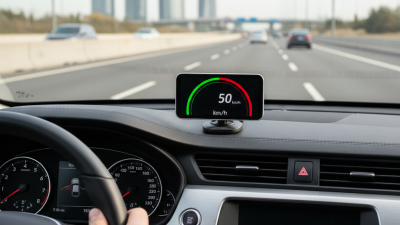
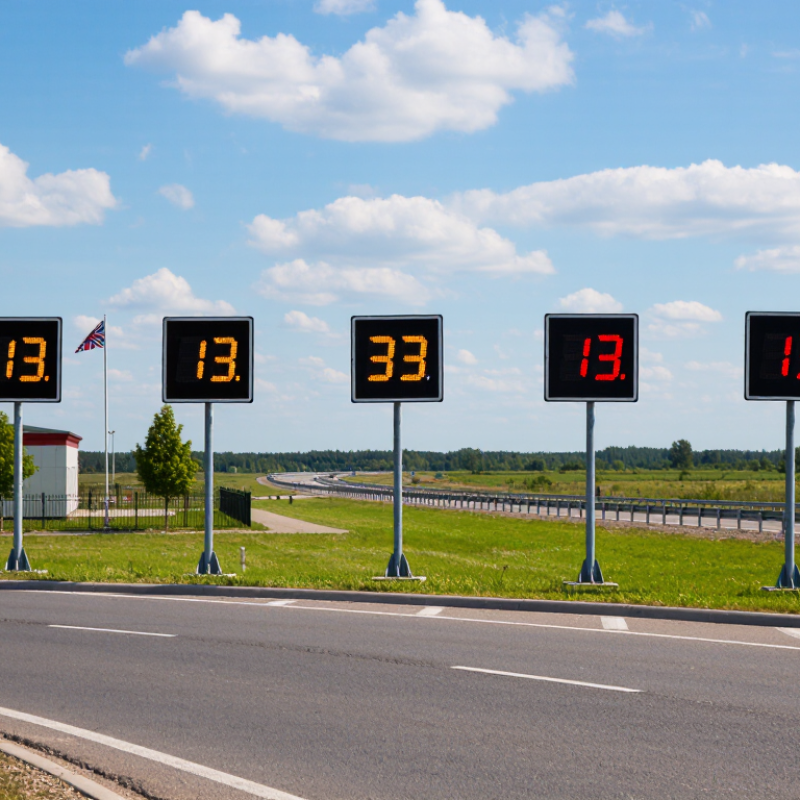
A radar speed sign uses radio waves to estimate a vehicle’s speed and display it to the driver. Many signs show a large number, sometimes with a simple green or red feedback cue. The goal is awareness: a driver sees an actual speed beside the posted limit and has a chance to ease off the accelerator. These signs can be useful near schools, neighborhood streets, and roadwork areas, where a quick visual reminder may matter. They do not replace thoughtful road design or careful traffic monitoring.

Tips: Check that the display is readable in daylight and at night. Confirm its radar range suits the road, and consider power options, mounting height, and weather exposure. Follow the manufacturer’s placement guidance; a sign aimed poorly may show inconsistent readings. Keep it simple.

A useful sign gives drivers clear feedback without overwhelming them. A bright number can catch attention, but flashing effects may distract, especially on a busy street. Some models also record traffic speeds, which can help identify patterns over time. Treat those figures as one source of information, not a complete picture: traffic volume, road conditions, and the sign’s location affect what the data means. Even a well-chosen sign cannot make every driver slow down.
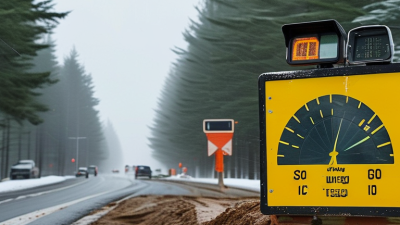
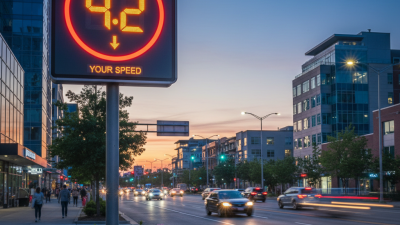
How Radar Speed Signs Detect and Display Vehicle Speeds

A radar speed sign sends a low-power microwave signal toward approaching traffic. The vehicle reflects part of that signal, and the returning wave shifts frequency as the vehicle moves. The sign’s processor uses this Doppler shift to estimate speed, then updates the number shown on its display. It sounds simple. In practice, aim, mounting height, road curves, and nearby moving objects can affect readings. A sign mounted too close to a bend may capture traffic at an angle, making the displayed speed less representative.

Display behavior matters, too. Many signs show a driver’s measured speed, while some use color changes or brief alerts above a set threshold. Clear, legible digits help drivers understand the feedback quickly; tiny displays can be hard to read in rain or glare. The NHTSA report Traffic Safety Facts: Speeding, 2022 recorded 12,151 speeding-related traffic fatalities that year, underscoring why accurate speed awareness matters. That figure does not prove a sign prevents crashes. Buyers should check the device’s measurement range, refresh rate, weather resistance, and documented field-testing method. Ask how it handles two vehicles in the beam. That detail is easy to overlook.

Radar Speed Signs: Speed Readings in mph and km/h

Common speed readings shown in miles per hour, with their exact conversions to kilometers per hour (rounded to one decimal place).

Radar speed signs use the Doppler shift of reflected radio waves to estimate a vehicle’s speed, then display the reading in the configured unit. Conversions use 1 mph = 1.609344 km/h.

Key Features to Compare When Choosing a Radar Speed Sign

Compare radar speed signs by how clearly they communicate, not just by their maximum detection distance. A display should remain readable in bright sun and at dusk, with numerals large enough for drivers to notice without distraction. Check whether brightness adjusts automatically and whether the sign can show a simple warning when speeds exceed a selected threshold. Detection range, measurement accuracy, and response time also matter. Ask for test conditions behind published figures; curves, parked vehicles, and mounting height can affect readings. Small details matter.

Power and upkeep shape the real cost of ownership. Solar power may suit an exposed roadside, while a grid connection can be more dependable in shaded locations. Compare battery runtime, charging needs, enclosure weather resistance, and how easily staff can access the unit for service. Data logging can help identify recurring speed patterns, but confirm what it records and how reports are retrieved. I would also check mounting options before ordering; a sign that fits the pole but faces the wrong angle is a frustrating mistake. If possible, review a sample display outdoors and ask about calibration checks, replacement parts, and support. A lower purchase price is less useful if routine maintenance proves difficult.

7 Best Radar Speed Signs for Buyers in 2026 - Key Features to Compare When Choosing a Radar Speed Sign

Compare these seven common sign configurations by intended use and key features. They are configuration types, not specific products. Available specifications vary by model; confirm detection range, display size, power requirements, and local compliance with the supplier before buying.

Configuration Best suited for Power and installation Display and feedback Features to compare Main trade-off
1. Solar-powered trailer sign Temporary deployments, changing traffic patterns, and locations without convenient mains power. Trailer-mounted; typically uses a battery charged by a solar panel. Check battery autonomy and expected solar exposure. Digital speed display; some configurations add a “SLOW DOWN” message or color feedback. Trailer security, panel sizing, battery monitoring, portability, and setup time. Higher purchase and transport burden than a fixed sign; performance depends on sunlight and battery condition.
2. Fixed roadside solar sign Rural roads or other permanent locations where grid power is unavailable or costly to install. Pole-mounted solar panel and rechargeable battery; mounting and panel orientation must suit the site. Typically a speed display; available digit sizes and brightness vary by model. Battery capacity, low-light operation, weather rating, mounting hardware, and maintenance access. Site shading, winter daylight, and extended cloudy periods can affect charging.
3. Mains-powered fixed sign Permanent installations near an available, suitable electrical supply. Fixed pole or roadside mounting with a compatible AC supply; installation may require electrical work. Can support continuous operation; display format and brightness are model-specific. Power requirements, surge protection, enclosure rating, cable routing, and service access. Needs a reliable power source and can involve higher installation costs where wiring is not nearby.
4. Compact school-zone sign School approaches and neighborhood streets with limited mounting space and moderate operating speeds. Usually pole-mounted; solar, battery, or mains-powered options may be available. Compact speed display; optional flashing or supplemental message features depend on configuration. Visibility at the posted approach speed, school-zone schedule compatibility, and suitability for local sign rules. A smaller display may be less visible from farther away; check sight distance and placement.
5. Large-display approach sign Roads where drivers need more time to see and respond to a displayed speed. Typically fixed roadside mounting; confirm pole capacity, wind loading, and the selected power source. Larger digits can improve legibility at distance; actual visibility depends on viewing angle, contrast, and ambient light. Digit height, brightness control, viewing distance, mounting height, and display response settings. Larger equipment can require stronger mounting, more power, and a higher budget.
6. Speed-feedback sign with driver messaging Sites where a simple speed reading may benefit from an additional visual prompt. Fixed or portable versions are available; power needs depend on display size and added features. May combine speed digits with a message, symbol, or color-coded feedback; options vary by model. Message legibility, configurable thresholds, brightness, and whether feedback can be disabled or scheduled. More display elements can increase cost and power use; avoid visual clutter at the site.
7. Data-logging or connected sign Agencies that want to review traffic-speed patterns and assess deployments over time. May be fixed or portable; logging and communications can add power requirements and ongoing service needs. Speed display with optional stored observations or remote reporting, depending on configuration. Data export, timestamps, storage capacity, connectivity coverage, privacy practices, and any recurring fees. Connectivity and analytics features can add cost; confirm exactly what data is collected and how it is accessed.

Buyer check: Confirm the sign supports the required speed units and display range, and ask the supplier for the specified radar detection range under your road and mounting conditions. Check applicable road-authority requirements before installation.

Seven Radar Speed Signs to Consider in 2026

A compact portable radar speed sign suits short-term studies near schools, work zones, or temporary traffic changes. It is easier to move, though frequent relocation can mean more setup work. Trailer-mounted signs add visibility and storage for longer deployments. They need a suitable place to park. Solar-powered models can reduce wiring needs, but shade and winter daylight may affect charging.

Permanent pole-mounted signs are a practical choice for recurring speed concerns on one stretch of road. Large-digit displays can be easier to read from farther away, especially where approach speeds are higher. Driver-feedback models pair a speed reading with a simple visual response, such as a colored indicator. Data-logging signs record traffic speeds over time, helping teams compare patterns before and after a change. That is useful evidence, not proof of cause.

Compare all seven options against the site, not just the advertised range. Check digit height, radar detection distance, viewing angle, weather rating, battery life, and how collected data can be exported. A bigger display is not always better; nearby lighting, curves, and roadside clutter matter. Ask for installation guidance and warranty details, and verify applicable local requirements. I would also test readability at the actual approach distance. Specifications can look convincing on paper, yet the sign may be hard to see at dusk.

Installation, Power, and Maintenance Requirements

Before choosing among radar speed signs, measure the mounting location and check its line of sight. A clear approach gives the radar a better chance of detecting vehicles consistently. Mounting height, road angle, and nearby trees can affect readings. Keep the display visible without placing it where glare or branches obscure the numbers. Small adjustments matter.

Power options shape installation and upkeep. A hardwired unit needs a suitable power source and protected cable routing. Solar models can reduce wiring, but they need steady sunlight and a panel positioned away from shade. In winter or cloudy locations, output may fall. Battery-powered signs offer flexibility, though someone must check and replace batteries on schedule. Ask how power levels are monitored. Power matters.

Maintenance is easy to underestimate. Dust, road spray, and insects can cover the display or sensor window, so clean them with a soft cloth and non-abrasive cleaner. Inspect brackets, fasteners, and wiring after storms or routine road work. Record faults and service dates; patterns may reveal recurring problems. One detail buyers sometimes miss is pole movement. A sign can look secure while vibration gradually shifts its aim. I would leave room for periodic access, even if the first installation seems straightforward.